
A conversation with the Partner at Sameep Padora & Associates about India’s diverse architectural identity, the role of craft and cultural narratives, and how technology is reshaping the future of design.
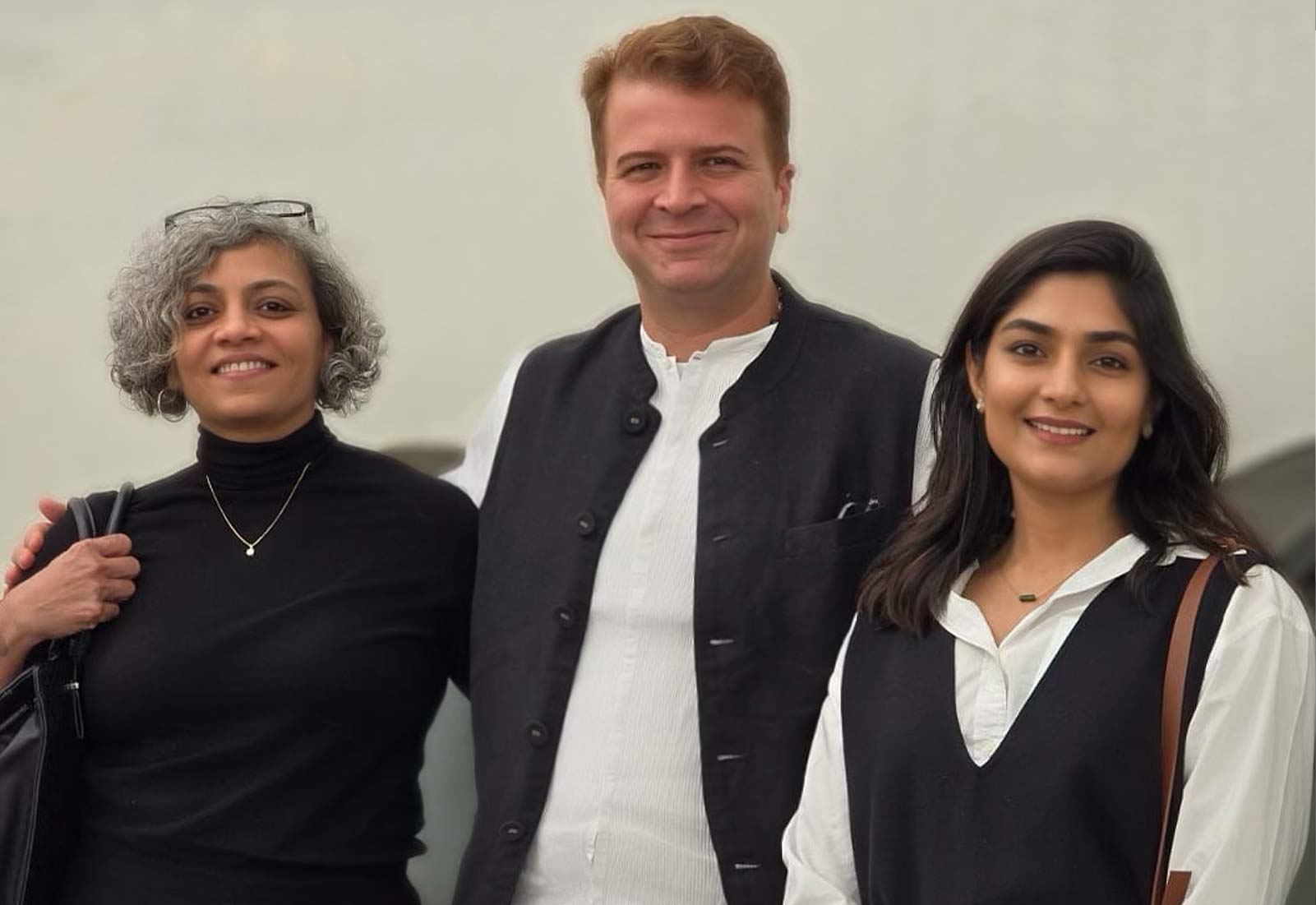

In India, geography, food, language, and design shift every 200 kilometers. This isn’t a bug; it’s the defining feature, creating a landscape where no single image can capture the whole, where abstraction lives in daily rituals, and where centuries-old craft evolves alongside contemporary innovation.
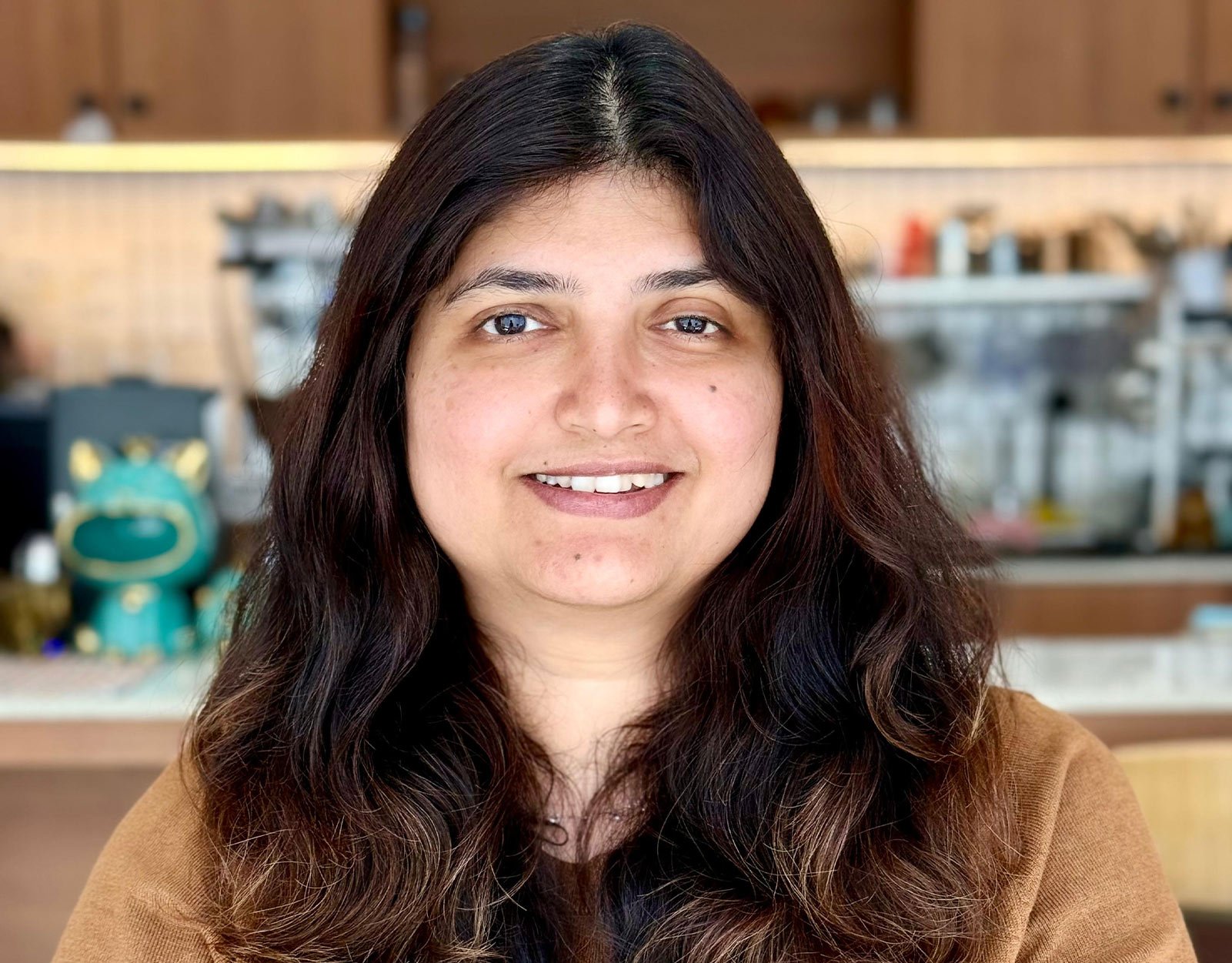
Aparna Dhareshwar, Partner at Sameep Padora & Associates (sP+a), designs within this complexity, creating spaces that challenge monotony through unexpected moments, light hitting a wall just so, and people inhabiting spaces in unanticipated ways.
Her work proposes that today’s innovation isn’t about formal experimentation but about rethinking typologies that haven’t changed over time.
Dive into our insightful conversation with Aparna to explore how she blends intimacy with functionality, what AI means for the future of Indian architecture, and the importance of including clients in even the small parts of a project.


Design in India is integrated into our daily lives, whether it is the rangoli patterns of Diwali or the taziya constructs during Muharram. Abstraction is embedded deep within the narratives of life on the Indian sub-continent. Coupled with this, there is also an incredible amount of skill and craft that exists simultaneously with rituals and culture.
Design in India is integrated into our daily lives, whether it is the rangoli patterns of Diwali or the taziya constructs during Muharram.
All of this produces an incredible range of inspiring ideas, some of which have taken centuries to evolve and some that have been emergent, given the uniqueness of the contexts that we inhabit.
In Ak Ramanujan’s essay: “Is there an Indian way of thinking?” He speaks about the incredible diversity that exists in India. Along with geographies, food, clothing, and language often change every 200 km or so.
This creates a situation where no single image can define India. Its diversity being its most defining feature. All these diverse influences are rich in themselves but also lend to cross-pollination and interpretations.
I personally find it very exciting. We already know the iterative range that AI is able to facilitate and its adaptive capacities. Personalization will be a dominant feature working across modes at scale. Richard Sennet in his book The Craftsman, talks about craft being of its time, in a sense design languages and processes will evolve in conjunction with the tools that AI will bring.
I think one can read intimacy as scale and tactility. Eventually, it’s about a body in space and the interactions and stimulations that one experiences. In our broader work we are constantly in search of moments that have the capacity to surprise us, a moment that we hadn’t anticipated.
Those are really the most rewarding parts of any built project. It could be the way that light hits a wall, it could be the way someone uses a space


With the proliferation of media and technology, I think formal experimentation is now no longer considered risky. I think today we need to innovate with typologies, to rethink the way we use particular spaces and materials that have stayed the same for a long time.
The way that we usually work with clients is to involve them in the thinking that leads us from one step to the next.
I think today we need to innovate with typologies, to rethink the way we use particular spaces and materials that have stayed the same for a long time.
We find a greater buy-in from the client for any innovation when we involve them in all the small parts, and not just show them the entire picture.
The new generation of budding architects comes from entirely different backgrounds, vis-à-vis comfort with technology, but also live in a world where their engagements are wide-ranging but perhaps not deep enough.
This is not in itself a bad thing, but rather the nature of the world and society we live in, and I think the younger generation is way better equipped to deal with this than we are.
The new generation of budding architects comes from entirely different backgrounds, vis-à-vis comfort with technology, but also live in a world where their engagements are wide-ranging but perhaps not deep enough.
However, as a word of caution, there are two things in my view that the younger generation needs to consider :
The Palace at Datia in Madhya Pradesh.
The miniature artist Nainsukh.
Hunnarshala, Bhuj. Gujarat.


To learn more, visit sp-arc.net
All images provided by Sameep Padora & Associates