
A conversation with the founders of Plus One Design about India’s spectrum of expressions, cultural DNA, east-meets-west aesthetics, and the balance where purpose meets imagination.
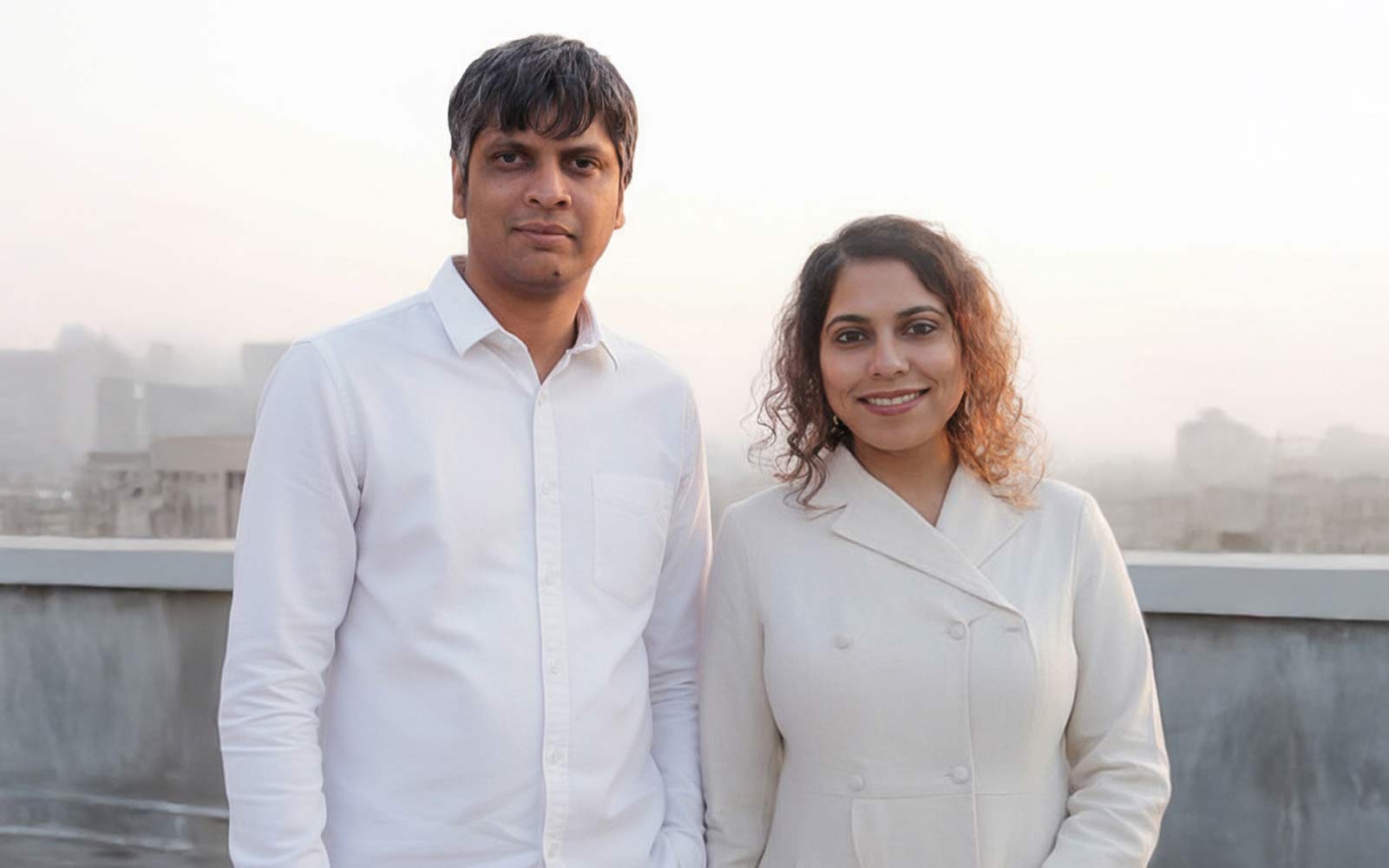

As part of our Indian Design in Focus series, we turn to Gautam Patil and Shitu Patil, the founders of Plus One Design – a Mumbai-based studio known for its cultural and emotionally expressive global approach to brand building. Drawing from India’s extraordinary diversity (its languages, scripts, rituals, crafts, and regional visual languages), the duo curates brands that feel both deeply Indian and universally resonant.
Their work spans indigenous paints, luxury hospitality, global beverages, and contemporary lifestyle brands.
In our conversation, Gautam and Shitu speak about the layered nature of Indian design and how their own lived experiences have formed their visual foundation. They discuss the evolution of India’s design maturity and why today’s clients are more open to bold creative choices. They also reflect on why a sharp brief is the anchor of meaningful work and touch upon the changing demands on young designers entering the industry.


Indian design mirrors the country itself: layered, emotive, and extraordinarily diverse. With 28 states, 8 union territories, and over 22 officially recognized languages, India is not a single aesthetic; it’s a spectrum of expressions.
In smaller towns, the visual language is unapologetically bold; hand-painted signage, street murals, political posters, and vernacular architecture all contribute to an identity built on colour, storytelling, and maximalism.
With 28 states, 8 union territories, and over 22 officially recognized languages, India is not a single aesthetic; it’s a spectrum of expressions.
Metros, on the other hand, blend this cultural vibrancy with global influences. The result is a contemporary Indian aesthetic that is rooted yet refined, international in sensibility but unmistakably local in flavour. This duality is what makes Indian design truly compelling on a global stage.
Our earliest influences are embedded in our lived experiences; Indian motifs, temple architecture, classical scripts, festive rituals, craft traditions, nature and people around us. These aren’t references we consciously seek; they’re part of our visual DNA.
We draw from them whenever a project calls for a deeper cultural resonance.
For example:
While our inspirations are deeply Indian, our interpretation is globally relevant. We like to mix cultural authenticity with modern, universal aesthetics. That combination gives our work both soul and sophistication.
Our earliest influences are embedded in our lived experiences; Indian motifs, temple architecture, classical scripts, festive rituals, craft traditions, nature and people around us.
For example, for TGL Co.’s (The Good Life Company) the exotic beverage brand’s two projects:
This east meets west, with cultural resonance and universal appeal, defines a lot of the work we do.
Absolutely. The Indian design landscape is experiencing a real shift. With the rise of D2C brands and young entrepreneurs who understand the value of design, there’s a stronger appetite for bold, differentiated identities.
The overall aesthetic maturity of the country has also evolved, people today recognise good design, and they reject mediocrity more readily.
With the rise of D2C brands and young entrepreneurs who understand the value of design, there’s a stronger appetite for bold, differentiated identities.
For clients who are still hesitant, we guide them gently. We use case studies, ours and others in the category to demonstrate how design directly impacts long-term business value. When clients see the commercial impact of strong design, they naturally become more open to innovation.


A sharp, well-articulated brief is the foundation of exceptional work. It gives direction, clarity, and purpose. Once the problem is defined, creative freedom allows us to explore, experiment, and push boundaries.
However, not all briefs are precise. When a brief is generic; “drive delight”, “increase sales”, we dig deeper. We uncover cultural insights, consumer tensions, and category behaviour through workshops, immersions, and research. This allows us to craft a sharper brief collaboratively with clients. Once that clarity is achieved, creativity can truly flourish.
Skill relevance is important, but what truly shapes a designer is attitude. The discipline to put in the hours, the curiosity to explore beyond the obvious, and the resilience to refine your craft, these are irreplaceable. Education should cultivate both skill and character.
Tools change, but taste doesn’t. A strong foundation in aesthetics, rigorous practice, and learning design “the right way” matters far more than shortcuts. The better design schools in India understand this, they train students not just to work, but to think, critique, and create meaningfully. With this foundation, tools like AI become creative accelerators rather than crutches.
Look beyond screens. Explore your own culture, your neighbourhood, your history. Inspiration lies in lived experiences, not in scrolling through Instagram or Pinterest.
Feed your imagination with reality: people, conversations, crafts, food, festivals, stories. Build ideas that stem from your own lens. Everything else is already taken; by others, and increasingly, by AI.
Miros, the new luxury hospitality brand from the House of Abhinandan Lodha, is particularly close to our hearts. We shaped everything, from strategy and naming to design and brand world creation.
In a world obsessed with material accumulation, we wanted to redefine luxury as the art of truly living in a moment. Miros celebrates these small, beautiful moments that shape our lives. Crafting a brand with such emotional depth and universal resonance was deeply fulfilling for us.
Take a road trip. Indian design lives in its streets; the painted walls, the expressive signage, the giant rooftop sculptures in Punjab, the larger-than-life political posters of Tamil Nadu, the hand-painted ads near Delhi railway station.
And of course, India’s architectural heritage, from South Indian temples to Rajasthani forts.
Also unmissable: India’s textiles, each region telling a story through its weave, embroidery, or print.
Shitu: I’ve always been drawn to Jamini Roy’s simplicity and boldness. When I sketch women, I naturally gravitate toward his almond-eyed forms. I’d also love to collaborate with emerging indie fashion labels like Nor Black Nor White. Their use of heritage craft in a contemporary, graphic way resonates deeply with my sensibilities.
Gautam: I love to take inspiration from nature and architecture. B. V. Doshi is someone I really looked up to. In more recent times, I really like Sangath Studio’s work, founded by people who worked closely with B. V. Doshi. Their work is rooted in the belief that architecture is a living response, one that grows from its surroundings, serves its inhabitants with care, and speaks gently to both place and time.
Shitu: Indian textiles are my treasure trove; temple-border sarees of Tamil Nadu, phulkari from Punjab, block prints from Rajasthan, Paithani from Maharashtra, or the loin loom from Nagaland. The colours, motifs, and textures are stunning. I also constantly look at patterns in Rajasthani architecture for structural inspiration.
Gautam: I’m hugely inspired by the living forces of nature around me, humans included. It’s an infinite reservoir of inspiration and open to anyone’s own personal interpretation. I find the human quirks and peculiarities hugely entertaining too!


To learn more, visit plusone.net.in
All images provided by Plus One