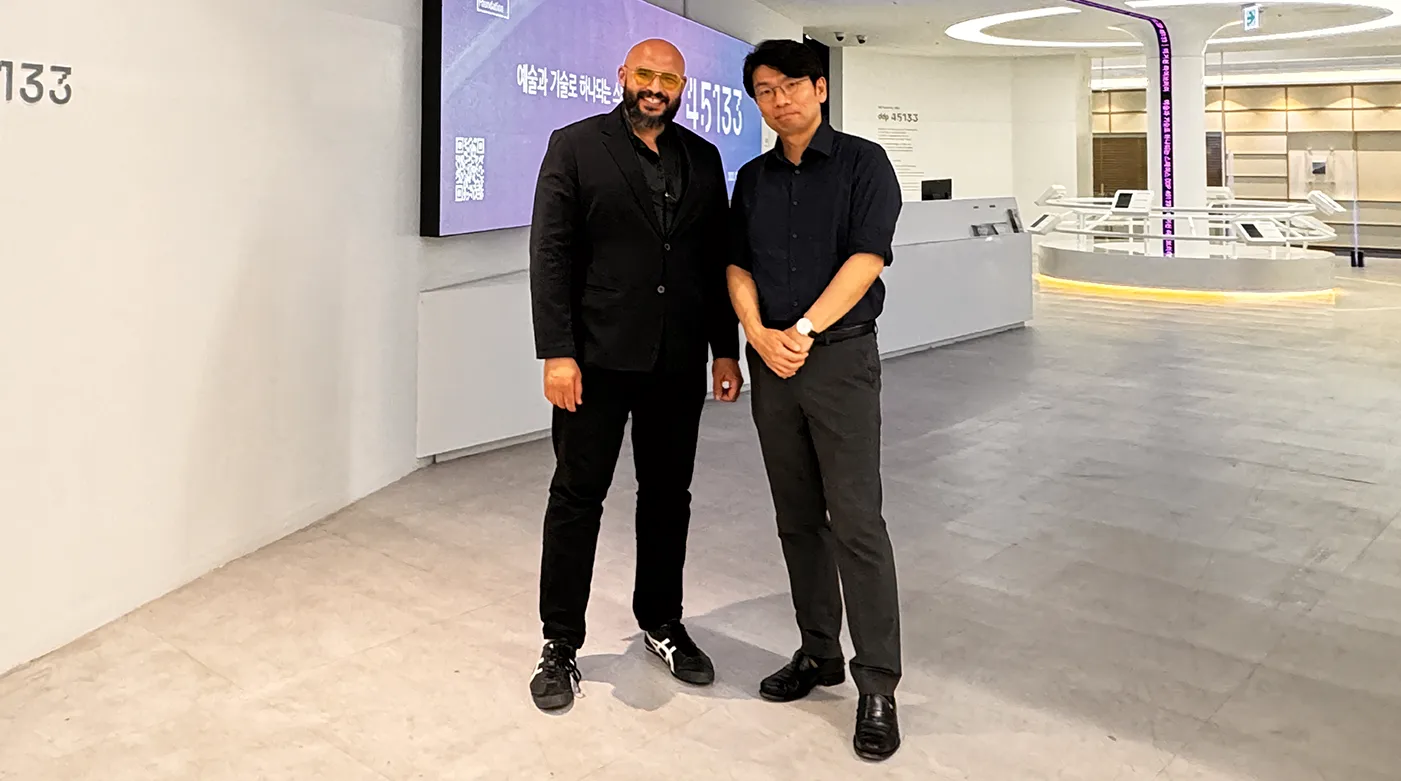

In our continuing Korean Design in Focus series, we recently caught up with Linda Hee Jung Lee, an interior designer and Principal Director, Korea Lead at Hirsch Bedner Associates.


In our continuing Korean Design in Focus series, we recently caught up with Linda Hee Jung Lee, an interior designer and Principal Director, Korea Lead at Hirsch Bedner Associates, an interdisciplinary hospitality design firm with 24 locations worldwide.
With a Master of Arts in Interior Design and a rich tapestry of cultural experiences, Lee brings an experienced perspective to her craft.
She brings over two decades of experience across the fields of Hotel Management, Design Management, Hospitality Industry, Concept Development, and Sustainable Design, and her time living and traveling in Europe has additionally honed her ability to blend diverse influences, resulting in spaces that are both innovative and culturally informed.
Lee, who spent seven years developing the 1600-room Grand Hyatt Jeju, a project she’s “particularly proud” of, approaches design with meticulous attention to detail. She carefully selects color schemes, furnishings, and finishes for each project, working closely on all phases from conceptual and interior architectural design to material selection, documentation, and field supervision.


Korean culture profoundly influences hospitality design, especially through its emphasis on simplicity, a core principle known as “the beauty of simplicity.” This approach favors minimalistic, uncluttered spaces that highlight even the beauty of emptiness. Traditional Korean color schemes—earth tones, pastels, and subtle contrasts—also play a significant role, contributing to the opulent and sophisticated atmosphere of contemporary hospitality design.
Cultural symbols like lotus flowers, clouds, and the Taegeuk are frequently used as design motifs. Particularly notable is the use of Hanji (traditional Korean paper) for screens, lamps, wall coverings, and more, adding a uniquely Korean touch to interior spaces.
The traditional Korean tea ceremony and wellness culture are also integral to the design of tea rooms and spa areas in hotels. These spaces are designed to foster relaxation and mindfulness, often featuring low seating, natural materials, and views of gardens or water features.
Korean bathhouses (Jjimjilbang) and traditional Korean medicine have influenced the design of spa and wellness centers, offering a holistic experience rooted in Korean tradition. For instance, the Grand Hyatt Jeju features a Korean-style Jjimjilbang, and a new project in Fairmont Hanoi will integrate this concept with a more Westernized luxury spa, set to open next year.
In summary, Korean culture and tradition profoundly influence South Korean hospitality design, creating environments that offer both visual beauty and authentic experiences for guests.
The past decade has seen dramatic changes in South Korean hospitality design. There’s been a growing trend of integrating traditional Korean design elements and materials into modern hospitality spaces. This fusion of tradition and modernity, enhanced by technology, creates a contemporary aesthetic.
Key trends include sustainability, the integration of technology, personalized design (especially in boutique and lifestyle hotels), and the concept of “glocalization”—the blending of global influences with local culture.
Post-COVID-19, there has been a significant shift towards safety and hygiene in design, with features like touchless interfaces, improved air circulation, and antimicrobial materials becoming standard. Wellness-focused amenities, such as spas, pools, and wellness programs for both adults and children, are increasingly popular. The traditional Korean bathhouse culture continues to inspire the design of wellness areas in hotels, providing guests with unique cultural experiences.
Designs now prioritize flexibility, with spaces and furniture that can be customized to meet diverse guest needs. For example, modular and transformable furniture is increasingly common, allowing spaces to be reconfigured as required.
Wellness has become a global trend, and South Korea is no exception. Even before COVID-19, wellness-oriented facilities were gaining popularity, and this trend has only intensified post-pandemic. Hospitality design in South Korea reflects global wellness trends while incorporating unique cultural elements that resonate with both local and international guests.
Many luxury hotels and resorts in South Korea have integrated extensive spa and wellness facilities, including Korean spas like Jjimjilbang and Hanbang (traditional Korean medicine). These spaces offer holistic wellness experiences, providing guests with opportunities for relaxation and emotional well-being.
Hotels and resorts often draw inspiration from their natural surroundings, incorporating elements of nature into their designs. For example, Forest RESOM (Re-State of Mind) is a premium resort nestled in a forested area. The resort offers facilities such as an infinity pool, outdoor Jacuzzi, and indoor Jjimjilbang, all designed to enhance the guest’s connection with nature and provide a restful experience.
Hoban Hotel & Resort is one of the rising local hospitality companies in South Korea, currently developing new wellness resorts on a larger scale in Jeju (Luxury Collection) and Gosung (Island Resort). These will be distinguished wellness resorts in the future, aiming to pioneer wellness and redefine luxury in their offerings.
Another notable property is PARKROCHE in Jungsun, developed before the Pyeongchang Winter Olympics. This luxury wellness resort, located near ski slopes, offers a variety of wellness programs, including yoga, sound meditation, and mindfulness sessions, as well as indoor and outdoor spa facilities. The resort provides a calm and peaceful environment, ideal for guests seeking relaxation and wellness in a natural setting
After working for 10 years in Hong Kong with HBA International, I returned to Korea to establish HBA Korea. Initially, our clients had a more domestic perspective and limited understanding of the hospitality industry. However, as global hospitality brands have entered the Korean market, local preferences have increasingly aligned with global trends, especially among clients with experience in international projects.
Balancing global design trends with local preferences can be challenging, particularly when clients are less familiar with global trends. However, most of our clients seek to incorporate global design trends into their projects. Our approach involves integrating local preferences into these global trends and finding a compromise that satisfies our clients’ needs. This process of integration and compromise is key to our work and will continue to shape our approach in the future.


The global popularity of Korean culture, or Hallyu, has significantly influenced hotel design in South Korea. A prime example is the Grand Hyatt Jeju, which blends Korean culture with a global brand. Initially targeting Chinese travelers, the hotel was designed to feel like a home away from home, while also introducing guests to Korean culture through various design elements.
For instance, Bojagi (Korean patchwork) and Mother-of-Pearl elements (자개) are used to add a luxurious, cultural touch to the hotel’s design. Traditional Korean architecture and furniture are also incorporated in a detailed and elegant manner.
Part of our hotel, there is retail area which is called “Hallyu Stree”, this is not high-end luxury, but it’s young Korean designer’s shop to create artist street such as Hongdae, Garosu-gil as famous for those young fashions.
Hotels in South Korea often provide spaces for K-dramas or films, making them popular destinations for fans and travelers. Collaborations with local artists are also common, allowing hotels to showcase contemporary Korean art.
For example, Lotte Hotel’s L7 brand collaborates with photographers, artists, fashion designers, and entertainment companies to enhance the local experience for guests. These collaborations help to create a unique blend of local culture and global hospitality.
Today, storytelling is a common approach in our design process, with a focus on creating narratives that are both strategic and aligned with business development goals. Bold design concepts must be supported by a solid narrative that explains the business and aesthetic rationale behind the design.
To encourage clients to embrace daring designs, we often use dramatic presentations, such as videos and visualizations, but these are always backed by detailed explanations and a compelling storyline. Building trust and fostering collaboration through open communication is essential, and sometimes it’s necessary to educate clients on design principles and the rationale behind bold choices.
“Today, storytelling is a common approach in our design process, with a focus on creating narratives that are both strategic and aligned with business development goals. Bold design concepts must be supported by a solid narrative that explains the business and aesthetic rationale behind the design.”
The Grand Hyatt Jeju is a project I am particularly proud of. It is one of the largest Grand Hyatt hotels in the world, and the largest in Asia, with 1,600 rooms, 14 F&B outlets, retail spaces, and extensive back-of-house areas. I worked closely with the chairman, operator, and design team for seven years, from the initial concept to the final completion.
Unfortunately, it opened during COVID-19 in December 2021, so we couldn’t celebrate as much as we would have liked. However, I am still very proud of this project—it feels like my big baby.
I love exploring new ideas and am always on the lookout for young artists with whom I can collaborate. I’m particularly interested in contemporary Korean art, such as the work of a young artist who has modernized the use of mother-of-pearl in her art. Traditionally used in Korean furniture, she has reinterpreted this material in a contemporary way, which I find fascinating.
In my upcoming talk, I’ll discuss how the hospitality industry is evolving to meet travelers’ desire for unique and authentic local experiences. While the industry has traditionally been influenced by Western hospitality culture, there is now a growing focus on local cultural authenticity and personalized experiences.
“While the industry has traditionally been influenced by Western hospitality culture, there is now a growing focus on local cultural authenticity and personalized experiences.”
The talk will also cover the increasing importance of sustainability and eco-design in the hospitality industry.
From the designer’s perspective, we are more conscious of using sustainable materials and incorporating biophilic design.
Operators are also focusing on enhancing guest experiences through wellness and sustainability programs. Collaboration with environmental organizations and offering meaningful activities through hospitality programs are becoming essential strategies for promoting hotels and enriching guest experiences.
I’m excited about the opportunity to discuss these topics and look forward to the event in September.