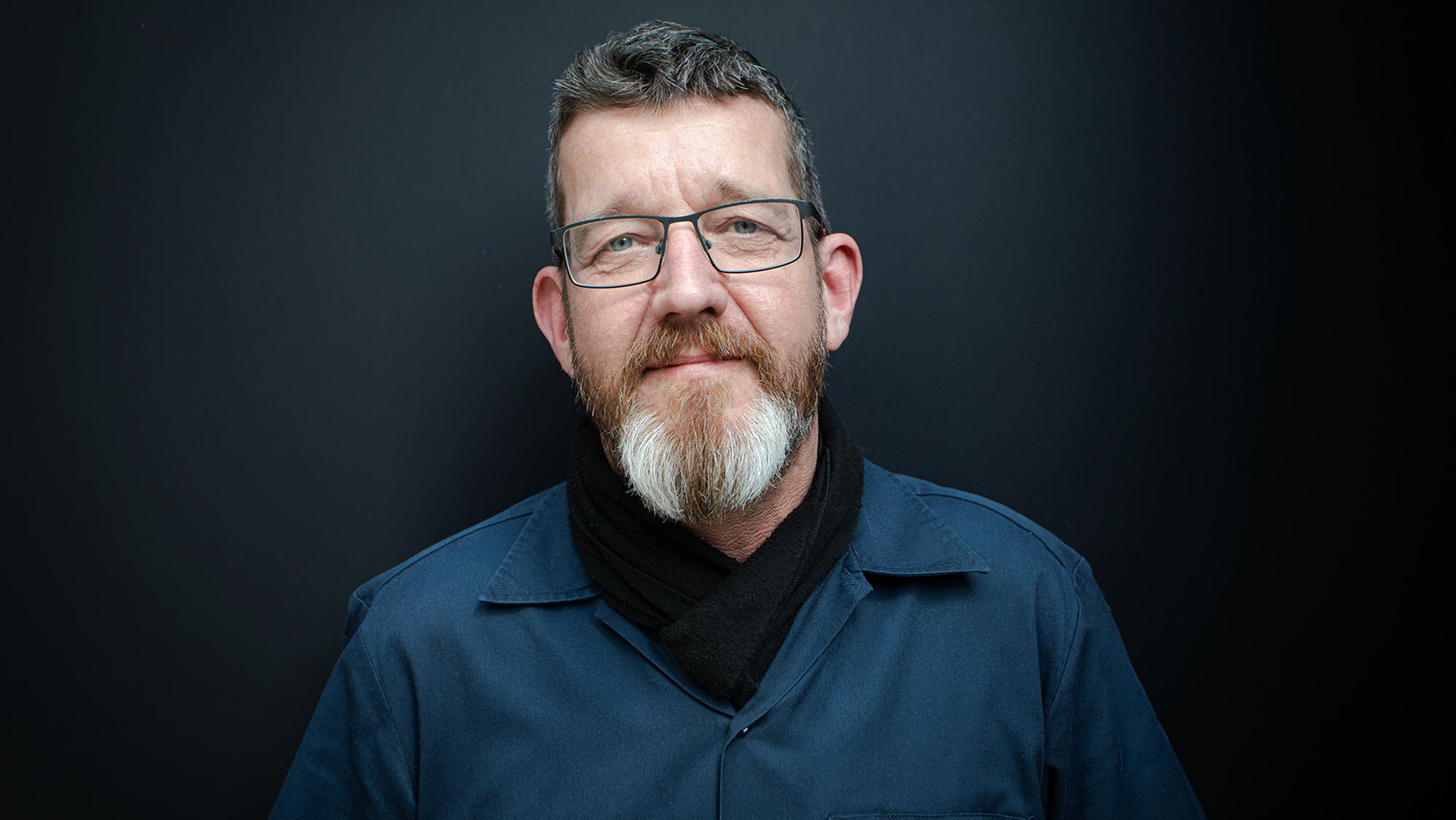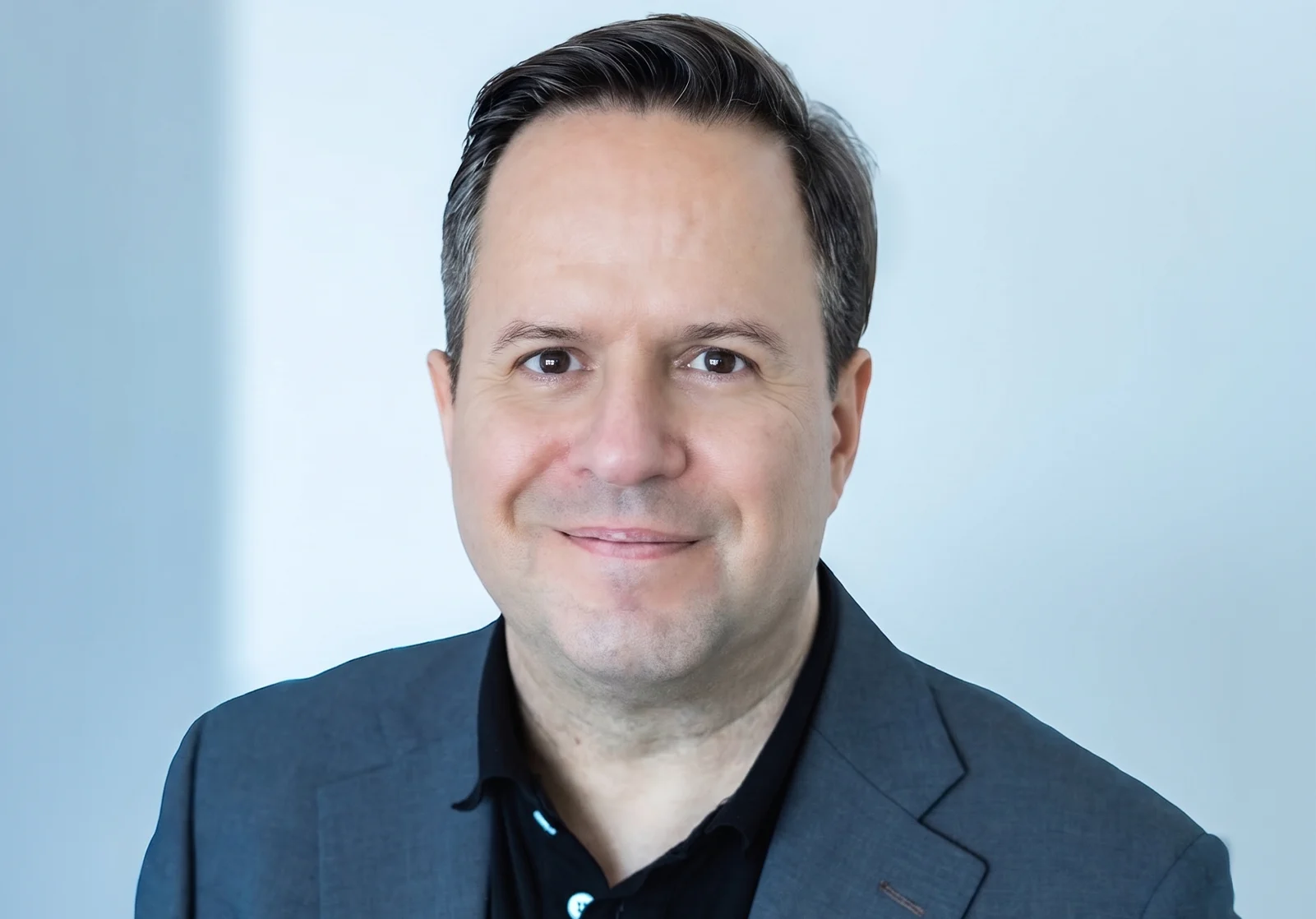
Experiential marketing has moved well beyond the days of what Ben Taylor calls “menus and venues” briefs. Across APAC, brands are increasingly treating experiential as part of broader marketing strategy, with greater emphasis on audience insight, measurable business outcomes, and how physical events can extend far beyond the people in the room.
For Taylor, CEO of Project Worldwide APAC, that shift has changed not only the scale and format of experiential work, but the way brands think about its role. Rather than starting with a venue, an attendee target, or a tactical idea, he says the process increasingly begins with a more fundamental question: what do you want the audience to think, feel, and do?
In our conversation, Taylor discusses how experiential has evolved across APAC, why real-world interaction is taking on greater importance for brands, how global ideas need to adapt to local markets, and how measurement and technology are shaping what comes next.

He also shares three people who would make his dream event speaker lineup.
From what you’re seeing across APAC today, where does experiential sit within the broader marketing strategy, and how has that evolved in recent years?
When I look back at the past two decades in this industry, experiential marketing was treated as an afterthought rather than a core part of the marketing mix. To be fair, most events we saw in Asia back then were celebratory occasions, often product and property launches designed more around celebration than addressing specific business needs.
Fast-forward to today, and the landscape has changed exponentially. Experiential is now deeply integrated into campaign planning and has become a cornerstone of modern marketing strategy. This shift is highly evident on the business side of our industry: valuations of experiential-based agencies have soared, outpacing traditional digital and creative advertising agencies in recent years.

A challenge facing brands is that consumers have more ways than ever to tune out digital marketing. What role are real-world interactions playing in response, and how is that influencing what brands are asking you to create?
Trust and authenticity are critical right now because it has become so difficult to know what to believe amidst the flood of fake news, AI-generated content, and online sameness. During the pandemic, we were all bolted indoors, which gave us round-the-clock access to brands but also led to a highly isolated way of living.
That isolation has only accelerated. Across almost every generation today, we are still constantly staring at these flat panes of glass for most of our days. This is one of the reasons for the rise of experiential as a driver for CMOs. If a company wants to truly differentiate itself from its competitors and peers, it must find ways to connect more deeply and build real relationships with its audiences.
Brands are asking us to create real-world moments to help them solve this: bridging the human disconnect left behind by years of digital saturation and isolation, and providing a real, trustworthy space where consumers can connect with a brand on a deeper level.
Experiential marketing has often been built around scale with large audiences, major launches, and headline attendance numbers. Is that still the case, or has the model changed?
The model has moved away from being a mere numbers game and become more focused on high-value, immersive, and intentionally amplified experiences.
Take, for example, a flagship experience like Salesforce’s “Dreamforce” that the GPJ team has been supporting for years. A decade ago, it was all about hitting massive registration targets, sometimes well over 100,000 in-person attendees. Today, physical attendance at these flagship events has shifted closer to 40,000 or 50,000 people. While still large, this in-person audience is far more curated. We’re seeing higher seniority levels and decision-makers in the room, creating a much more impactful in-person business environment.
At the same time, we’ve seen a massive shift in how these events are amplified globally. We no longer treat the online audience as an afterthought, posting static stage recordings on YouTube later. Instead, the physical event acts as a high-production broadcast stage, and is treated like a live TV show with hundreds of cameras, editing the experience in real time.
View this post on Instagram
This evolution turns the physical footprint into a powerful interactive content engine, allowing remote participants (many of whom can’t attend due to geography or budget) to engage with the authentic energy generated on the physical floor. Dreamforce, for example, reports over 200,000+ virtual viewers, generating over 90 million broadcast views. So, in effect, the live audience is more targeted, current client and pipeline-focused attendees, but the experience now reaches far greater numbers than in the past, addressing other business imperatives such as brand building and broader new business outreach.
In APAC, this change is felt as well. In the past decade, the dominant model was hosting one massive, centralized event meant to cover the entire region’s stakeholders. We see a transition to more high-touch, adaptable global to local playbook formats that can be molded to each business culture in the market. A great example of this is the AWS Summit series. Rather than holding one flagship event, they deploy 10 summits across APAC.
It’s fascinating when you compare B2B and B2C unit economics. An enterprise buyer attending a major B2B summit represents a potential contract value of hundreds of thousands or even millions; conversely, a consumer might purchase a product below $100 five times a year.
On the consumer side, where our DARKHORSE team lives, brands are also increasing investment into experiential through smaller, highly curated activations. With the rise of creator culture, they can bring together smaller groups of “amplifiers” – influencers, creators, and tastemakers. The physical space is curated to create proximity, excitement and built for the enhanced reach through creators’ channels to millions of consumers. A good example of this is Maybelline’s recent launch of Sky Tubes Tubing Mascara, which involved testing the product on the slopes of the Southern Alps.
How important are audience insight and segmentation when designing an experience, and how do they shape the format you ultimately create?
Briefs used to be incredibly prescriptive. It was what I call a “menus and venues” brief: we were going to a specific venue, at a specific time, and the focus was entirely on the logistics of the agenda, attendee numbers, and whatever tactical gimmick was trendy: whether that was a flash mob, a VR experience or something else “cool” at the time.
The only place to start is to truly understand the audience and work backwards from what you want them to think, feel, and do.
Today, the starting point has completely flipped. The only place to start is to truly understand the audience and work backwards from what you want them to think, feel, and do. Rather than treating experience design as moving people from room to room, we align our strategy to three core, measurable pillars: brand sentiment, audience engagement, and business results. Clients start thinking from the perspective of the audience, asking what mindset shifts, learning, education and engagement they want to guide them through. Experiences are built around that.
For example, we partnered with IBM for the inaugural APAC Think on Tour in Singapore, bringing together regional business leaders and partners, and evolving the traditional conference model by augmenting the main stage with a high-density, insight-led experience engineered from the ground up around the audience journey.
Across APAC, markets can differ significantly in their cultures, behaviors, and expectations. What have you learned about how the same experiential idea or format can land differently from one market to another? Are there examples that particularly illustrate this?
Success in this region requires accepting that geographic proximity does not equal behavioral similarity; even neighboring markets operate on vastly different social codes. The threat to global brands remains “lazy regionalism”, the mistake of taking a strategy that worked in one market and applying a rinse-and-repeat template across the entire region.
At the same time, long-standing regional “taboos” are breaking down. Two decades ago, the unspoken rule in China was that you should never host a standing cocktail reception because audiences are used to a formal, sit-down dinner. Today, that is no longer the case.
The threat to global brands remains “lazy regionalism”, the mistake of taking a strategy that worked in one market and applying a rinse-and-repeat template across the entire region.
A few weeks ago, I was in Tokyo with the GPJ team at Google Next. After the main keynote in front of thousands of delegates, the single large stage transformed into five silent, simultaneous breakout sessions with screens and podiums but no “room dividers”. The audience stayed in their seats, donned multi-channel headphones, and engaged with five different presenters on one stage in the same space simultaneously. It was an extraordinary feat of operational efficiency, made possible entirely because the design respected the discipline, focus, and cultural norms of a Japanese audience – I haven’t seen that approach in many other markets.
This is why intelligent governance is central to our strategy. An attendee at an event in Japan or the US will instantly recognize the brand and strategic DNA, but how that experience comes to life has to be tailored to the local audience. Our global experiential playbooks provide both clear brand guardrails and built-in flexibility, allowing our teams to adapt operational mechanics to local nuances while leveraging global infrastructure, know-how and capability to balance global consistency with local execution.
In 2024, you wrote in an op-ed piece that “experience impact is the next experiential revolution.” Two years on, where are we with the revolution?
It is undoubtedly a revolution, but shifting an industry’s mindset takes time. Historically, experiential marketing suffered from an attribution problem; it was valued intuitively rather than analytically.
We invested in developing the measurement methodology. Because we wanted a standardized, robust system that could scale globally, R&D was rigorous.
Historically, experiential marketing suffered from an attribution problem; it was valued intuitively rather than analytically.
The power of this methodology became clear early on with a major enterprise client who was challenging us on how to differentiate or innovate. Rather than pitching creative concepts, we asked to use their program as an effectiveness test case, mapping our design directly to the CMO’s business KPIs. The results were so compelling that we not only retained them, but they named us their Agency of Record (AOR) and consolidated their entire, multi-market experiential portfolio under us for the first time in their history.
We view this methodology the same way Volvo viewed the three-point seatbelt: as an innovation so fundamental that its true value lies in elevating the entire industry’s standard of measurement – as an industry we need to do this together – a rising tide lifts all boats!
Looking ahead, what do you think will define the next phase of experiential marketing across APAC? What are brands asking for today that they weren’t asking for two or three years ago?
While measurement is top-of-mind, brands are increasingly asking us how to apply experience design principles and elevate raw creativity through purposeful technology. Twenty-five years ago, “creativity” in this space essentially meant brand application: you took a logo, slapped it on a backdrop, made sure the color temperature was correct, and called it a day.
Today, brands want creative design and technology to be used in an immersive, highly intentional way to enhance the experience rather than distract from it. For example, we use computer vision to read audience emotions in real-time while maintaining strict data privacy. It provides powerful experience design data by measuring whether guests are inquisitive, surprised, highly engaged, or losing interest.
As experience designers, our role is to constantly evolve, innovate, and leverage these tools to understand the audience’s emotional journey while elevating their connection to the brand.
Looking ahead, imagine using those real-time emotional analytics to guide live stage environments. Similar to a TV news producer giving a broadcast anchor live feedback in an earpiece, technology could provide real-time prompts to shift the energy in a room based on audience sentiment. Technology is no longer just a display on a wall; it is the underlying engine informing us and upscaling our creative capabilities across the region.
As experience designers, our role is to constantly evolve, innovate, and leverage these tools to understand the audience’s emotional journey while elevating their connection to the brand.
A brand team is standing at the drawing board brainstorming their first event. What advice would you give them?
Events are big investments, so you have to start with the audience and work backwards from the outcomes you want to achieve.
Ask yourselves: what do we want this audience to think, feel, and do? When you define those desired outcomes and metrics right at the drawing board, it allows us to design the right experience with those KPIs built into the architecture from day one, ensuring you capture a measurable return on your investment, whether that is driving pipeline and sales, or building deeper trust, brand engagement, and stronger relationships.
Quick Hits
Best event you’ve been to that wasn’t your own:
Lady Gaga’s concert in Singapore last year. In all honesty, I hadn’t been to a live concert in decades so it surprised me: It was no longer just a singer on stage performing in front of screen graphics. It was theater, storytelling…it was operatic, deeply engaging, and an incredible overall experience for the audience. A complete spectacle, and it shows the exact same excitement, engagement, and future-focused experience design that we should be adopting more within our own industry.
Your dream three event speakers, dead or alive:
Lee Kuan Yew for his incredible foresight and vision. We are seeing things that he had spoken about 20-30 years ago come true.
Freddie Mercury, for his sheer creative courage. His life was a remarkable story of commitment, grit, and unwavering confidence that drove incredible creative output against the odds.
Matt Jones, a former colleague who became an entrepreneur, and later a speaker. He left the agency world to open a gin distillery, Four Pillars Gin, which I thought was mad – hi Matt! He used the skills he learned in our industry to create an amazing human-first experience brand.
One thing common at events you wish would disappear:
Registration. Given where technology is today, there has to be a better way than hanging pieces of ribbon and plastic around our necks. Having attendees queue up to collect a badge does not enhance the experience.
From a recent event: instead of ropes and lines greeting attendees, there was a whole group of hosts welcoming people. They were singing, dancing, and making the entrance feel like a welcoming parade. It was awesome – almost Disney-like.
As an industry, we have a duty to innovate and rethink every step, and transforming the way we receive people into an event is an area ripe for change.