When one in four vehicles on the road is already a Toyota, the idea wasn’t to insert the brand into culture — it was to show people what was already there.
Toyota
Saatchi & Saatchi NZ
Spark Foundry NZ
Digitas NZ
In New Zealand, Toyota accounts for one in four vehicles on the road. And that kind of ubiquity comes with its own set of challenges.
When a brand has that level of visibility, awareness takes care of itself. Emotional connection is another matter.
To address that, Toyota New Zealand, Saatchi & Saatchi New Zealand, Spark Foundry New Zealand, and Digitas NZ set out to evolve the brand’s long-running “Let’s Go Places” platform.
The shift expanded the platform toward something more grounded: a reflection of Toyota’s place in everyday New Zealand life.
This included incorporating used cars, fleet vehicles, rentals, share cars, and Toyota’s support of communities through sponsored vehicles.
The answer didn’t call for a dramatic reinvention. It simply required New Zealanders to take a look around them.
Below, some of the team behind the campaign break down the thinking, the challenges, and how it all came together.
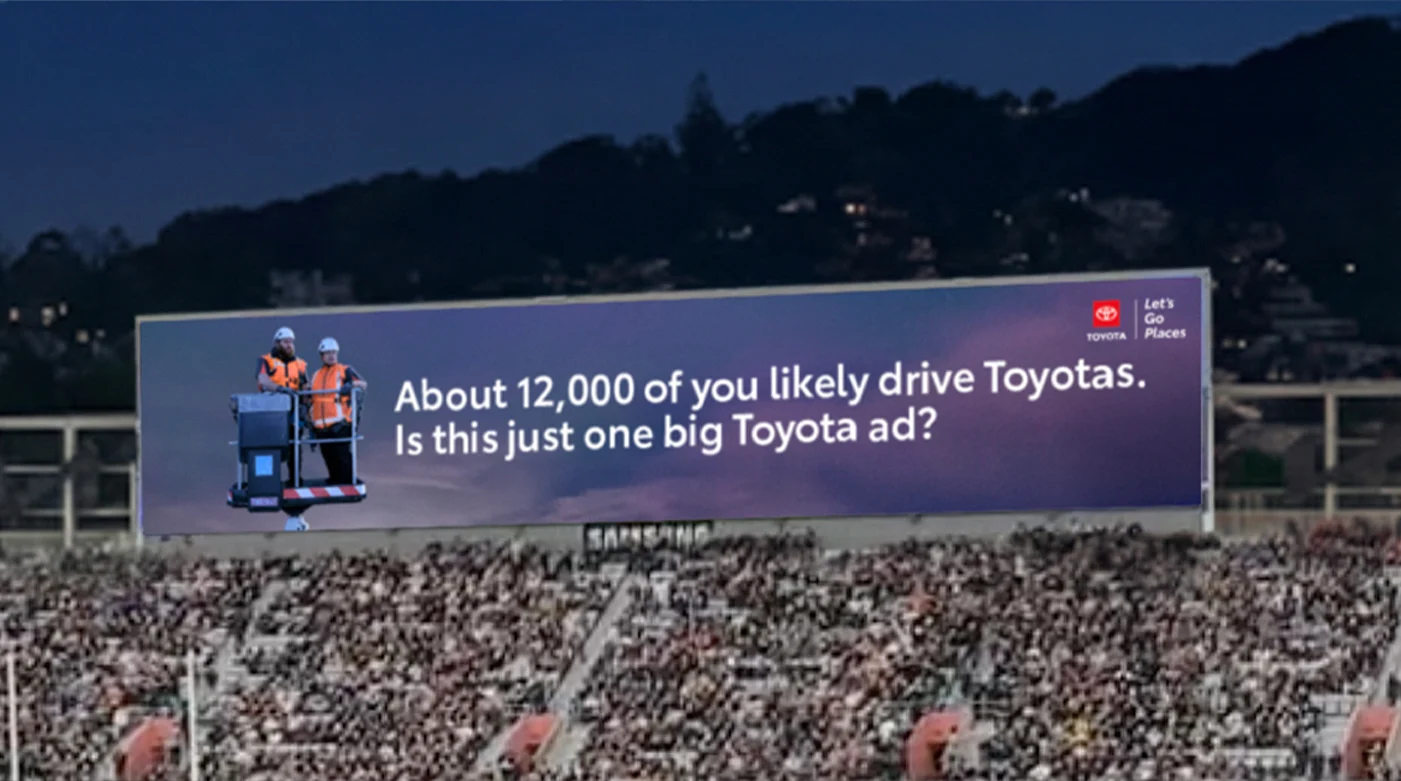

The breakthrough came from a simple, slightly absurd observation: If one in four vehicles in New Zealand is a Toyota, then any intersection could already be an ad.
Car parks. Traffic lights. Suburban streets. Rural highways. Toyota didn’t need to place itself into culture; it was already there.
Toyota already dominated physical availability. But mental availability still needed to be actively nurtured.
By acknowledging this reality with humour and self-awareness, Toyota could invite New Zealanders in on the joke, rather than talking at them.
Instead of creating a single hero placement, Toyota, Saatchi & Saatchi, Spark Foundry, and Digitas reframed the entire country as the media channel.
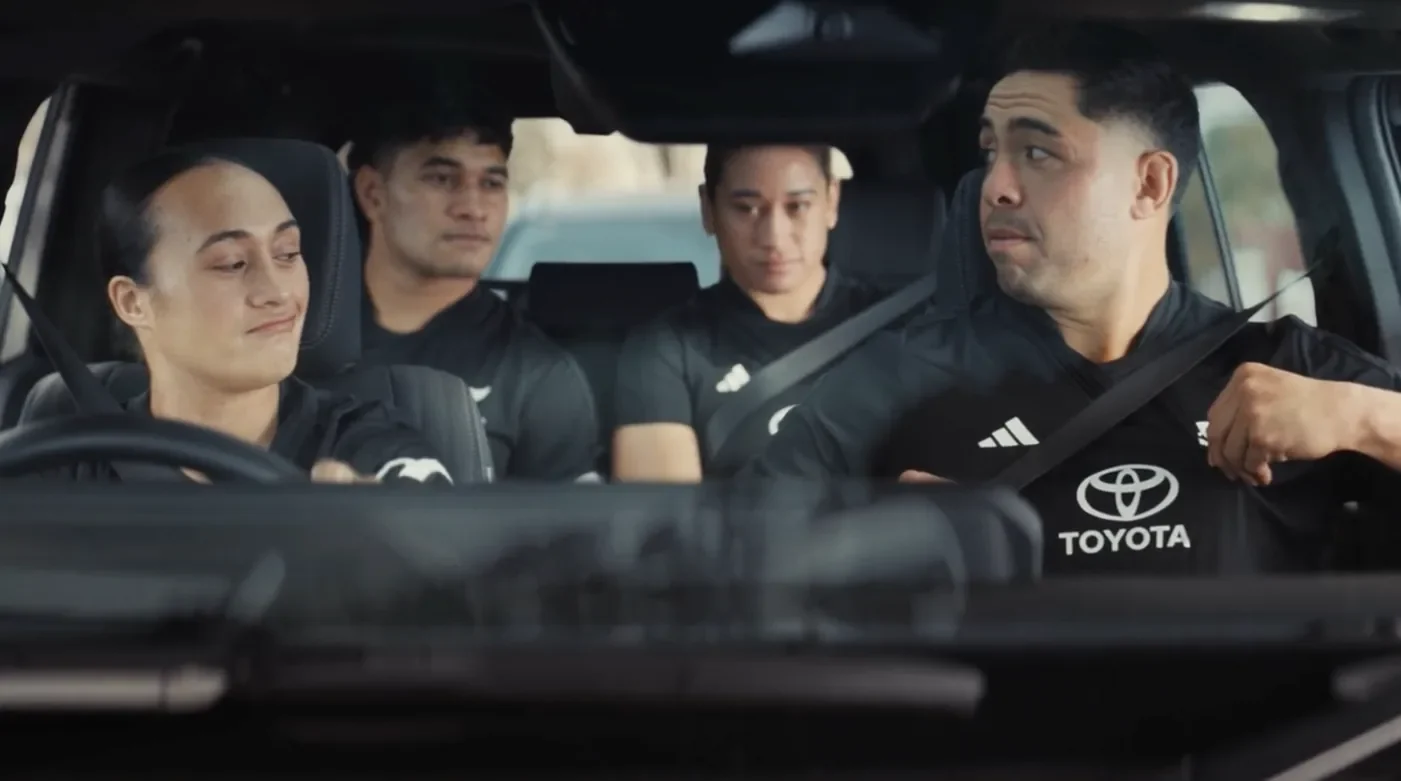
The campaign centred on a film where every day New Zealanders begin noticing the sheer number of Toyotas around them, until they start asking the question: “Is this an ad for Toyota?”
The idea allowed Toyota to showcase its full range, from hardworking utes (utility vehicles) and hybrids to EVs and shared mobility services, not through product shots, but through real-life visibility.
The hero film leans into self-awareness, blurring the line between advertising and everyday life.
Toyota’s greatest proof point wasn’t a claim. It was already sitting at the traffic lights.
The hero film leans into self-awareness, blurring the line between advertising and everyday life. Intersections become stages and ordinary moments become brand proof, all without feeling forced or performative.
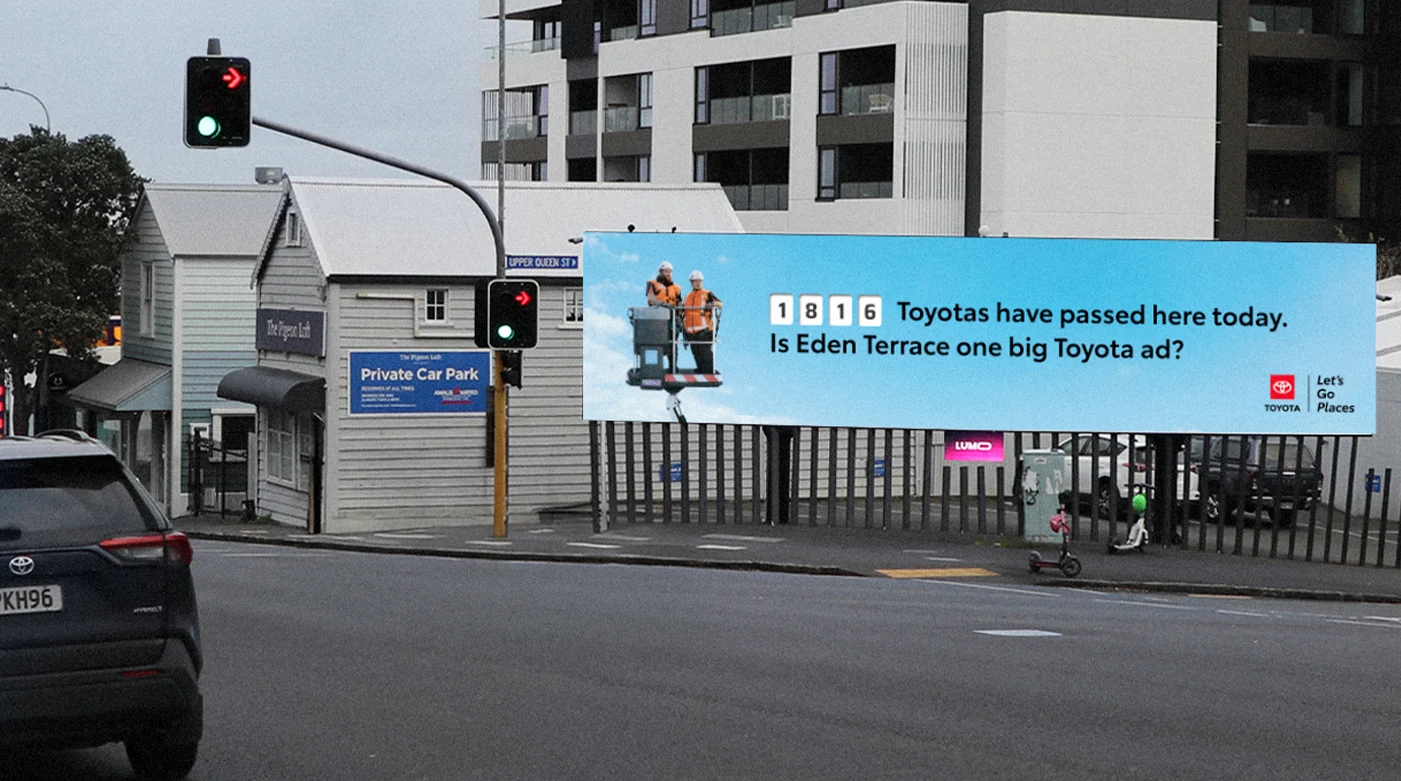
The idea scaled beyond film into OOH, social, digital and live activations, including real-time billboard executions that counted Toyotas passing through key intersections, turning the country’s traffic into dynamic media.
By anchoring the idea in a uniquely New Zealand truth of familiarity, understatement and humour, Toyota, Saatchi & Saatchi, Spark Foundry, and Digitas ensured the work felt less like advertising and more like an observation New Zealanders recognised instantly.
Toyota already dominated physical availability. But mental availability still needed to be actively nurtured.
The challenge was clear:
The solution had to turn scale into storytelling, and presence into participation.
This campaign was an evolution of Toyota’s narrative in several ways.
Their advertising has often been based around invented stories. This campaign, although brought to life through a make-believe scenario, was about revealing and spotlighting the ways Toyota exists in real New Zealand life – turning the entire country into Toyota’s ad.
Toyota’s greatest proof point wasn’t a claim. It was already sitting at the traffic lights.
The campaign also took a very holistic approach to Toyota’s offering, expanding beyond new vehicles to a full mobility solution story – incorporating used cars, fleet vehicles, rentals, share cars, and Toyota’s support of communities through sponsored vehicles.
The campaign didn’t just make people notice Toyota; it made them feel something about it.
By transforming ubiquity into creative advantage, Toyota strengthened both emotional connection and commercial performance, proving that brand building and business growth don’t need to sit at opposite ends of the road.
Assistant Vice President – Marketing, Sustainability & Technology, Executive: Susanne Hardy
Manager, Marketing: Jamie How
Brand Marketing Specialist: Kate Sutherland
Chief Executive Officer: Mark Cochrane
Chief Creative Officer: Steve Cochran
Executive Creative Director: Lee Sunter
Senior Art Director: Connyr Snell
Senior Copywriter: Cain Duff
General Manager: Susie Darling
Group Business Director: Kate Gyde
Business Director: Maxime Lahaye
Head of Connected Strategy: Tim Cullinane
Executive Agency Producer: Jane Mill
Head of Post Production: Tracy Powell
Junior Producer: Grace Roddick
Design Director: Shiv Narandas
Studio Manager: Shane Kelly
Retoucher: Nick Browne
Creative Service Manager: Gabrielle Pezaro
Oliver Bills-Strange
Nia Atta
Chris Brunner
Zhanna Ten
Hai Nguyen
Ashmeeta Singh
Managing Director: Nicky Greville
General Manager: Kelly Rosnell-Shand
Group Business Director: Stacey Stephenson
Head of Strategy: Kyra Lyden
Head of Digital: Sarah Vosloo
Business Director: Toby Yonge
Senior Planner / Buyer: Sofia Ignateva
Digital Manager: Sol Amaya
Media Executive: Hannah Gosbee
Senior Performance Media Manager: Abdul Bohra