Though International Women’s Day is just past, we are continuing to spotlight voices from across the industry as part of our IWD Voices series, with leaders sharing their journeys, experiences, insights, and the lessons that have shaped them.
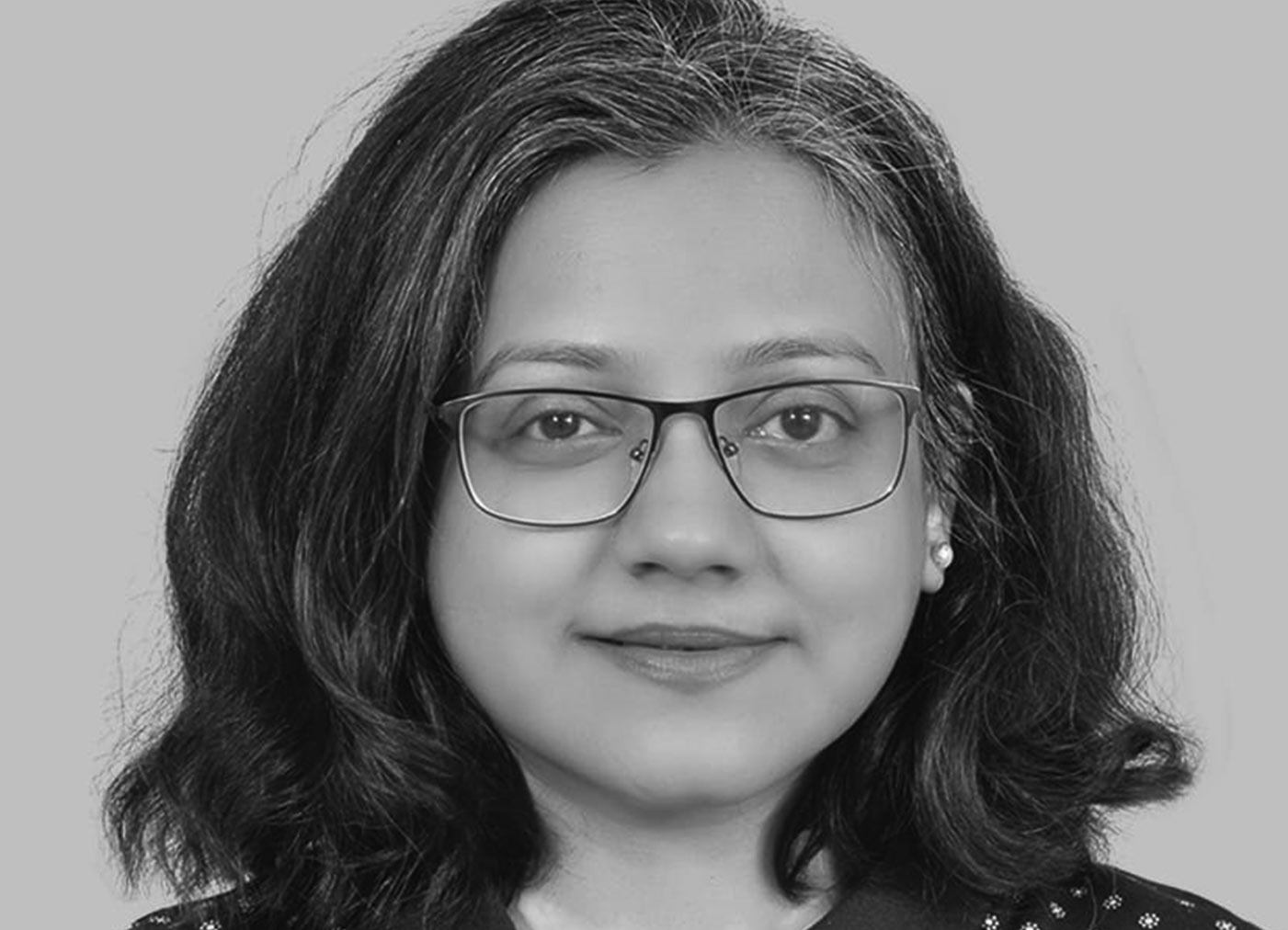
Next up, we speak with Dr. Vaishaly Bharambe, Counsellor and Medical Educator, and Founder of VB Anatomy Academy.
Vaishaly reflects on what the IWD 2026 theme means to her both professionally and personally, how her understanding of fairness has evolved with experience, and what she believes has genuinely improved for women in the workforce—and where gaps remain.

She also discusses her research on organ donation and what it revealed about women’s autonomy, the responsibility of senior leaders to move beyond policy statements, and the change she hopes the next generation of women will see in the workplace.
The theme for International Women’s Day 2026 is “Rights. Justice. Action. For ALL Women and Girls.” What does this mean to you professionally and personally?
To me, the theme “Rights. Justice. Action.” represents three essential pillars of a fair society. Professionally, it means that every woman has the unquestionable right to pursue a career, to work with dignity, and to be judged purely on the basis of her knowledge, competence, and contribution. Justice means that if she is treated unfairly in the workplace, systems must exist to address it promptly. And action means that such issues should not remain theoretical discussions—institutions must actively create environments where respect, safety, and equal opportunity are guaranteed.
On a personal level, these principles are just as important within the home and family. Every woman deserves respect, compassion, rest, and equality in her own household. Rights and justice should not end at the workplace door—they must exist in everyday life as well. Equally important is that a women must recognize that these rights are fundamental. When fairness and dignity are absent, the right action is to speak up, seek support, and stand firm in asserting one’s worth. Empowerment lies in both claiming one’s rights and having the courage to act when those rights are not honored.
What first drew you to your industry, and was there a defining moment that set your career in motion? Was there a role model who influenced you early on?
Interestingly, I entered this field almost by chance. When I moved to Pune, starting a medical practice was quite expensive, and as an MBBS doctor without a postgraduate degree at that time, I realized that the city largely supported specialists. To continue working in the medical field, I joined a medical college as a tutor in anatomy. Coming from a strong government medical college background, I took the responsibility of teaching very seriously.
Very soon, I discovered that teaching seemed to come naturally to me. Whenever I had the opportunity to teach, classrooms would fill up with students, and their enthusiasm encouraged me to explore the subject more deeply. That realization—that I had the ability to help students understand and enjoy learning—became the defining moment that set my career in motion. From there, my journey became one of continuously exploring anatomy more deeply and linking it with the surgical sciences, recognizing that anatomy forms the very foundation of every surgical specialty.
Every woman has the unquestionable right to pursue a career, to work with dignity, and to be judged purely on the basis of her knowledge, competence, and contribution.
I have also been deeply fortunate to learn from remarkable teachers throughout my journey. Dr. Aruna Mukherjee, my first Head of Department, inspired me greatly in my early teaching years. Dr. Vasanti Arole later guided me during my MD in Anatomy. Dr. Vatsalaswamy Puranam, Dr. Usha Dubhashi, and Dr. Purushottam Manvikar each shaped my thinking in different ways—whether it was clarity in teaching, the art of communication, or the deeper meaning behind knowledge and research. Rather than a single role model, I have been blessed with several mentors who influenced me profoundly at different stages of my career, and I remain deeply grateful for their guidance.
How has your understanding of fairness changed as you’ve gained experience and seniority?
Over time, my understanding of fairness has become both clearer and more realistic. Fairness, in its truest sense, means behaving without bias and ensuring that everyone who works with you or under your leadership is treated with respect and equity. As one grows senior, there is a greater responsibility to consciously practice this fairness in every interaction and decision.
At the same time, experience also teaches you that expecting perfect fairness from the world is sometimes unrealistic, because our social structures are still evolving. Especially for women who step out to build careers, there may be moments of bias or unfairness. The way to handle this is not to be discouraged by it, but to continue working with resilience, competence, and integrity. By demonstrating the values we expect from others, we slowly influence the environment around us.
Fairness, in its truest sense, means behaving without bias and ensuring that everyone who works with you or under your leadership is treated with respect and equity.
Ultimately, every woman who pursues a career is not only building her own path but also paving the way for many others who may draw inspiration from her journey. In that sense, perseverance in the face of unfairness is not just a personal effort—it contributes to a broader change for the generations that follow.
As conversations around women and work have evolved, what do you think has genuinely improved—and where do you think more attention and action are still needed?
There have certainly been improvements over the years. Today, more women are entering the workforce and more organizations are willing to trust women in positions of responsibility. Women are able to rise closer to the leadership levels of institutions, and their professional competence is being recognized far more openly than before.
However, there are also areas where greater attention is still needed. While women are working and contributing financially, the responsibilities at home have not reduced proportionately. In many cases, women today are managing both a demanding professional life and the full weight of household responsibilities, which places a tremendous burden on them. Society has encouraged women to work, but it has not fully evolved to share domestic responsibilities in an equitable way.
For true progress, the social structure must evolve alongside women’s professional growth—ensuring shared responsibilities at home, financial empowerment, and systems that support women’s health and well-being.
Another important concern is financial awareness. Even when women earn well, many still remain distant from managing their own finances, which can limit their independence and decision-making power. For true progress, the social structure must evolve alongside women’s professional growth—ensuring shared responsibilities at home, financial empowerment, and systems that support women’s health and well-being.
Recognizing these realities is important because genuine progress will come not only from women entering the workforce, but from building a society that allows them to thrive sustainably and with dignity.
Is there a project or initiative you’ve worked on related to women’s empowerment that you’re particularly proud of? What made it meaningful to you?
Yes. One area of work that I am particularly proud of emerged from my research on organ donation. During the course of that research, a striking pattern began to appear—far more women were coming forward as live organ donors compared to men. This was deeply unsettling to me, because love and sacrifice should ideally have no gender. Yet the data showed that women were repeatedly the ones donating organs to spouses, brothers, and children.
This observation pushed me to examine the issue more closely. While many donations were undoubtedly genuine acts of generosity, it also became clear that some of these cases reflected something far more troubling, situations where women were pressured into donating parts of their bodies under the socially acceptable language of altruism. In some instances, it bordered on a silent, unspoken form of domestic coercion.
I continue to speak about women’s issues because I believe that real empowerment requires honesty.
I chose to speak about this openly and eventually published these findings in an international Scopus-indexed journal. Bringing this uncomfortable reality into the academic and public conversation was extremely meaningful to me, because it challenged a narrative that society often accepts without question.
I continue to speak about women’s issues because I believe that real empowerment requires honesty. While the world often celebrates the idea that women are becoming empowered, the truth is more complex. In some sections of society, the situation is improving, but in others it may actually be worsening. Unless we are willing to acknowledge these uncomfortable truths, meaningful change cannot happen. Even if speaking about such issues brings criticism, it is important that someone is willing to speak the truth openly.
What responsibility do senior leaders have in shaping more equitable workplaces, beyond statements or policies?
Today, statements and policies about equitable workplaces are quite common, but their real value lies in whether they are actually implemented. The responsibility of senior leaders is not merely to announce policies, but to ensure that those policies are consistently applied in everyday practice. Words must be followed by action.
Senior leaders must also have the empathy to recognize when fairness is not being practiced and the courage to intervene when policies are ignored. Many workplaces already have rules designed to ensure equity, often supported by the law, but the real challenge lies in enforcing them.
What is one change you would like to see in workplaces for the next generation of women?
What I say may sound idealistic, but I believe it is the true measure of equality. The day workplaces stop asking about the gender of the person coming to work and begin recognizing individuals purely on the basis of their capability, that is the day we can say that equality has truly been achieved. As long as gender continues to be a factor in how we evaluate professionals, it simply means that there is still a mountain left to climb.
Quick Hits
A trend you are excited about, or not excited about:
One trend that truly excites me is the increasing number of women managing their own finances and investments. Financial awareness and independence are among the most empowering shifts we are seeing today.
A creative campaign or representation of women that inspired you or made you feel seen
The talks and leadership journey of Indra Nooyi have always inspired me. Her reflections on leadership, responsibility, and balancing multiple roles resonate deeply with many women who aspire to build meaningful careers.
A piece of advice that stayed with you longer than expected
My guide, Dr. Arole, once told me something that has stayed with me for life: “Dreams don’t have a gender.”