The Studio Giraffe creative director reflects on Singapore’s evolving design industry, cultural influences, and the role of client relationships in creative work.


Up next in our Singapore Design in Focus series, we speak with Tulika Sud, Creative Director at Studio Giraffe. Sud has been based in Singapore for 17 years, where she has seen the design industry grow alongside a broader investment in local design education, talent, studios, and in-house teams. She originally came to Singapore to study for her BFA at NTU’s School of Art, Design & Media.
For Sud, what distinguishes Singaporean design is the way different cultures are consciously blended into something local and unique. She also points to the diversity of Singapore’s workforce, which brings different perspectives and approaches to creative briefs and problem-solving.
That perspective also shapes how Sud approaches creative work. Rather than treating boldness as an end in itself, she emphasizes understanding the client, the brief, and the practical constraints around a project. At Studio Giraffe, that means balancing creative ideas with brand guidelines, budgets, technical limitations, timelines, and what is feasible for the client.


I think what sets Singaporean design apart is that it’s not just different cultures existing side by side here, they are consciously blended into something unique. The workforce here is very diverse as well, so you get to learn from a lot of different viewpoints and experiences – all the different ways of looking at a brief or solving a problem.
I’ve seen the understanding of and investment into design in Singapore grow tremendously in the 17 years that I have been here. Along with that industry growth, the role design plays has shifted too – it was often brought in at the end of a project, almost as decoration or polish. Now design is involved much earlier, shaping strategy itself.
There’s been a lot of effort put into building local design schools and growing talent – I originally came to Singapore to do my BFA at NTU’s School of Art, Design & Media and a lot of other schools and courses have been set up since then.
I think what sets Singaporean design apart is that it’s not just different cultures existing side by side here, they are consciously blended into something unique.
It used to feel like design and marketing here focused a lot on foreign agencies with offices here. Now there’s a bigger homegrown landscape of local studios and freelance designers, and a shift from a few big agencies to numerous smaller setups.
Clients in all kinds of industries are willing to invest in design, whether collaborating with local studios or hiring their own in-house design teams. There’s a lot of opportunity here!
We work with clients across the region, and I haven’t seen too much of a difference in Singapore versus other countries in terms of their approach to risk. I don’t think every project has to be the most bold or crazy idea if that doesn’t serve the purpose. Our specialty is largely marketing communications, which is less experimental than advertising or branding, so we aren’t always trying to reinvent the wheel.
Communication with clients is the priority, to understand where we can experiment and where we need to follow an existing direction. Long-term relationships with clients pay off too, as they can trust us to try something unconventional once they are familiar with us. Or when we have the opportunity to take on a branding project or work with a startup in an unusual space, we make the most of it!
When I first graduated with my Visual Communication degree, this was the biggest reality check for me in my first job at a local agency. In university we were free to come up with all kinds of wild ideas without really thinking about any sort of constraints. Out in the real world, reality set in quickly, with things like brand guidelines, budgets, technical limitations and timelines suddenly in the picture.
At Studio Giraffe, we work with small organisations that are still defining their brand language as well as with larger companies that have existing systems in place that we need to adapt to. We can’t let ourselves get sidetracked into trends or personal preferences and must find a way to create in a way that achieves our client’s goals and feels true to their brand, while taking into consideration what is feasible and realistic. We have to find a balance between creative, effective and practical.
The honest answer to this question is – it depends! There are a lot of variables involved in each project that we take on, and the type of client or asset we are working with generally determines what type of brief we need, so we need to stay flexible. When we work with B2B clients, or large MNCs, they usually come in with an established set of brand guidelines, so for those projects we need to start with a clear brief.
On occasion, they may have something like an internal initiative where we have more room to play. On the other hand, if we are working with an SME or a startup, then we may have the opportunity to take more risks and try something more creative. It’s also important for us to ask the client the right questions to help shape the brief.
We try to take the lead from our clients on what style of working suits them best and then tailor our approach for a smooth process that gets them the results they are after, while ensuring the process is seamless. Either approach is challenging and creatively fulfilling in its own way, whether we are trying to find a new perspective within established guardrails; or we are coming up with something entirely new.


Things are certainly changing very quickly, and we are fielding a lot of questions from clients on how they can use AI as well as how we are using it in our workflow. While some AI tools have been valuable for us in adding efficiency and simplifying repetitive or administrative tasks, there isn’t anything that can truly produce professional-quality design collateral and understand all the nuances involved (yet!).
Good designers aren’t just pixel pushers creating something aesthetic. Having said that, it’s key to stay up to date with everything that’s changing and see how we can use it to improve our offering. This was true even before the AI boom.
The key for me is to look at it as a tool that can enable us to work more effectively for our clients. AI artwork is now everywhere, but people can usually tell when something has been AI-generated versus created by a human. Good designers aren’t just pixel pushers creating something aesthetic. Having said that, it’s key to stay up to date with everything that’s changing and see how we can use it to improve our offering. This was true even before the AI boom.
Not necessarily specific to Singapore, but I think the value of soft skills is quite significant and can help you stand out. I spent a lot of time in my early career worrying about developing my technical skills, only to realise those are a lot easier to pick up, and don’t make you stand out as much as soft skills do. You can be an incredibly talented designer, but if you can’t communicate well and present your work, you lose out on a lot of opportunities.
The “boring” things like being organised and reliable can make all the difference. Clients come back because they can trust you and your processes, and that’s something you really have to earn. That’s actually where Studio Giraffe’s name came from – the giraffe is said to represent foresight and vision, by way of seeing the big picture while remaining grounded.
The ‘boring’ things like being organised and reliable can make all the difference. Clients come back because they can trust you and your processes, and that’s something you really have to earn.
The other thing to keep in mind in Singapore specifically is that the industry is relatively small and very well connected, so your reputation matters and word of mouth can bring you a lot of opportunities.
We designed a commemorative book celebrating the Singapore Institute of Technology’s journey over the last 10 years. The intention was to enable readers (whether skimming through the book or reading in more depth) to get a clear understanding of the narrative, so we used large images, quotes, fact boxes and icons to create visual interest.
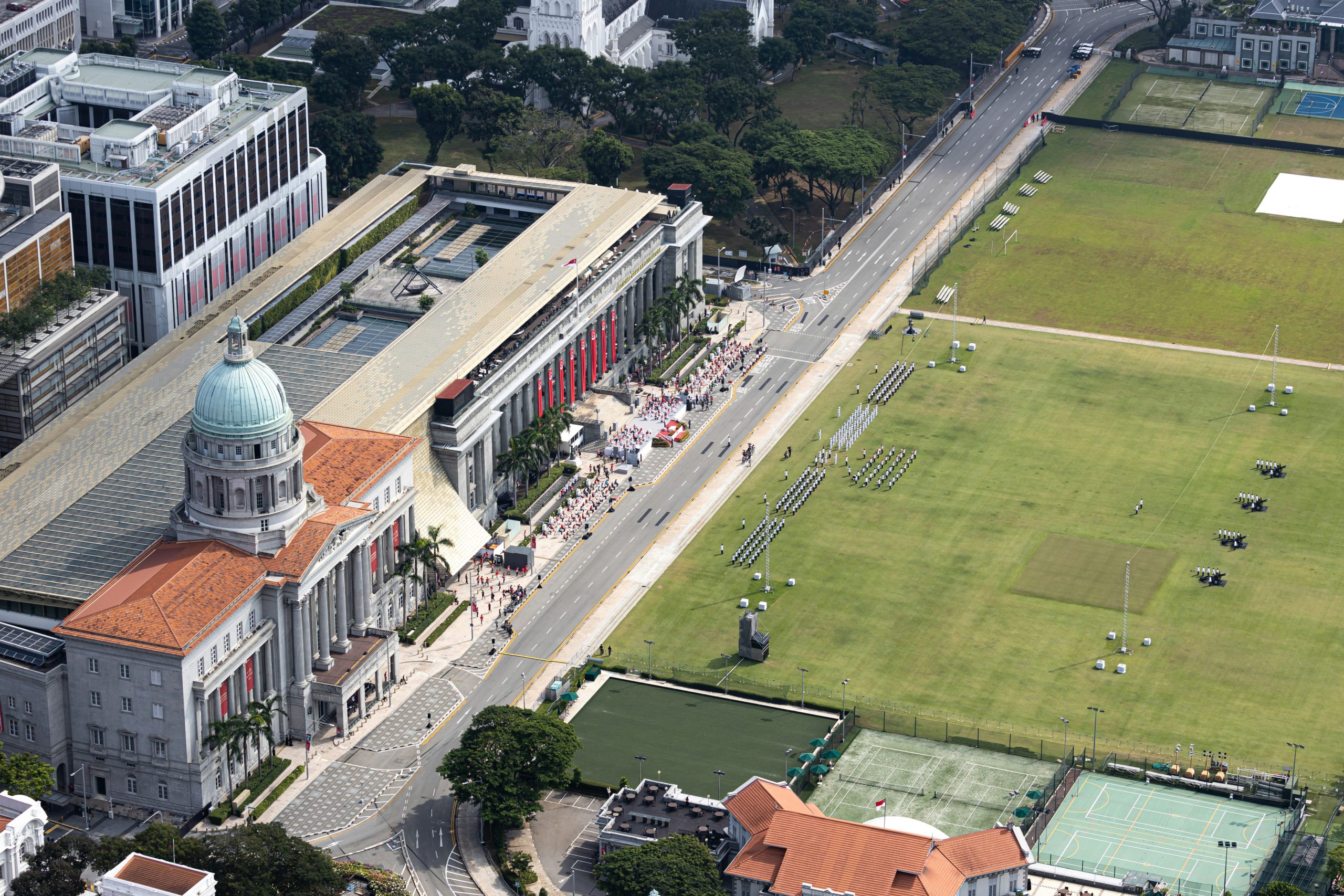
The book was launched at a Gala Dinner with Guest of Honour Prime Minister Mr Lawrence Wong, then-Deputy Prime Minister (DPM) and Minister for Finance. Having had the privilege of a university education in Singapore myself, I was grateful for this opportunity to create a book that showcases the rich history and remarkable growth of a Singaporean educational institution.
I find the multilingual typography from old handmade signs for shops to be fascinating, and it represents the diversity we have in Singapore of languages and cultures. There’s still a lot of it that you can see if you walk around areas like Jalan Besar or Chinatown, and it adds so much personality. As I said before, I think that’s very Singaporean, the idea of taking things from different cultures and remixing them into something local and unique, not just in old signage but in things like food and language too.
Lucinda Law. Her work is gorgeous, I took a watercolour class with her and it really brought me back in touch with what I first loved about art.
Singapore has an amazing selection of museums that I can spend hours at. The National Gallery is probably my favourite.


To learn more, visit www.studiogiraffe.sg
All images provided by Studio Giraffe.