


In India, design isn’t merely seen; it’s felt. From hand-painted truck art to mural-covered walls, India’s design language thrives on excess: colour, texture, and symbolism, where every surface tells a story and every detail holds meaning.
As Amit Aggarwal suggests, maximalism isn’t new to India, it’s an inheritance. This sentiment is also echoed by Sabyasachi Mukherjee, who has often spoken of India’s natural exuberance and its comfort with ornamentation.
“When I look at India, I truly believe it is a maximalist country,” the world-renowned fashion designer told The Voice of Fashion.
“Even regions like the Northeast or Kerala which are ostensibly minimalist, have spices, food, and other ideas that are maximalist.”
As designers, artists, and brands reimagine what modern India looks and feels like, this layered aesthetic emerges as one of our most authentic design signatures: bold, emotional, and deeply human.
India, however, has always found expression in a different vocabulary. Its design carries memory, warmth, and a sense of belonging deeply rooted in culture and heritage. As designers, artists, and brands reimagine what modern India looks and feels like, this layered aesthetic emerges as one of our most authentic design signatures: bold, emotional, and deeply human.
Indian maximalism isn’t a modern invention. It is a deep-seated cultural inheritance, a visual language that has evolved over millennia, where utility meets artistry. The idea of alamkara, or adornment, has long shaped how India approaches design. From architecture to textiles, from objects of worship to everyday utensils, decoration has always been a form of meaning-making.
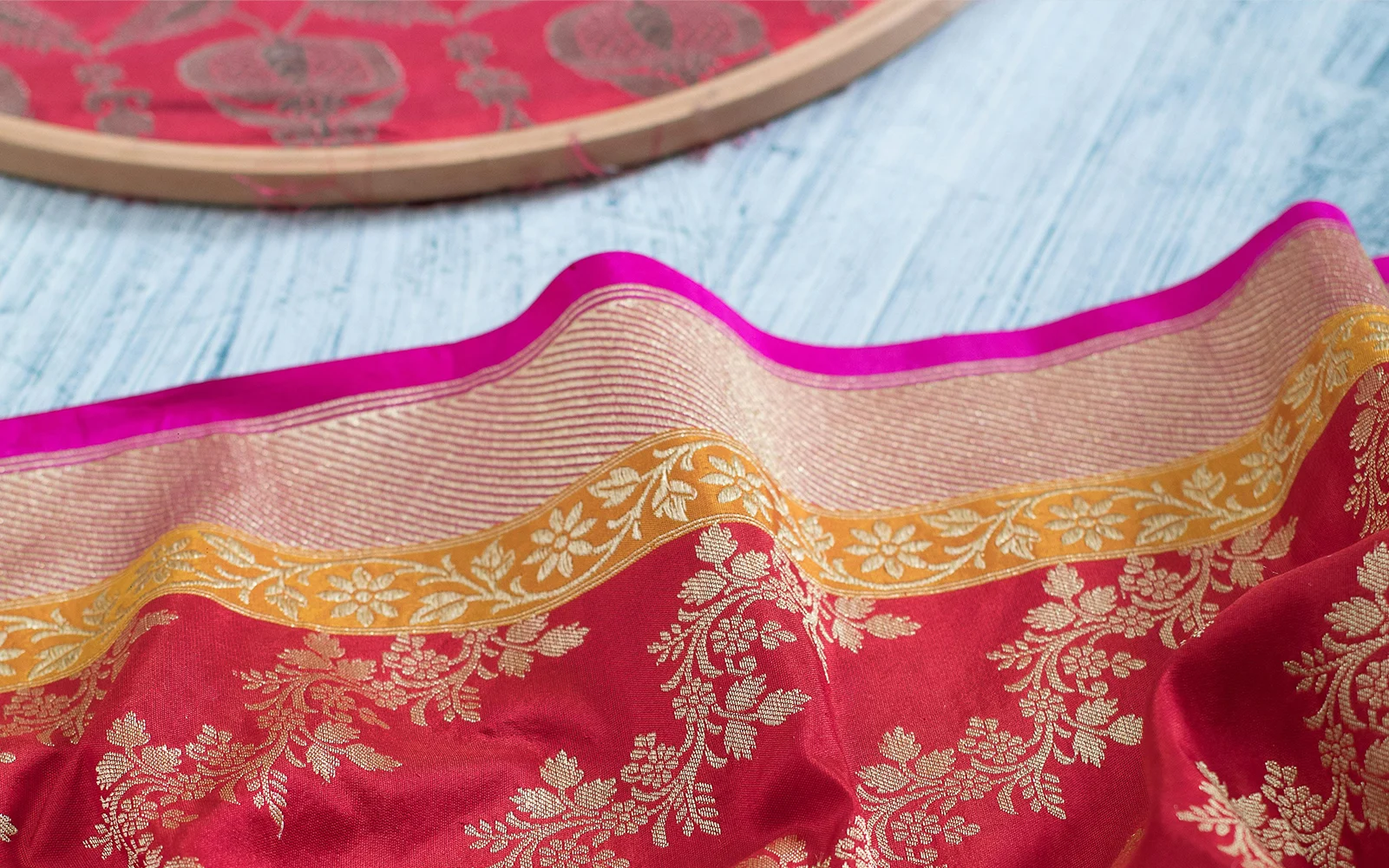
In a country as diverse as India, visual abundance becomes a unifying language. A garland at the door, a painted motif on a truck, the vivid hues of a sari – each communicates emotion and place.
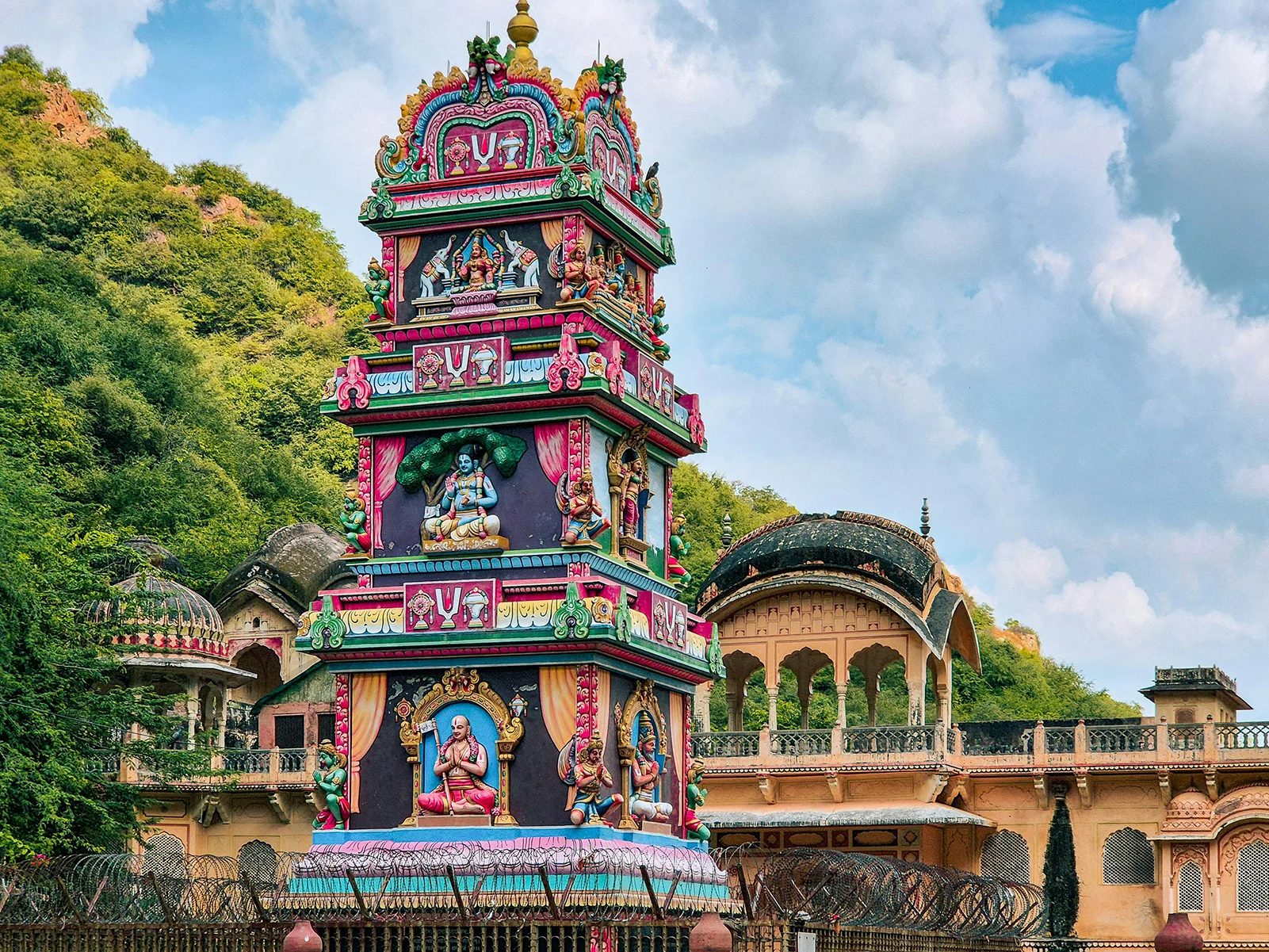
This instinct for richness runs through every layer of India’s visual tradition. You see it in the towering, intricately carved gopurams of South Indian temples, the narrative depth of Mughal miniatures, and the symbolic precision of folk art like Madhubani and Pattachitra.
It continues through the rhythmic motifs of handlooms and the visual spectacle of Bollywood, where costume, colour, and choreography come together in celebration. Across mediums and centuries, India has treated detail as devotion, a way of honouring craft, story, and spirit.

This approach to form and ornament is never arbitrary; it stems from a deeper need to express identity, belonging, and joy. In a country as diverse as India, visual abundance becomes a unifying language. A garland at the door, a painted motif on a truck, the vivid hues of a sari – each communicates emotion and place. Ornamentation is how we distinguish ourselves and each other.
Indian design finds meaning in multiplicity. It values density over emptiness, emotion over precision, and the act of storytelling over stillness. Here, ‘more’ has always been how we make sense of the world.

This instinct remains alive today, visible in local paan stores, and the temporary installations for festivals like Durga Puja and Rath Yatra. These cultural codes form the foundation of a new design language now finding expression in contemporary India.
India’s contemporary design landscape reflects a renewed comfort with visual and cultural abundance. The current wave of designers and brands across categories are not inventing maximalism but reframing it for a new context where layered expression, craft, and storytelling define modernity as much as restraint once did.
Phool, which began by converting temple flower waste into incense and sustainable biomaterials, builds its brand identity around texture and ritual. Its packaging references traditional ornamentation and cultural symbolism, translating the act of offering into a form of design.

Subko takes a deliberate, system-driven approach to visual richness. Its packaging layers multiple scripts, structured grids, and intricate typographic framing to signal geography and craft. The serrated edges, screen-printed textures, and multilingual detail on every bag or box create a tactile record of origin.

Paper Boat brings this sensibility into mass consumption. Its storytelling-led packaging, filled with soft colour, illustration, and narrative recall, demonstrates how emotion itself can function as design maximalism. Memory and meaning become the ornament.
In fashion and streetwear, brands like NorBlack NorWhite, HUEMN, and Biskit reinterpret maximalism through textile, print, and silhouette. Their work references India’s craft traditions while engaging with global aesthetics of rebellion and individuality. Together, they show how expressive layering and cultural narrative can be reimagined for a generation comfortable with both chaos and curation.

Stranger & Sons, a craft gin label, demonstrates how maximalism can coexist with refinement. The brand’s illustrated packaging depicts Indian flora and fauna with precision and humour, balancing intricate composition with controlled colour and typography. It captures the paradox that defines much of modern Indian design: exuberant yet disciplined, familiar yet new.
Design studios like Bombay Duck Designs with Tiffn and the Empowerment exhibition or Codesign with SuperYou have translated this layered sensibility into structured brand systems. Their work for clients across sectors shows that Indian maximalism can be methodical, intentional, and scalable, functioning as a design system rather than surface embellishment.
Even global brands are beginning to understand the strength of this visual language. Red Bull’s limited-edition India packaging celebrated the country’s energy and complexity through festival-inspired illustration, positioning cultural richness as a differentiator rather than a deviation from global codes.

Across these examples, what emerges is a clear shift. Indian design no longer defines modernity through reduction. Instead, it recognizes that abundance, when grounded in story and context, can communicate identity, character, and confidence with equal clarity. This visual fluency now extends beyond objects and packaging, shaping how India designs its spaces and experiences.
You don’t have to look far to find it. India itself is a living canvas. This inherited maximalist spirit isn’t confined to history; it thrives in our everyday, transforming India’s environment into an ever-evolving design canvas, from the smallest package to the grandest public space. It’s a testament to how design isn’t just an aesthetic choice but an integral part of daily life and cultural expression.

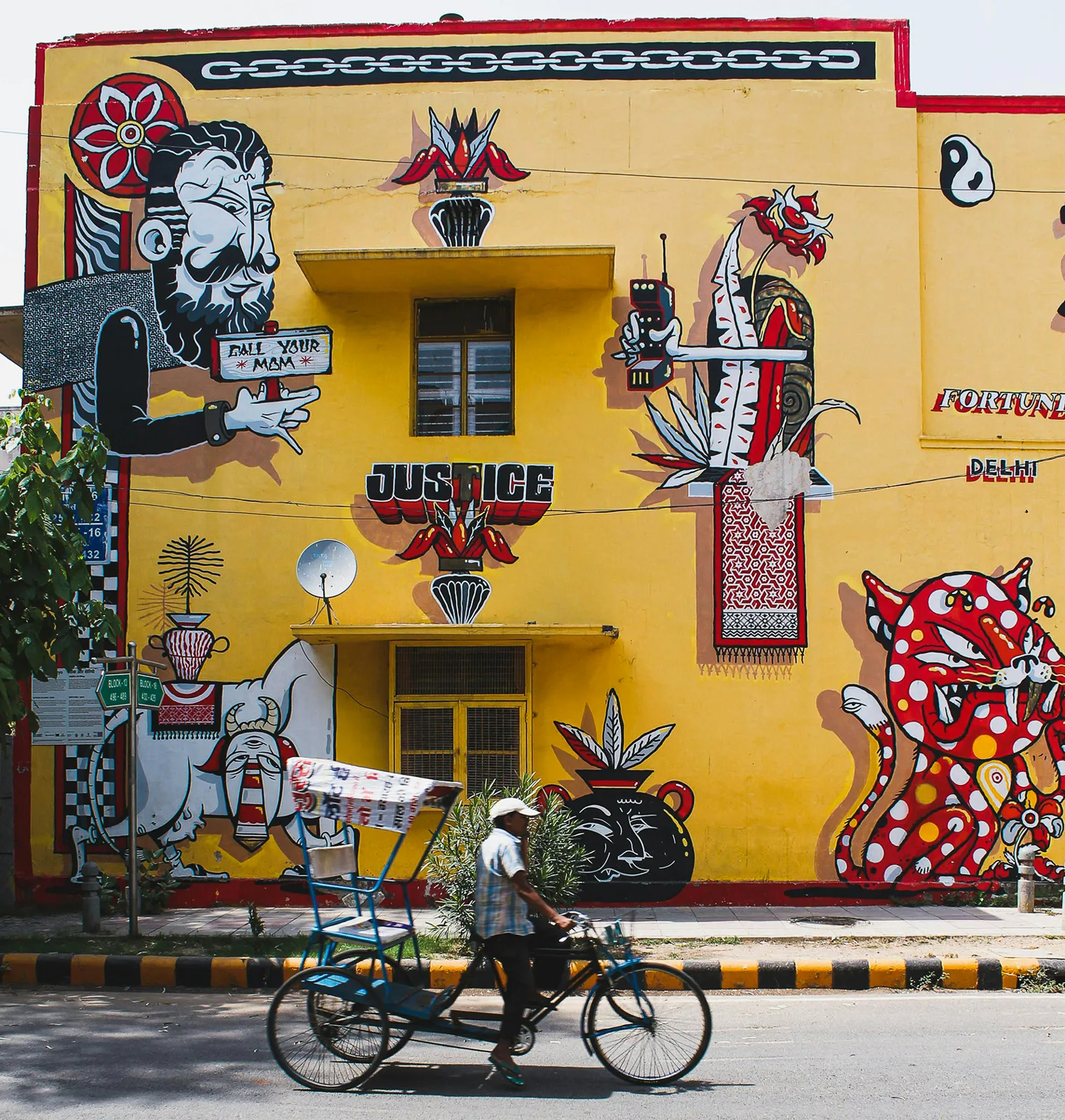
Public art projects by the St+art India Foundation have turned walls, flyovers, and industrial facades into stories that blend the local with the contemporary. Their murals use scale, typography, and cultural references to democratize art and make the city itself a living gallery. The result is a new kind of accessibility that celebrates community while transforming public space into a layered cultural canvas.
Across India, weddings continue to evolve into immersive design experiences that merge ritual with spectacle. These celebrations represent spatial maximalism at its peak, where every element – from expansive stage architecture to elaborate floral compositions is choreographed.

In popular culture, the same instinct plays out on screen and stage. The breathtaking Durga Puja pandals of Kolkata echo the visual language of Bollywood and streaming-era India. Productions like Padmaavat and Brahmāstra, or the visual drama of The Bads of Bollywood and Sacred Games, demonstrate how Indian storytelling embraces scale, pattern, and symbolism to communicate emotion. Whether through costume, set design, or visual identity, every detail works toward richness, not restraint.

This form of maximalism is democratic, accessible, and collective. It is not about luxury or excess but about expanding expression into the public realm. It allows for individuality within a shared cultural framework, turning India’s visual landscape into something dynamic, participatory, and deeply human.
As India embraces a new design language, a key question arises: can maximalism help brands truly stand out, or does it risk adding to the noise? In a world where we’re bombarded with thousands of decisions daily, design is crucial for helping people notice and remember. Brands today need to do more than just be consistently recognizable. Their assets can’t stay static; they need to tell bigger stories, adapt to different situations, and engage us across all our senses. From packaging to digital experiences, sound to motion, brand elements must now exist as part of a fluid, multisensorial ecosystem, creating memories that resonate with consumers in our busy world.
This isn’t about excess for the sake of impact. Not everything needs to be vibrant all the time. Sometimes, a bold layer, a nostalgic texture, a meaningful motif, or expressive typography and brand voices can signal as strongly as a logo.
In this landscape, assets are expected to perform harder than ever before. A colour, sound, texture, or symbol is no longer decorative; rather, they work in tandem to create recognition through rhythm and emotion. Maximalism has the potential to lend itself to this shift. When guided by structure, its visual and sensorial abundance can create versatile asset systems that are both adaptive and expressive. Each element carries its own story, yet contributes to a larger, coherent whole.
This isn’t about excess for the sake of impact. Not everything needs to be vibrant all the time. Sometimes, a bold layer, a nostalgic texture, a meaningful motif, or expressive typography and brand voices can signal as strongly as a logo. Through this art of adornment, maximalism allows brands to engage multiple senses, build memory across experiences, and move beyond consistency into connection.
Maximalism today is less a style and more a mindset. It’s a way of saying we don’t need to simplify ourselves to belong. For brands, it’s a reminder to embrace context instead of erasing it and to design with the vibrancy and messiness of the people they speak to.
As brand worlds expand and fragment, the challenge is no longer how to simplify, but how to stay alive in motion. Maximalism, when done with intention, offers that balance: a design language rooted in detail, emotion, and system. It could give brands the tools to go above and beyond visibility, to become felt, remembered, and lived.
Maximalism today is less a style and more a mindset. It’s a way of saying we don’t need to simplify ourselves to belong. For brands, it’s a reminder to embrace context instead of erasing it and to design with the vibrancy and messiness of the people they speak to.
This approach understands that meaning in India often lives in the details, not despite them. It reframes the very idea of modernity, echoing Sabyasachi’s vision of ‘The New India’ that is confident in its own aesthetic. Here, ‘more’ isn’t the opposite of modern; it’s the way we’ve always been modern.
As India’s creative voice grows louder on the world stage, its design language stands as proof of something essential: that clarity doesn’t always come from silence. Sometimes, it’s the colour, the noise, and the glorious contradiction that make us feel seen. This spirit is not just visual; it is a fundamental, unifying characteristic of the entire nation.
Sauravi is Client Coordinator and Anaihita is a Strategist at Landor in India.