The modern brand landscape is increasingly rewritten by technology — more and more by the gravitational pull of digital trends and infrastructure.
From AI-powered tools to influencer partnerships and “phygital” experiences, brands across sectors—niche and mainstream alike—are redefining how they spark awareness and deepen loyalty.
However, algorithms get blamed for the sameness. The real driver is still human. We classify ourselves and others through what we consume and share. Taste becomes orientation. Imitation becomes cohesion. And technology? It amplifies the trend— then locks it in.

Here are four trends shaping this transformation and changing how brands connect with consumers.
Digital platforms reshape brand content by exposing cultural rhythm
Social media has evolved beyond a place to post a selfie—it’s now a dynamic environment that dictates how content is conceived and consumed.
The increasing dominance of short-form video—think Instagram Reels, TikTok, and YouTube Shorts—demands that brands distill their message into visually arresting moments designed for instant impact and shareability.

A hook must land land quickly. A visual must feel familiar yet fresh. A sound must trigger memory or meme. Don’t just call it shrinking attention spans. It’s about humans scanning for social cues — fast. We’re reading signals instead of simply watching content: Does this resonate with me?
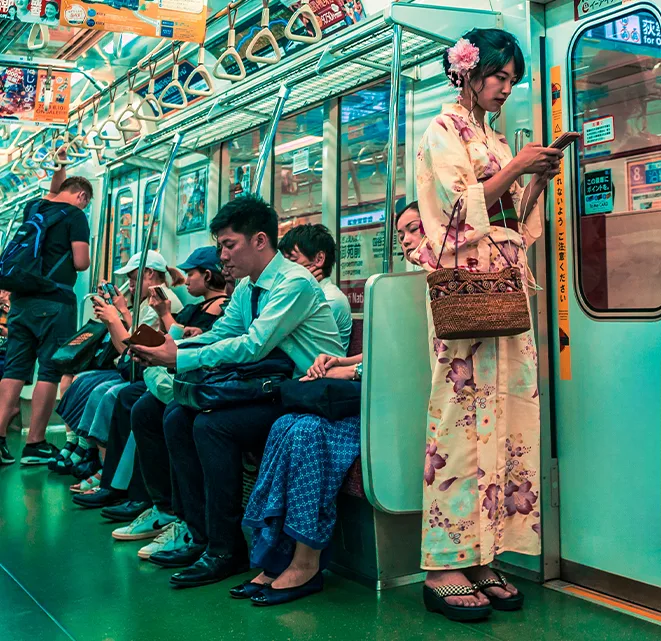
Digital-native consumers lead the charge in embracing immersive, app-driven shopping behaviors in Asia.
Take the luxury industry as an example: according to 2024 research from Tencent, over 90% of purchase decisions in China are shaped by digital touchpoints — including brand websites and WeChat mini-programs.
In fact, these online interactions now dominate the consumer journey: the same Tencent and BCG research shows that ‘brand online’ is the primary channel for stimulating interest (86%), while the WeChat ecosystem offers the influential set of touchpoints—though offline stores and events remain significant.
AI turns content and marketing operations into high-speed workflows
Artificial intelligence has graduated from pilot projects to everyday marketing operations. Generative AI tools now empower teams to rapidly prototype concepts, generate multiple creative variants in minutes, and automate localization and personalization at scale.
Take DBS Bank’s Institutional Banking Group: the bank deployed agentic AI to transform both internal operations and client-facing content workflows. The move earned them “Best Use of AI” at the DigiZ Awards 2026.
By embedding AI agents into their creative pipelines, teams can now generate and review tailored financial communications almost instantly for different client segments without manual rework.
And it’s not just finance — consumer brands and tech companies are equally reliant on AI to refine messaging and allocate media budgets dynamically in real time based on performance data.
Brands meet consumers on the platforms they already use
Strategic partnerships between brands and consumer-facing apps became an invitation to belong by merging craftsmanship with digital interactivity. These alliances help brands tap into younger, broader audiences while delivering experiences that honor the integrity of their products.
Cathay Pacific, working with Leo Singapore and Starcom, ran “Hong Kong: The Most Fun per Square Kilometer” — a social-first campaign that used TikTok and Instagram to highlight the variety packed into single neighbourhoods. Creators were challenged to explore one square kilometre, with their journeys presented as self-contained stories on TikTok and as a mapped grid on Instagram, all linked to a campaign microsite with curated itineraries and fares.
Similar models are emerging across beauty, fashion, and lifestyle, where brands team up with social apps and creator networks to build diverse activations, dissolving the line between “brand” and “platform”.
The customer journey becomes a nonlinear “phygital” conversation
The path to purchase has become a multidimensional loop. A TikTok unboxing leads to a Reddit thread, which leads to an in-store try-on. A livestreamed runway sparks Instagram commentary, which drives boutique appointments. Digital fuels desire and familiarity; physical confirms quality and cements emotional bonds.
Since TikTok Shop’s June 2025 launch in Japan, tens of thousands of merchants—including many small and medium-sized brands in food, beauty, fashion, and home categories—have begun using short videos and livestreams to sell. Around 70% of the platform’s GMV in its first year came from live streams and short videos, indicating a fast shift toward “discovery commerce” beyond traditional retail.
While livestreaming has become a standard practice for many brand activations, it isn’t replacing stores. Instead, it’s turning into the new front row— where brands host and transactions feel like conversations. Rather than broadcasting flawless sales, many now invite participation, including polls and real-time responses.
Technology has turned from a nice-to-have to a force multiplier for brand power. Used strategically, it unlocks speed and scale—all while keeping brand essence and human connection firmly at the center.