
Next in our series, we speak with the Founder and Director of Graphixstory about India’s layered design identity, the storytelling power of motion, the value of bold collaboration, and the foundations that young designers today need to thrive.
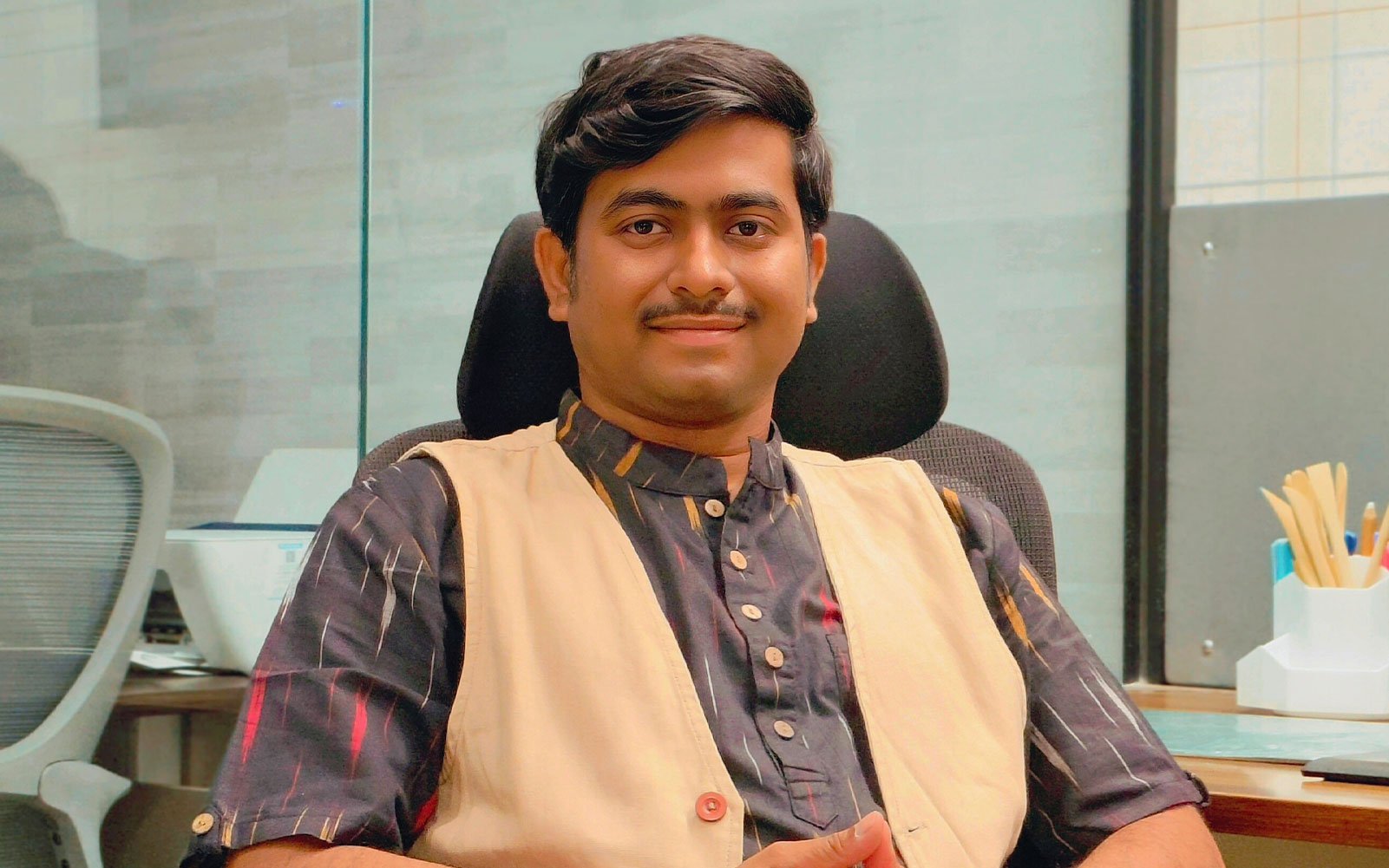

As Indian Design in Focus continues, today’s conversation turns to Surajit Majhi, Founder and Director of Graphixstory, a Kolkata-based animation and design studio known for its technology-driven creative work across 2D/3D motion graphics, stop-motion, claymation, live-action, illustration, and set design.
With a team of storytellers, artists, animators, and illustrators, the studio approaches each project with an emphasis on narrative, craftsmanship, and human-centred thinking.
In this interview, Surajit discusses the cultural forces that shape India’s design identity, the role of emotion and storytelling in animation, how client openness influences creative experimentation, why a strong brief still anchors successful work, and the shifts he sees in India’s design education. He also shares his perspective on what young designers need to understand as they enter the industry for the first time.


India’s design identity didn’t emerge overnight — it was forged through centuries of cultural exchange, shaped by conquerors, travellers, traders, and dreamers who left behind not just relics, but rhythms of thought and beauty.
Indian design often embraces organized chaos — symmetry coexists with spontaneity, order with imperfection. It mirrors the country’s rhythm — dynamic, layered, and full of surprises.
What truly sets Indian design apart is its soulful fusion of tradition, emotion, and innovation. While global design trends often emphasize minimalism, precision, or conceptual abstraction, Indian design thrives on storytelling, cultural symbolism, and sensory richness.
From the Aryans, who shaped our sacred symbols and geometries, to Chandragupta Maurya’s grand vision of empire and order — each era carved a new layer into India’s creative soul. The Mughals brought Persian grace — poetry in arches, symmetry in gardens — while the British introduced modern tools and industrial craft.
Yet through it all, India never imitated; she absorbed, adapted, and reimagined, turning every influence into her own art form.
What truly sets Indian design apart is its soulful fusion of tradition, emotion, and innovation. While global design trends often emphasize minimalism, precision, or conceptual abstraction, Indian design thrives on storytelling, cultural symbolism, and sensory richness. Every motif, color, or form in Indian design carries meaning — from the lotus (purity and rebirth) to the peacock (beauty and pride).
Indian design is rarely aesthetic for its own sake; it’s a language of belief, heritage, and emotion. India doesn’t shy away from color. Indian design celebrates bold contrasts, layered hues, and visual warmth.
This is why Indian design feels alive — it carries the DNA of centuries, the fingerprints of countless cultures, yet remains unmistakably Indian.
It tells stories, preserves roots, and reflects the pulse of a diverse, ever-evolving nation.
It’s not one story, but a million stories woven into one tapestry.
At Graphixstory, when we say we “weave dreams into immersive animations, painting narratives that linger in minds and hearts,” it’s more than a visual language — it’s our way of working.
We believe every project begins as a dream — a spark of imagination, emotion, or purpose. Our role as designers and storytellers is to weave that dream into visual form — through motion, design, and narrative that people can feel, not just see.
In practice, our process is guided by the principles of Human-Centered Design — where every creative decision begins with people, not pixels.
We believe every project begins as a dream — a spark of imagination, emotion, or purpose. Our role as designers and storytellers is to weave that dream into visual form.
We start with empathy, seeking to understand the emotions, needs, and aspirations of the audience we’re designing for. Through observation, questioning, and co-creation, we uncover insights that shape our storytelling foundation.
Our design philosophy is rooted in balance — between art and intention, technology and storytelling, culture and modernity. We don’t just create visuals; we create experiences that live in memory, where design becomes emotion, and animation becomes language.
It truly varies from client to client, but we’ve been fortunate to work with several who have encouraged us to break boundaries and think beyond convention. Such collaborations open up space to experiment with visual styles, shapes, and colours, allowing creativity to flow freely.
We’ve also noticed that startups and emerging brands tend to be more bold and open-minded, eager to explore fresh, unconventional ideas to communicate their message. That kind of creative freedom often leads to some of our most exciting and memorable work.
Before we pitch an idea, we don’t just prepare visuals- we take the time to sit with our clients and understand their mindset — how they think, what they value, and how open they are to exploring new creative directions. We believe that every great collaboration begins with a shared wavelength.
If the vibe aligns, we dive deep into the design process together — brainstorming, experimenting, and co-creating to discover fresh, innovative solutions. That connection matters to us, because at Graphixstory, we believe that true creativity emerges where energy, trust, and imagination meet.
A well-crafted creative brief is the foundation of every successful project. It allows us to clearly understand the problem statement, the client’s preferences, the intended communication, and the target audience. It also provides insights into the client’s existing design framework, its flexibility, and adaptability. In many ways, a thorough creative brief is like a precise diagnosis before prescribing treatment — it ensures the solution is targeted, effective, and meaningful.
Designs often fail or underperform not because of a lack of creativity, but because of poorly written briefs or the absence of one. At Graphixstory, we thrive when given the freedom to explore design and animation styles, add subtle layers of detail, or include those small elements that become the “cherry on top.”
We also value when clients allow the time necessary for a design or animation to reach its fullest potential. After all, great creativity is not just about talent — it’s about thoughtful execution, precision, and care.


The Indian education system is still evolving, but it’s certainly moving in the right direction when it comes to nurturing young talent for the creative and design industries. However, there’s still much ground to cover.
Creative subjects and design-oriented courses should be made accessible across a larger number of universities, not limited to a select few. Design education must be democratized — so that creativity is not seen as a privilege, but as a path available to all who wish to explore it.
We also need to encourage both parents and students to view design as a viable and respected mainstream career. This can happen only through greater awareness, exposure to real-world industry insights, and mentorship from professionals who’ve lived the creative journey.
Design education must be democratized — so that creativity is not seen as a privilege, but as a path available to all who wish to explore it.
Moreover, I believe that the principles of Design Thinking should be part of every student’s learning — regardless of their field. Because design isn’t just about aesthetics; it’s about problem-solving, empathy, and innovation. When people learn to think like designers, they learn to look at the world not just as it is, but as it could be.
With more young professionals embracing freelancing as a career path, it has become essential for our education system to integrate best practices of freelancing into the curriculum. Students should be equipped not only with creative skills but also with the professional discipline required to navigate the real world of independent work.
Equally important is awareness about copyright laws and intellectual property rights. These are not just legal concepts — they’re vital tools that protect creators and their work. By educating students on these principles early on, we empower them to safeguard their creativity, uphold professional ethics, and build sustainable careers with confidence.
The very first lesson for anyone entering the creative industry is to understand the difference between art and design. While art is an expression of self, design is about solving problems and creating experiences for others.
Dedicate the initial years to learning and skill development. Keep your mind open, welcome feedback, embrace constructive criticism, and seek out opportunities for collaboration. Never stop exploring — always find a way to learn a new skill or software, because growth in this field is continuous, and curiosity is your greatest asset.
There are many projects that are close to our heart for different reasons. I’ll love to share a few of them.
Mogum’s Dayout (Tygr app explainer): This project holds a special place in our journey — it was the very first project of Graphixstory. To our surprise and delight, it was featured among the best in the Motion Graphics category on Behance within just a few months of its release. We hadn’t seen that coming, and it remains one of those early moments that reminded us why we do what we do.
Mass Snap for Navratri (Snapchat): This project (one of our early projects) also holds a special place in our heart.
Discover India with Etsy: We had the opportunity to collaborate with Etsy India on their campaign #DiscoverIndiaWithEtsy, creating the announcement visual that celebrated some of India’s most eminent traditional art forms from across the country.
For this project, we designed a 3000×4000 px artwork, which was then carefully sliced into 12 individual 1000×1000 px squares to form a cohesive Instagram grid layout on Etsy India’s page.
It was a truly enriching experience — not only to work with such a creative brand, but also to discover and appreciate the diversity and heritage of India’s art forms along the way.
Man Vs Money by LLA (episode 1): Labour Law Advisor (LLA) is one of India’s leading finance-focused YouTube channels, with over 5.38 million subscribers. We had the pleasure of collaborating with them to craft the animated visuals for their video series called Man Vs Money.
Among all the episodes, Episode 1 holds a special place in our hearts — for its storytelling, and for the immense love, care, and attention to detail we poured into every element: the colours, compositions, characters, and animation.
When the video was released, it received an overwhelmingly positive response and love from viewers — a moment of joy and validation that continues to inspire our creative journey.
Tajmahal, Hawamahal (Jaipur), Jaipur city palace, Cave murals of Ajanta and Ellora
It’s Suresh Eriyat, founder of Eeksaurus Studio
It’s my city, Kolkata, and its cafes, museums, art galleries, art fairs, street arts, murals and its people.


To learn more visit graphixstory.com
All images provided by Graphixstory