The Creative Director of FACTORY discusses Singapore’s design identity, how the role of design has evolved alongside the nation, why AI makes human taste and judgment more important, and more.


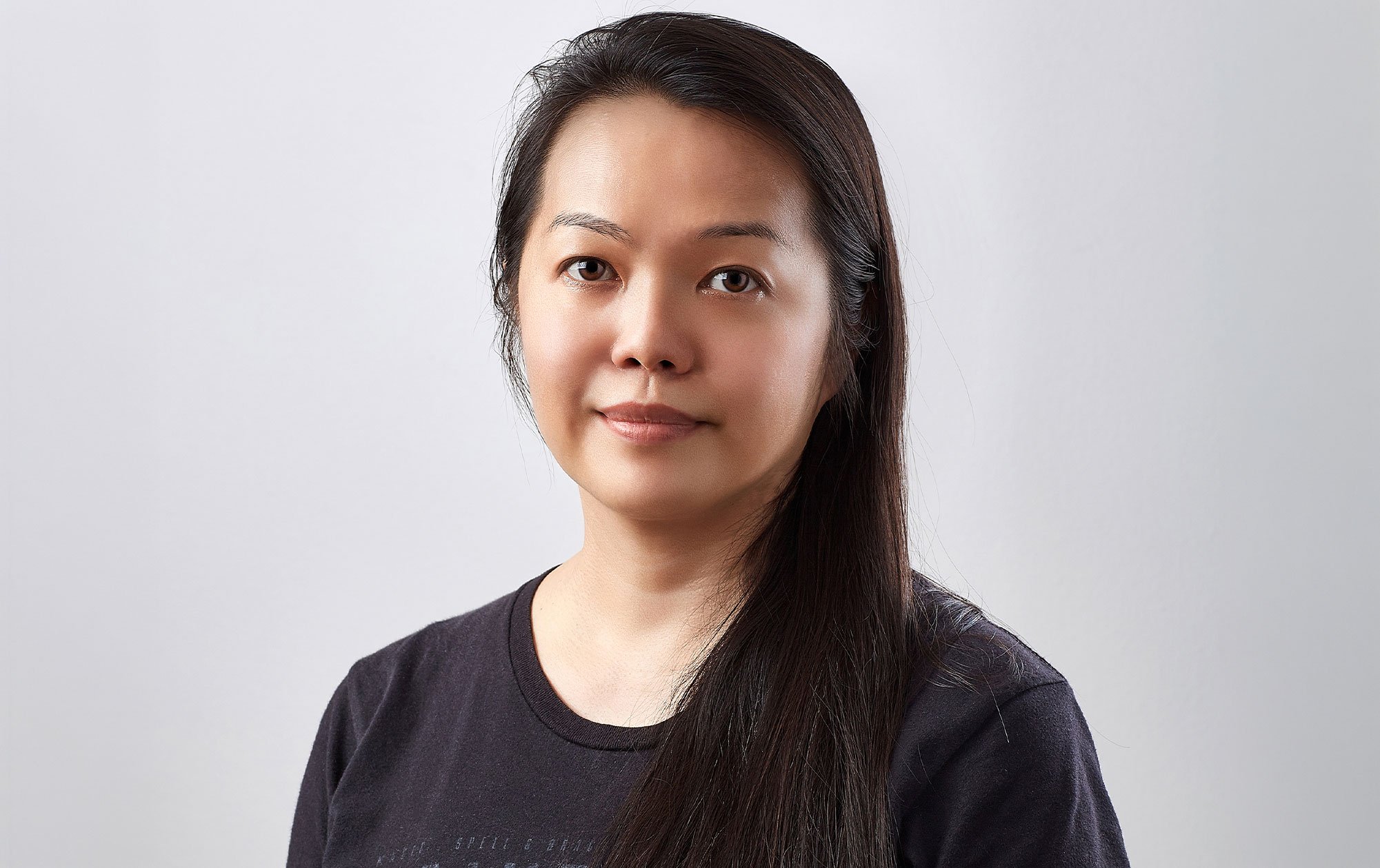
Up next in our Singapore Design in Focus series, we speak with Roy Wang, Creative Director of FACTORY, a multidisciplinary art and design studio based in Singapore, Shenzhen and Malaysia.
Wang says he is not sure he knows of a single, definable Singaporean aesthetic. Instead, he sees the country’s design as shaped by the same conditions as Singapore itself: small, dense, multicultural and highly connected with the world, with very little room for error. As a result, he says, its designers tend to be pragmatic and adaptable.
In our interview, Wang reflects on how design’s role has evolved alongside the nation, and why its real value emerges when designers are involved from the beginning, helping to define the problem rather than simply decorating the answer.
He also discusses working with clients who become cautious when work starts to feel unfamiliar, the three questions FACTORY often asks at the start of a project, and cross-contextualisation – taking a principle from one context and applying it somewhere unexpected.
Regarding AI, wang views it as simply a new tool, one that has made human taste and judgment even more important. He also shares what he wishes he had learned in school: that being a good designer and building a sustainable design practice are two very different skill sets.


To be honest, I am not sure I know of a single, definable Singaporean aesthetic. I’ve always felt that Singaporean design is shaped by the same conditions as Singapore itself. We are small, dense, multicultural and highly connected with the world with very little room for error.
As a result, our designers tend to be pragmatic, adaptable and conscious that design ultimately has to work. At our best, that discipline translates into clear systems that are carefully crafted and infused with a certain quiet wit.
I’ve always felt that Singaporean design is shaped by the same conditions as Singapore itself. We are small, dense, multicultural and highly connected with the world with very little room for error.
I think something we are also good at is translating between cultures. In a way, we are so globally fluent that the work sometimes loses its own accent.
The Singaporean design I find most interesting does not necessarily reject practicality, but uses it as its base structure, bringing in humour and a sense of place as layers. This makes it globally understandable, but it could only have come from here.
Singapore itself is in fact a nation by design!
In the early years, design was often pragmatic and infrastructural. It is ‘invisible’ in the sense that it was largely pragmatic and not showy. You could see in how our city was built, in public housing, transport, way finding, public communication and the systems needed to help a very young country like ours function. At least that was the case I recalled in my childhood.
One challenge still remains. Design is sometimes brought in too late, after the important decisions have already been made, and designers are simply asked to make something look better.
But as our economy matured, I felt design became an increasingly important commercial tool to help businesses compete and project confidence internationally. Today, its role is much broader.
One challenge still remains. Design is sometimes brought in too late, after the important decisions have already been made, and designers are simply asked to make something look better. I feel that design’s real value emerges when designers are involved from the beginning, helping to define the problem and shape its narrative rather than simply decorating the answer.
Yes, although the willingness is not always linear. Clients often approach us asking for something bold, then become understandably cautious when the work starts to feel unfamiliar. I do not see that as a criticism. They understand their business far better than we do, they have bosses to report to, and they are the ones carrying real business and reputational risks.
Our role is to make the unfamiliar feel considered. We connect every bold choice to a clear idea, business objective or audience insight. It is superfluous to ask a client to simply “be brave”.
By prototyping extensively, this allows our clients to experience the idea rather than having to imagine it from a presentation slide.
We need to show them why a direction belongs to their brand, and from there, it would feel like the idea was all they ever wanted. By prototyping extensively, this allows our clients to experience the idea rather than having to imagine it from a presentation slide. Innovation becomes easier to embrace when it has a reason.
Those definitions give us a useful starting point, but they are not a hard boundary. One of our core design principles is the idea that true creativity recognises that there are boundaries, but makes it feel like these boundaries never existed.
Design gives art structure and a way into the audience through messaging. Art gives design emotion, ambiguity and the ability to stay with someone beyond its immediate function. When the two work together, communication can be both clear and memorable.
At the beginning of a project, we often ask three questions: What must people understand? What should they do? What do we want them to feel? The first two protect the function of the work. The third prevents the solution from becoming merely practical.
One of our core design principles is the idea that true creativity recognises that there are boundaries, but makes it feel like these boundaries never existed.
This is especially important because many FACTORY projects move across identity, print, digital, exhibition and physical space. We are not simply placing a ‘brand’ onto different surfaces. We are trying to create one coherent experience across all of these touch-points. For me, a project succeeds when the message lands through a lingering experience.
We listen, research, define the real problem, understand the audience and make prototypes. What changes is where we look for answers and what we choose to prototype.
A method our agency often uses is called cross-contextualisation. It means taking a principle from one context and applying it somewhere unexpected.
For a branding project, we might prototype language, identities and visual systems. For an exhibition, we study movement, sightlines, scale, sound and material. For a digital experience, we focus on journeys, interactions and what people need at different moments.
A method our agency often uses is called cross-contextualisation. It means taking a principle from one context and applying it somewhere unexpected.
For example, if we were asked to design a new teh peng (our local ice milk tea) brand, which by nature is a drink of comfort for many Singaporeans, we might study a totally different product like a sofa, which is also an object of comfort for most people.
We will consider how that quality in the sofa could be translated into the cup, space, service or visual language. We are not copying the appearance of the sofa. We are translating the underlying experience. Perhaps, we will even design the best sofa to enjoy the teh peng from!


I’d like to think that since the beginning of time, it has been Man with tools versus Man with tools. For us, AI is simply a new tool we have at our disposal.
We use it for research, early visual exploration and prototyping. It shortens the distance between an idea in my head and something the team or client can respond to. That has made our workflow faster and more iterative.
At the same time, AI has made human taste and judgement even more important. When almost anyone can generate a polished image, looking good is no longer enough to distinguish good design. Context, editing and the ability to build a coherent experience across many touch-points become more valuable.
Speaking from the point-of-view of the founder of a design agency, I wish I learnt in school about how being a good designer and building a sustainable design practice are two very different skillsets
Design school trained my eye and my craft, but it did not really prepare me for scoping, contracts, cash flow, hiring, managing expectations or simply knowing when to walk away from a bad piece of business. You can create brilliant work and still run an unhealthy business. After all, no one owes you a living for what you love.
Design school trained my eye and my craft, but it did not really prepare me for scoping, contracts, cash flow, hiring, managing expectations or simply knowing when to walk away from a bad piece of business.
Singapore is also an extremely small market, so reputation travels quickly. How you work with people can matter as much as the final work. To have the emotional intelligence of being able to communicate an idea without becoming defensive are all part of being a designer.
I’ve also learnt that not every project has to become a portfolio piece. Some projects keep the lights, some teach you something, some open doors and some are simply opportunities for ground-breaking design work. Longevity comes from knowing the difference without losing your curiosity along the way.
The project that changed FACTORY’s trajectory was probably ADM Show 2020 that we did for NTU’s School of Art, Design & Media (ADM). When the pandemic made a conventional graduation exhibition impossible, we had to find another way to present the work of 160 graduating students.
We created a hybrid experience comprising an interactive digital exhibition and the physical ADM Travelling Show, which brought the students’ work directly to leading creative practitioners and potential employers.
The travelling show received the Red Dot: Best of the Best in 2021. It was our first time receiving the Red Dot Design Award’s highest distinction, and it genuinely put FACTORY on the international map. More importantly, it proved that a major constraint could become the starting point for a more inventive and emotionally engaging experience.
The project also had a personal resonance because ADM was my alma mater. This made ADM 20: Still Ahead of the Curve especially meaningful when we returned years later to design a publication which commemorates the school’s twentieth anniversary.
Built around interviews with alumni, faculty and staff, the publication unfolds into a single 11.4 metre accordion, becoming both a book and a physical timeline of the relationships formed there.
Another project close to our hearts is called Write a Christmas Card, our long-running, self-initiated campaign that is now in its 15th edition, encouraging people to send handwritten notes to someone they care about during Christmas. Each edition challenges us to transform the humble card into something playful and unexpected.
Hearing that people kept the cards, displayed them at home or were inspired to write to someone reminds me that design can create small but meaningful human gestures.
More recently, Dreams of Santa Paws at Millenia Walk brought Meowly, a character from our agency’s artistic practice into a large public space. Through kinetic light sculptures, the meowly-go-round and communal seating, we created a playful festive world that encouraged people to pause and spend time together.
Seeing children and adults interact with something that began as a personal character was very special. It also captured the space between art and design that FACTORY has always explored.
The Singapore Pavilion at the 58th Venice Art Biennale in 2019 was another important international milestone.
Together, these projects represent different kinds of impact: recognition that changed our trajectory, opportunities created for young designers, personal ideas entering public life, and small acts of connection made possible through design.
I really appreciate the visual language of our older HDB estates, especially the tiled block numbers, mosaic details and common area furniture and wayfinding. They were created to solve ordinary problems, but together they form something practical and unexpectedly characterful. In fact, I made a microsite many years ago based on the design of my own HDB block.
Theseus Chan. I have been inspired by his work since young, and how he has shown that graphic design can be both an experience and a provocation.
Running along Singapore’s park connectors, especially around Pandan Reservoir near my home. There is something magical about being beside such a large body of water. The rhythm of running allows my mind to space out, and that is often when I achieve clarity in my thoughts and ideas.


To learn more, visit factory1611.com
All images provided by FACTORY