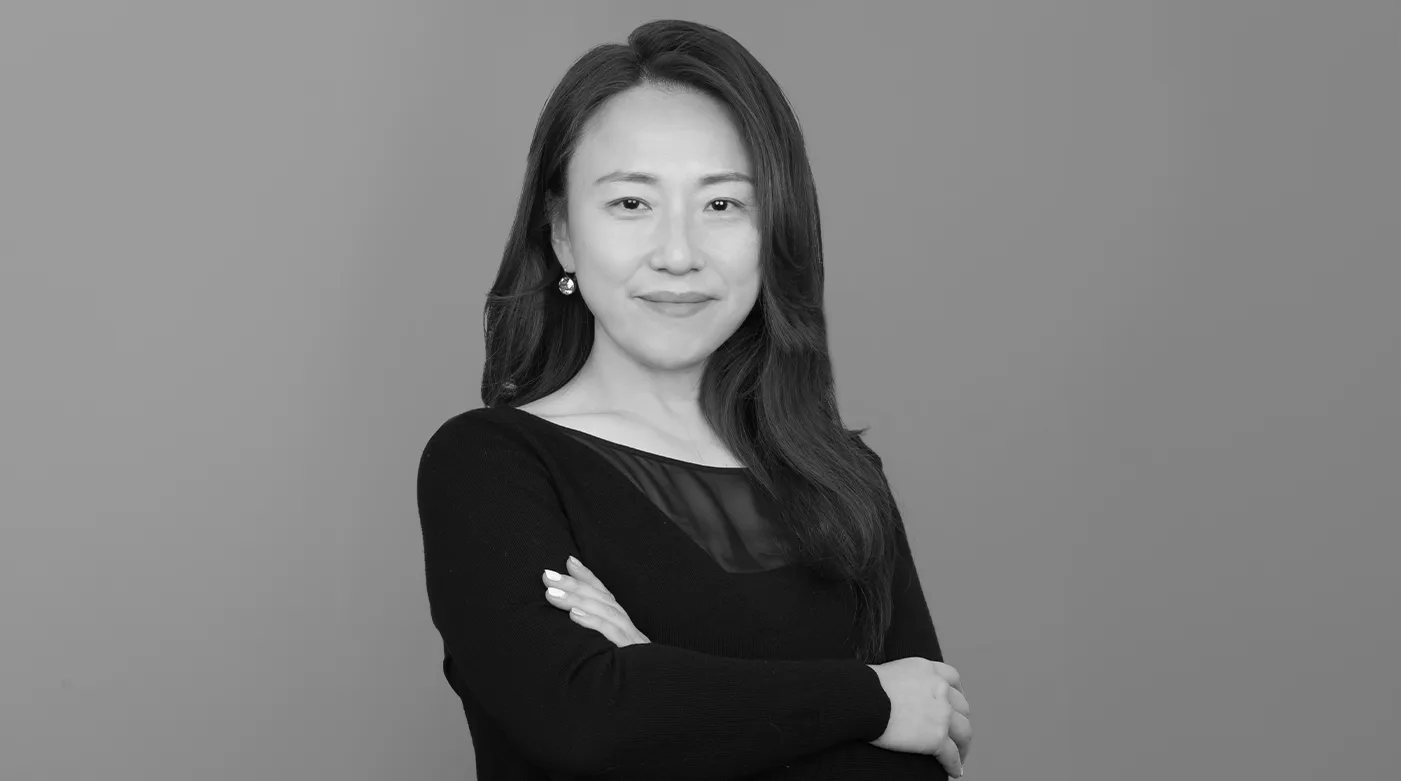

Part one of a conversation with the Seoul Design Foundation’s Sang Mook Rhee about the foundation’s impact on Seoul’s design scene, Korean design’s evolution, and Dongdaemun Design Plaza’s role as a cultural and creative hub.


Dongdaemun Design Plaza (DDP) is a striking architectural icon in Seoul, South Korea. Designed by renowned architect Zaha Hadid in collaboration with Samoo, this neo-futuristic landmark has become a centerpiece of the city’s vibrant Dongdaemun district.
Its fluid, organic form stands in stark contrast to Seoul’s traditional skyline, making it a focal point of the dynamic Dongdaemun district and serves to solidify Seoul’s position as a global fashion and design hub.
Much more than just an aesthetic marvel, DDP serves as a multi-functional space. Across its 86,574.7 sq meters of floor space, it houses fashion showrooms, exhibition halls, and public green spaces.
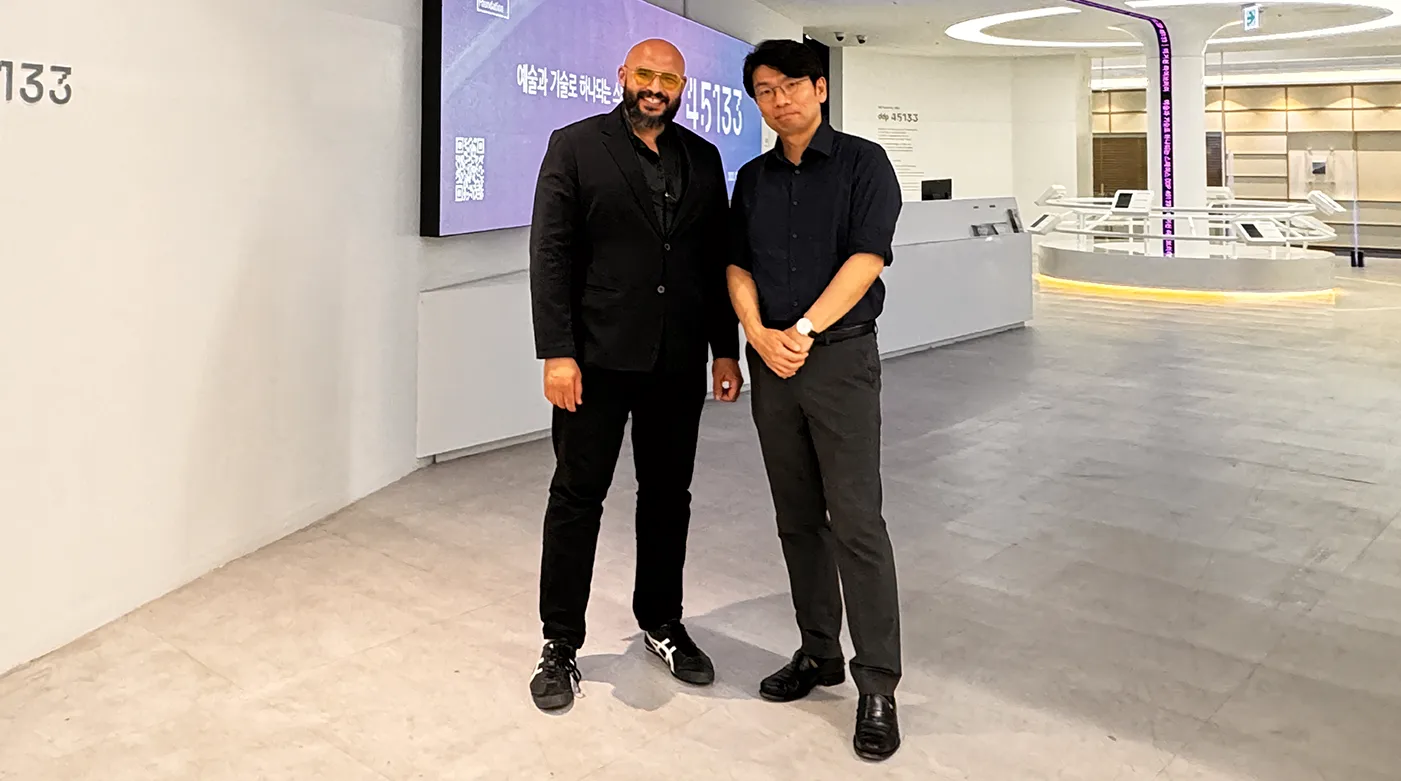
The following interview took place at the Dongdaemun Design Plaza (DDP) in Seoul, South Korea. Ibraheem Youssef, a Canadian design professional, speaks with Sang Mook Rhee, Director of the Management Division at the Seoul Design Foundation, and his team.
They discuss the foundation’s impact on Seoul’s design scene, Korean design’s evolution, and the DDP’s role as both a cultural and creative hub. (Read part 2)


Ib: I’d like to start by saying it’s an honor to be in conversation with a city that cares deeply about the development of the field of design. I’ve been following the evolution of the design scene in Seoul and the Seoul Design Foundation, and it always delivers inspiration and insights.
To lay the groundwork for understanding the Dongdaemun Design Plaza (DDP) and the Seoul Design Foundation, I feel it would be beneficial to begin by examining the broader context in which they were both conceived. How would you characterize the impact of design’s evolution on the daily lives of Koreans since the Korean War?
Rhee: The first aspect is the promotion of industry, the industrial viewpoint. In the beginning, we focused on manufacturing, hand manufacturing specifically. But, given that we don’t have many natural resources within Korea, we needed to focus on other things like design or creativity, which both have to be founded on some kind of cultural assets, right? And that’s where utilizing design became a good channel for us to strengthen our competitiveness.
Design has led the second, or third wave of industrial development in Korea. After the war, we needed to re-establish and rebuild all of our cities. And that’s where design came in.
Of course, at the first stage of the reconstruction, the level of design was very poor, but at least we had acknowledged the importance of design at that point. With that in mind, we started to develop our design industry, sensing its necessity in improving the quality of things like the urban landscape, society, and environment.
“We envisioned the Seoul Design Foundation as an engine of sorts, to speed up the rate of design adoption in the public sphere. As a catalyst to upgrade the environment of normal citizens. We aimed to utilize design to achieve a higher rate of satisfaction for the citizens of Seoul.”
When it comes to Public Design, there’s the Industrial & the Landscape, two channels of design that have been very important for us to develop. The Seoul Design Foundation, which was established in 2009, was created to help us achieve two main objectives. Firstly, the promotion of industrial design and the design industry as a whole.
Secondly, we envisioned the Seoul Design Foundation as an engine of sorts, to speed up the rate of design adoption in the public sphere. As a catalyst to upgrade the environment of normal citizens. We aimed to utilize design to achieve a higher rate of satisfaction for the citizens of Seoul.
Creating an entity that would enact these policies was a necessity, a bureau or departmental division of sorts that’s easily accessible to the average Seoul citizen. But, within the realm of politics, things tend to change, whether it’s the arrival of a new mayor that wants to scrap all of the previous policies of the previous one, or policies that are favoring specific trends with regards to accessibility to funds.
Ib: Ahh yes, politics, sometimes easier said than done. Which makes me wonder how a massive undertaking such as the DDP managed to get greenlit, and now that I think further about it, it must’ve been an uphill battle to get a project of that magnitude approved.
Rhee: It was indeed initially. There were many criticisms and concerns with the creation of DDP. Mainly surrounding the fact that it’s a huge infrastructure that required an equally huge investment. To achieve that investment, we needed the backing of the design industry and all the expertise, credibility, and experience it had to offer.
“We began by focusing on small-scale projects, such as improving playgrounds, updating urban lighting, and creating multilingual signage with consistent colors and fonts to address Seoul’s complex urban landscape.”
Furthermore, when it came to creating a sustainable entity, our primary mission was to prepare for the conception of this unprecedented building that aims to represent so much.
One of our goals was to aid the Seoul Metropolitan Government in making this design concept a reality, and it’s through our frequent communication that we helped them create and manifest design-centric policies within the city of Seoul that eventually, helped the general public have a more well-rounded understanding of the value of design, which ultimately paved the way for the realization of DDP.


Ib: Are there any other instances where design has been strategically integrated into public policy to enhance the lives of Seoul citizens?
Rhee: There are indeed numerous examples. For instance, we began by focusing on small-scale projects, such as improving playgrounds, updating urban lighting, and creating multilingual signage with consistent colors and fonts to address Seoul’s complex urban landscape.
This included designing signs and signboards for the numerous small shops lining the streets. These initial endeavors served as successful case studies, demonstrating the value of utilizing design in public spaces and building support for larger-scale projects, such as the significant investment in the Dongdaemun Design Plaza.
Ib: The gradual approach, definitely a fan. Starting with smaller, citizen-centric projects to build momentum and trust. Building on that, what would you say is Seoul’s design advantage on the global stage? What unique elements or strategies elevate its design influence beyond its borders?
Rhee: Seoul’s unique advantage in global design lies in its ability to seamlessly blend tradition and modernity. Unlike cities that are mainly dominated by centuries of intact ancient history, such as Rome or Paris -which they can easily rely on- Seoul in contrast, was largely re-built from scratch after the war.
The landscape here is characterized by a juxtaposition of remaining historic sites, surrounded by modern skyscrapers, creating a dynamic environment where diverse experiences coexist. Visitors can spontaneously encounter both the ancient and the contemporary, a harmonious blend that is a hallmark of Korean design.
“Our core purpose is to enrich the lives of Seoul’s citizens by cultivating a vibrant design culture and championing the growth of the local design industry.”
This coexistence is seen, for example, in how we structured our programming approach at DDP, from being a stage for K-Pop, such as the Hunter music awards, to showcasing traditional markets such as the Dongmyo market. It’s a fusion evident everywhere from signage to video design, and beyond. This ability to synthesize seemingly disparate elements reflects the marriage of Korea’s rapidly evolving industry and its rich cultural heritage.
Korean design’s power, then, is not merely aesthetic in nature, but more so in its embodiment of a cultural dynamism that embraces both tradition and innovation.
Ib: The duality, this harmonious coexistence of “Then meets Now,” sets Korean design apart on the global stage. This is the Korean advantage.
Rhee: Yes, exactly. The Korean industry has experienced a very rapid development, one that was fueled by a collective power and united energy. And our culture, in turn -like our industry- has also experienced that change and development as well.
So, in a way, we are compelled to maintain and invest in a very diverse set of cultural assets and spectrums, whether we’re talking about those overseas or from a domestic point of view. Think of Industry and Culture as two special parents, and their marriage resulted in a very special child called “design.” That is the uniqueness of Korean Design: it’s traditional and it’s modern, it’s diverse and it’s specific. Like the spectrums of color.
There’s a very strong power that can be acquired from this rapid change and development, which can lead to a specific and unique experience and fresh points of view.
“It’s an inhale and exhale of everything design, in a way, and at the heart of it all is our belief in the value of cultural dialogue.”
Ib: I’d add that as a non-Korean admirer of Korean culture and design, I see an additional, unique aspect. Korean design strikes me as remarkably experimental and unafraid to push boundaries.
This willingness to try new things is evident not just on a global scale, but even within the Asian context. I feel that Korean design often seems to be more adventurous and innovative. It’s a willingness to experiment, even if it sometimes leads to less successful outcomes, that truly sets it apart. This courage to constantly seek out the “new” is, in my opinion, a defining characteristic of Korean design.
Rhee: Well, one maybe could have labeled such an attitude in the past as “reckless,” but I would define the current Korean attitude you speak about as more of an “invincible” one. No fear anymore.
Ib: I love that attitude; it sure is contagious! Could you elaborate on the Seoul Design Foundation’s objectives, both within the national context of Korea and on a broader global scale?
Rhee: While the Seoul Design Foundation, as an integral part of the Seoul Metropolitan Government, is deeply rooted in local initiatives, it’s important, I believe, to mention that our influence and aspirations extend far beyond the city’s boundaries.
“We envision the Seoul Design Foundation as a dynamic bridge, connecting the world to the unique strengths and competitive spirit of Seoul’s design landscape.”
Our core purpose is to enrich the lives of Seoul’s citizens by cultivating a vibrant design culture and championing the growth of the local design industry. This is achieved through a diverse range of programs and initiatives that seek to elevate the urban landscape, empower designers, and inform the public about the transformative power of design.
However, our ambition doesn’t rest solely on local achievements. We envision the Seoul Design Foundation as a dynamic bridge, connecting the world to the unique strengths and competitive spirit of Seoul’s design landscape. This involves not only sharing our innovative design solutions but also actively seeking inspiration and knowledge from international best practices.
By fostering this reciprocal exchange of ideas and expertise, we believe we can contribute to the global advancement of design while simultaneously enriching and diversifying Seoul’s own design ecosystem.
It’s an inhale and exhale of everything design, in a way, and at the heart of it all is our belief in the value of cultural dialogue.
Ib: From the perspective of our design studio, station, for example, being exposed to the Korean and Canadian perspectives simultaneously is very inspiring. Does the Seoul Design Foundation collaborate with metropolitan or international organizations or entities?
Rhee: Of course. We are always open to collaboration, and we’re a member of the World Design Organization. So, you can imagine that since we have this huge infrastructure in place, which is dedicated to design, we have no choice but to collaborate with other like-minded partners. Whether it’s brands or companies, cities, or museums, we work with others on a global scale.
That concludes part one of our conversation with Sang Mook Rhee. Stay tuned for part two of our interview where we’ll dive deep into the iconic Dongdaemun Design Plaza (DDP). Rhee will share insider insights on its conception, construction, and cultural impact.