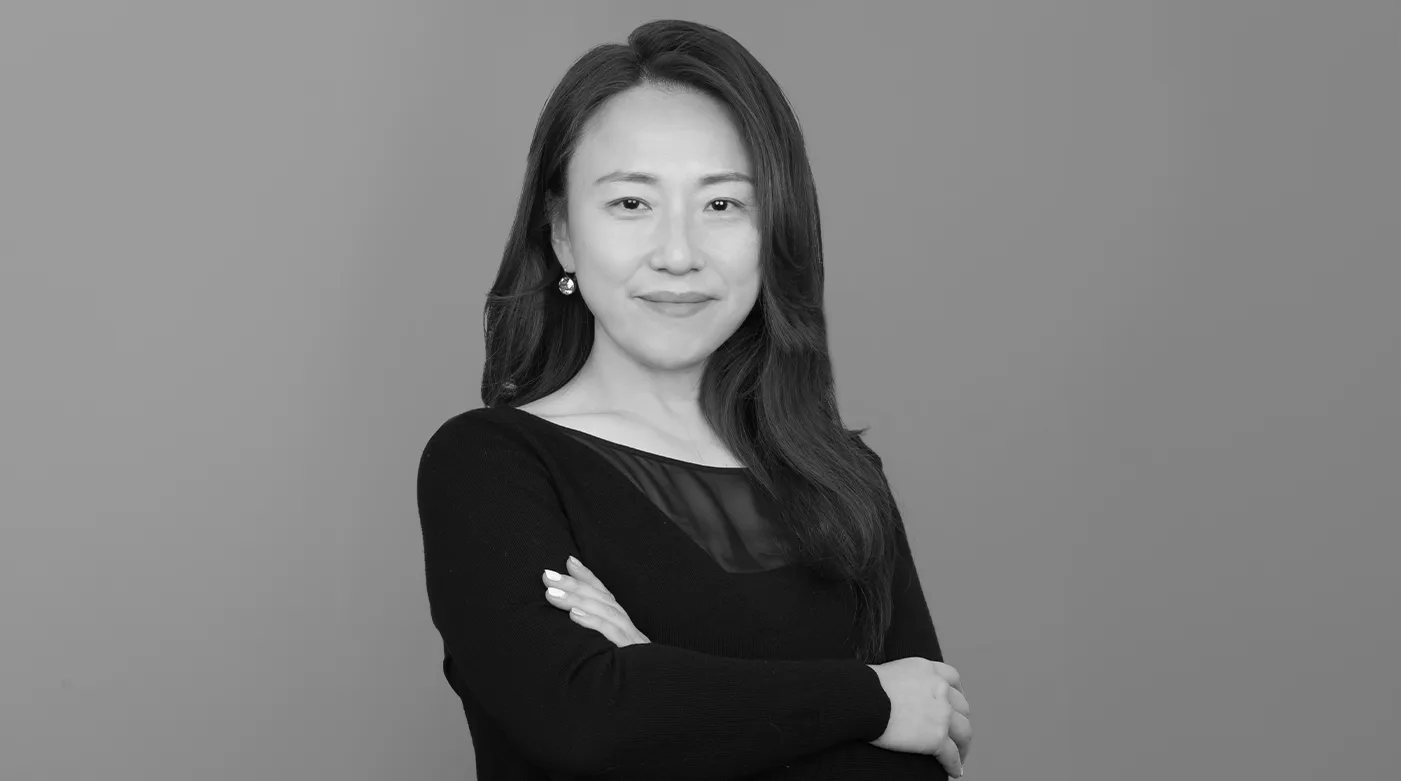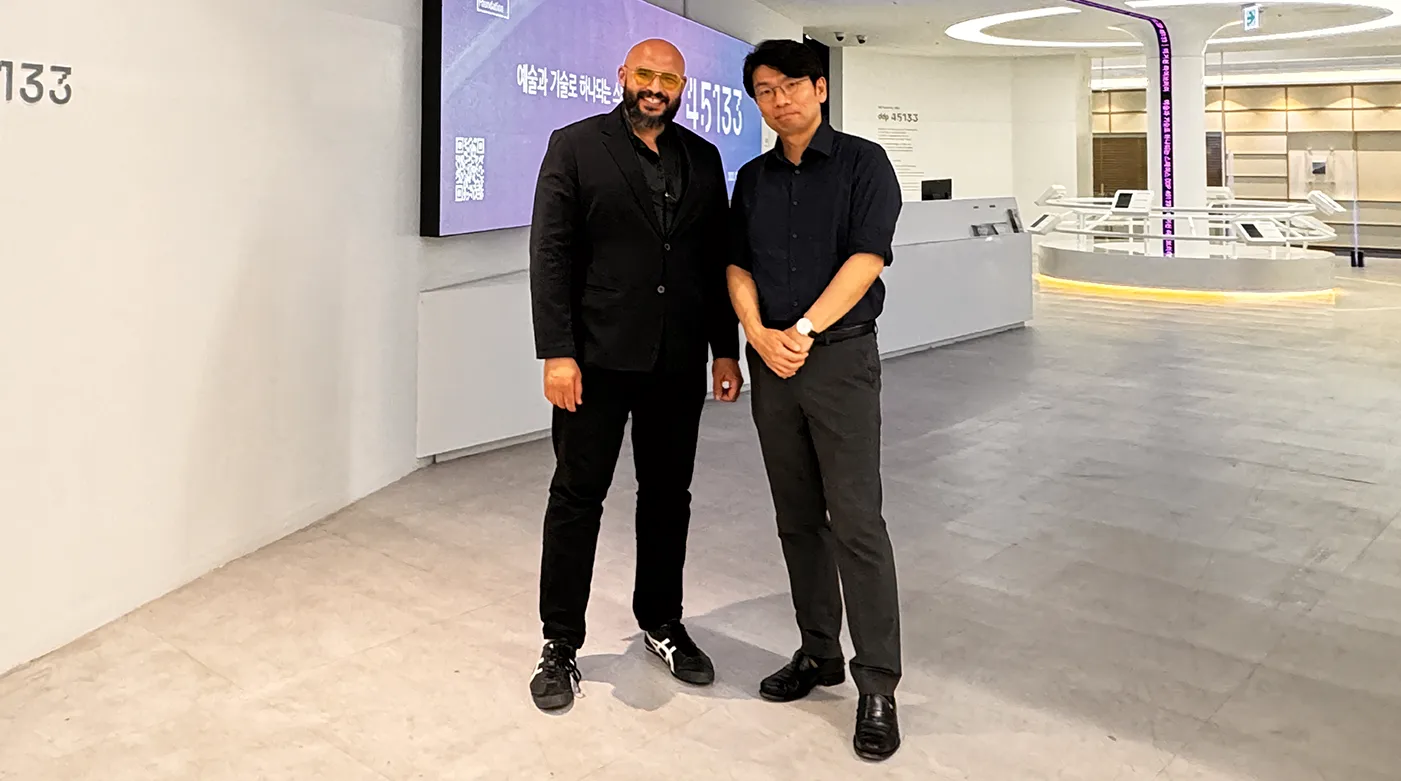

Park talks about BEPOP’s approach to designing for diverse clients and the evolving design landscape in Korea. He also shares his insights on consumer trends and the studio’s vision for creating a positive impact through design.


In the vibrant city of Seoul, where tradition meets innovation, is BEBOP, an industrial design studio that focuses on creating emotional connections between humans and objects. Leading the creative company is Rich Park, alongside co-founders Soohun Jung and Byungwook Kang. Their journey began at the Samsung Art and Design Institute, where the three met during their product design studies.
As part of our ongoing Korean Design in Focus series, we recently spoke with Rich to learn more about BEBOP and the broader landscape of Korean design. Known for their playful yet thoughtful approach, BEBOP has collaborated with clients ranging from ambitious startups to global powerhouse brands.
Over the course of our conversation, we talk about BEBOP’s design approach, its process for creating emotional connections and balancing playfulness with thoughtfulness, BEBOP’s client collaborations, and the studio’s vision for positive impact through design.


It’s not easy to define the whole of Korean industrial design in terms of any specific aesthetic style. Besides, as we live in a very connected world today, there is less influence from a single country on industrial design, and major trends are shared globally.
However, looking into Korea’s history does reveal some interesting broad characteristics that influenced what we feel is unique to the culture and mindset of Korea today.
In the early 1900s, Korea was controlled by Japan before fighting to gain its independence in 1945. Shortly after, there was an internal war in 1953 that divided North and South Korea. Understanding all of this happening in the span of less than a single generation, and especially what happened after, is one of the most fascinating and impactful history of Korea.
Soon after the unstable times of the 1950s, South Korea had a big political movement for modern industrialization, where the whole country collectively made an effort to grow the economy as fast as possible. A strict work ethic was created where working hard and long hours equaled getting more done, and relaxing was seen as laziness.
From this, the country saw one of the fastest economic growths in history and global industry giants like Samsung and Hyundai were established.
“Korea is incredibly fast to adopt the latest aesthetic trends while also evolving them with creative ideas. Designers are passionate about trying bold approaches and also consumers have an open mind towards trying new things.”
Emphasizing how recently and quickly all of these big changes happened, even our parent’s generation was directly involved in this economic growth effort. Everyone in our generation have memories of our parents typically working more than 12 hours every day, and they would pass their work ethic onto us.
Our theory is that this past has lead to Korea’s characteristics of being fast, passionate, and bold. Today’s Korean commercial industries like design, products, brands, and even services all share these characteristics.
Korea is incredibly fast to adopt the latest aesthetic trends while also evolving them with creative ideas. Designers are passionate about trying bold approaches and also consumers have an open mind towards trying new things.
Consumer product cycles are equally fast, changing very quickly to the dynamic flow of trends. Brands constantly try new and eccentric things in their marketing campaigns and product releases.
Even the mainstream majority of consumers love brands that are experimental and bold.
Tech and IT sectors openly adopt new technologies to stand out and are always racing to release the next faster, better, or even completely new category of products.
Even typical consumer service sectors like delivery, food service, and banking all have high standards in speed and quality. It’s normal to expect things to be taken care of ASAP and 24/7. And because Korea quickly embraced digital systems you can take care of all errands from your phone immediately and most likely while sitting in your sofa.
This history and today’s environment of Korea’s speed and passion we believe influences the way Korean designers work today.
We’ve been seeing more diverse and niche products especially with younger consumers embracing individuality more than ever. And because manufacturing has become more accessible even by smaller brands, they are more willing to try interesting bold ideas.
For some context, starting from the 2010s, there was almost a national consumer consensus of everyone defaulting to white-colored products. While that still remains the safe option, now consumers are embracing individualism with colorful unique tastes.
“Consumers are refraining from buying the lowest price tag, and rather have a higher standard and awareness for thoughtfully designed and well-made products.”
Also, there is generally a higher appreciation for well-designed products. Consumers are refraining from buying the lowest price tag, and rather have a higher standard and awareness for thoughtfully designed and well-made products.
On a slight tangent, there has recently been a huge trend of vintage European and American furniture in Korea.
As for Korea’s product design field, it was previously dominated by commercially driven consumer tech, appliances, and industrial products. But we’re now seeing many Korean designers embracing the artistic side of design too, creating beautiful objects and furniture.
Korean brands also now have a deeper appreciation for the power of design and its importance in growing the brand value, even if they might not always be a commercial hit.


It’s an intentionally broad statement that we feel is at the core of everything we design. How a product looks, how it functions, and how it feels like to use all influences what makes people feel emotional about a product, both consciously and subconsciously.
What emotional connections need to be made is different for every product, whether it’s making people feel comfortable and natural, safe, proud and respected, expressive, playful, or even a delightful surprise. So we focus on the essential purpose of a product to find what meaningful values we can create that can lead to special emotional connections.
Startups are more willing to try bold designs. We think because they are more incentivized to come up with something totally unique as a small company going against established giants.
Many big companies are also open to bold designs but in a different way. They appreciate it more for inspirational and aspirational values, but in terms of immediately manufacturing the next product, they ultimately want a balanced design that is on the safer side that mainstream consumers will feel a bit more familiar with.
In our process, we like to explore a wide range from familiar to more polarizing designs to show what different values they provide. In many cases, bold design concepts are not a good fit in the context of the market, consumer reception, and ultimately for the success of the business. So we don’t force any of our clients to explore a bold design without a good reason.
“I think there is a somewhat romantic perception by designers that bold design is always a better design and all of the non-designers just don’t get it. We believe this is the wrong way to think of design.”
I think there is a somewhat romantic perception by designers that bold design is always a better design and all of the non-designers just don’t get it. We believe this is the wrong way to think of design. A designer’s responsibility is to create a great product as part of a team of collaborators, including the marketing and engineering team. A designer’s focus should not to be to draw something impossible that is only fresh and compelling to the small silo of the design world.
As a design studio, the majority of our work is for immediate manufacturability, and one of the most important things for us is to understand every client’s different stakeholders and what is the best direction to collectively create a great product, regardless of how safe or bold the design is.
This balance is always different due to the different product market, audience, brand, and the company’s values. And actually, aesthetics and functionality are not always on the opposite sides of the spectrum. Sometimes an innovative aesthetic idea sparks an innovative practical functionality, and sometimes a new practical idea inspires completely unique aesthetics.
For us, as a team of designers, everyone has a different way of discovering their ideas, and we encourage diverse approaches and perspectives by having an open working process and environment. With ideas ranging from impossible blue sky ideas to purely realistic and cost-efficient ideas, we discuss the overall balance as a team based on the project context and the different design strategies that we define in the beginning of every project.
Every project is a different chapter of our design history and is meaningful in different ways. We’re proud to have had so many good, bad, and even crazy experiences through these projects and we are proud of every project as we have always learned something new from it. We believe every experience is a good experience, and we’re always open to a new experience.