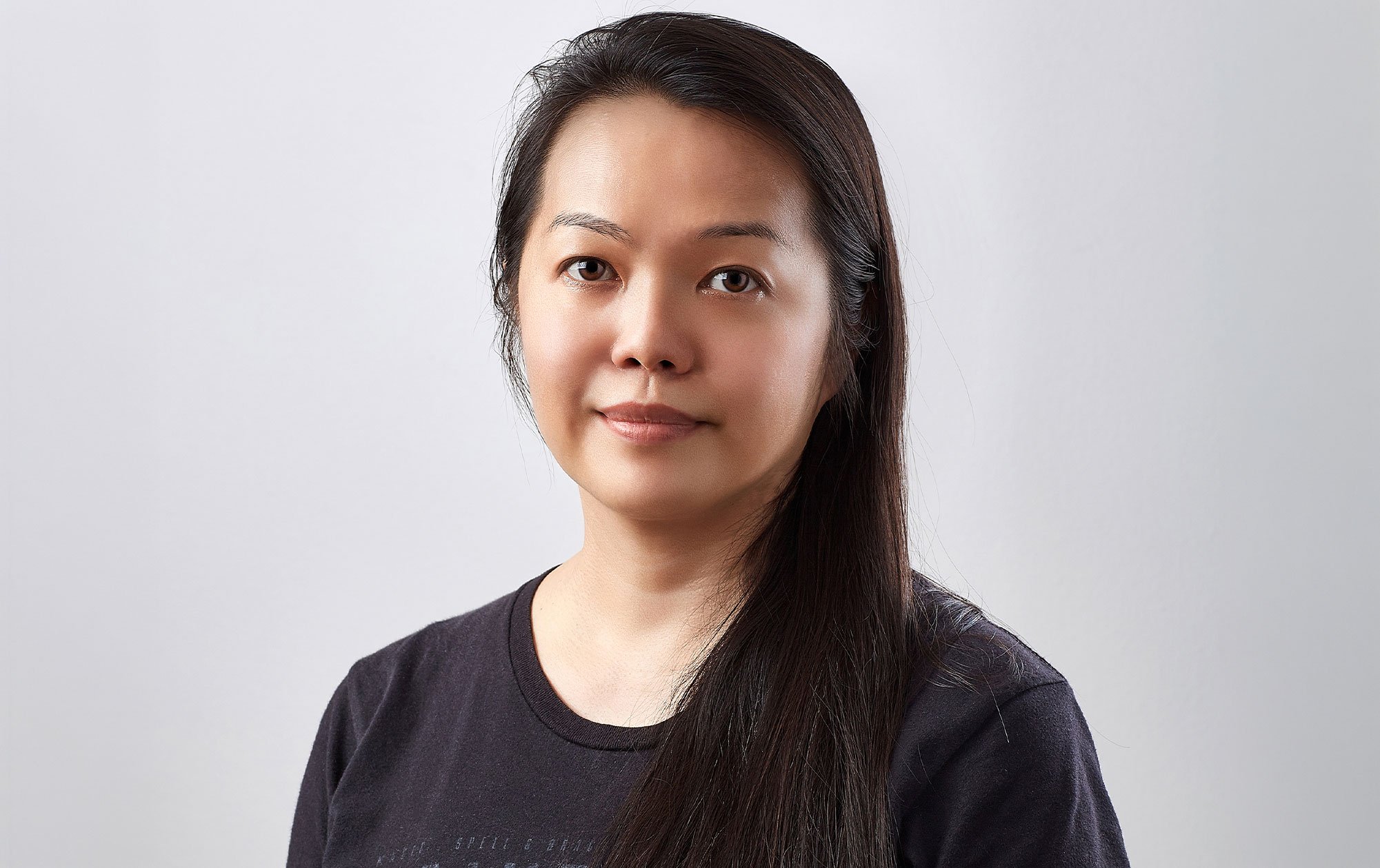
Up next in our Singapore Design in Focus series, we speak with Namjot Kaur, a Singapore-based product designer, Red Dot Award winner, and entrepreneur behind PocketRocket, a customizable model car business.
Kaur graduated from LASALLE College of the Arts in 2025 with a BA (Hons) Product Design and received the McNally Award for Excellence in the Arts, the college’s valedictorian award.
When asked what sets Singaporean design apart, Kaur pointed to a combination of cultural diversity, resilience, and strong ethics, with Chinese, Malay, Indian, Eurasian, and many other cultural influences existing alongside one another.
Over the course of our interview, she discusses how design in Singapore has evolved from being seen as a supporting discipline into an important part of how the country shapes its future, why she begins every project by asking whether it will genuinely help the people she is designing for, and how being a product designer, car enthusiast, and student pilot each calls for a different creative hat.

She also talks about ALBATROSS, her final-year project at LASALLE, a disaster response drone glider hybrid designed to support earthquake relief in Indonesia. The project received a Red Dot Design Concept Award in 2025 and is now exhibited at the Red Dot Design Museum in Singapore.
Kaur also offers advice for students hoping to build a design career in Singapore: “Don’t wait until you feel completely ready.”
What sets Singaporean design apart from the rest of the world?
I think what sets Singaporean design apart is the combination of cultural diversity, resilience and a strong ethics. Singapore may be small geographically, but it is incredibly rich in culture. Chinese, Malay, Indian, Eurasian and many other cultural influences exist alongside one another, creating a unique environment for ideas to intersect and evolve.
I think there is something powerful about being a small country with a very global outlook.
That diversity naturally finds its way into our design language. It gives Singaporean designers a broad range of cultural references to draw from, while our strong ethics pushes us to constantly refine and challenge what we create.
I think there is something powerful about being a small country with a very global outlook. We are exposed to the world, but we also have a strong identity of our own. Our size does not limit the scale of our ideas.

Singapore has transformed dramatically since its founding. How has the role of design evolved alongside it?
As Singapore has developed, design has gradually evolved from being seen primarily as a supporting discipline to becoming an important part of how we imagine and shape our future.
Today, design extends far beyond aesthetics.
The growth of institutions such as LASALLE College of the Arts, Nanyang Academy of Fine Arts and School of the Arts, alongside newer developments such as the establishment of the University of the Arts Singapore, has played an important role in creating a stronger creative ecosystem. These institutions give young designers the opportunity to experiment, question existing systems and develop practices that can compete on a global stage.
Today, design extends far beyond aesthetics. It intersects with technology, business, sustainability, healthcare, social innovation and many other fields.
To me, that evolution reflects Singapore itself. We have moved from being a nation focused largely on building what we need to a nation that can also imagine what could be possible.

You’ve spoken about design being most powerful when it serves people who are often overlooked. How does that belief influence the way you approach a project?
I always begin with one fundamental question: “Will this genuinely help the people I am designing for?”
I believe meaningful design starts by understanding people rather than designing based on assumptions about them. That means going beyond secondary research and making the effort to experience the environment, speak to the people involved and understand the realities of the problem firsthand. For me, research is not simply a phase that happens at the beginning of a project. It is about developing a genuine connection with the people and context throughout the design process.
I always begin with one fundamental question: “Will this genuinely help the people I am designing for?”
Some of the most meaningful insights I have received have come directly from the people experiencing the problem. When you listen closely enough, people often tell you what the solution needs to be. That is a principle I want to carry into every project I work on, designing not just for people, but with a deep understanding of them.

You’re a product designer, car enthusiast, and student pilot. How do those different interests come together in your approach to design?
I see all three of my passions as creative in their own way. The difference is that each one requires me to put on a different creative hat.
As a product designer, I wear the hat of a creator, thinking about how ideas can become tangible objects and experiences. As a car enthusiast and now an entrepreneur through PocketRocket, a customisable model car business, I wear the hat of a curious explorer, constantly looking at design, culture, trends and the stories behind the things people love. As a student pilot, I put on a problem-solving hat, where creativity is about making decisions, thinking ahead and finding solutions within a very different set of constraints.
What I love is that none of these creative hats exist in isolation. They constantly influence one another and allow me to look at problems from different perspectives.
For me, creativity isn’t limited to sitting at a desk and designing something. It is a way of thinking, and I get to experience that creativity in three very different worlds.
When approaching a project, do you prefer the clarity of a set brief or the flexibility of creative freedom? What makes that balance important for you?
I believe the strongest design projects need both.
Creative freedom gives you the opportunity to explore ideas that may not initially seem obvious. It allows you to question the brief, experiment and sometimes discover a better direction than the one you initially imagined.
At the same time, complete freedom can sometimes cause a project to become too abstract and disconnected from the problem it is meant to address. A clear brief provides the purpose and boundaries needed to keep the work meaningful.
Creative freedom gives you the opportunity to explore ideas that may not initially seem obvious. It allows you to question the brief, experiment and sometimes discover a better direction than the one you initially imagined.
For me, the ideal balance is having a clear destination without being restricted to a single route. The brief defines what needs to be achieved, while creative freedom determines how we get there.
AI is a growing part of the conversation in design. How do you see its role in the industry, and how has it shaped your own workflow?
AI is a powerful technology, and when used thoughtfully, it can become a valuable tool for research, exploration and ideation.
What concerns me is when AI begins to replace the creative thinking and authorship that make design meaningful. As someone working within the creative industry, it can be disheartening to see AI generated visual work becoming increasingly common, sometimes without much consideration for the creative process or the people behind it.
I would like to see AI remain a tool in the designer’s hands rather than a replacement for the designer. Design is not simply about generating an image or producing an object. It is about understanding people, culture, context and emotion, and making intentional decisions based on that understanding. Those are qualities I believe we should continue to protect.
Looking back on your design studies, what advice would you give to students hoping to build a career in design in Singapore?
My biggest advice would be to step out there and be brave enough to take what comes your way. Don’t wait until you feel completely ready. Enter the competition, approach the person you admire, take on the project that feels slightly beyond you, and let yourself discover where it takes you.
My biggest advice would be to step out there and be brave enough to take what comes your way. Don’t wait until you feel completely ready.
Singapore is an exciting place to begin a career in design. We have a growing creative ecosystem, with institutions, industries and communities that give young designers the space to learn, experiment and find their own voices.
You may not know exactly where your path will lead, and that’s okay. Be curious, be courageous and allow yourself to take up space. The opportunities are there. You just have to reach for them.
Could you share a project (or projects) from your own work that stands out as especially meaningful or impactful to you?
One project that remains particularly meaningful to me is ALBATROSS, a disaster response drone glider hybrid designed to support earthquake relief efforts in Indonesia.
What made the project especially impactful was the opportunity to visit disaster-affected areas and witness the realities of disaster response firsthand. Being physically present in those environments changed the way I understood the problem. It moved the project beyond being a design exercise and made it feel deeply human.

The resulting system was technically complex and challenging to develop, but that complexity was also what made the project so rewarding. It taught me that meaningful design isn’t always about creating the simplest solution. Sometimes, the right solution requires us to embrace complexity because the problem itself is complex.
ALBATROSS went on to receive a Red Dot Design Concept Award and is now exhibited at the Red Dot Design Museum in Singapore.
For me, its presence in the museum represents more than an award. I hope it can serve as a reminder that even problems that initially seem overwhelming can be approached through design, provided we are willing to understand them deeply, listen to the people affected and pursue the right direction.
Something symbolic of Singaporean design that someone visiting Singapore should see that isn’t widely known:
I think our newer hawker centres, such as the Kopitiam at Changi Airport Terminal 3, are often overlooked. They bring together Singapore’s traditional food culture with contemporary architecture and thoughtful public design. I love seeing how a very familiar part of Singaporean life can be reinterpreted for a modern context without losing its cultural identity.
A Singaporean designer or artist you’d love to collaborate with or have been inspired by:
Benson Lee. He is a Singaporean automotive designer (and fellow LASALLE alumnus) whose work at Porsche first sparked my passion for automotive design. His journey showed me that it is possible for a Singaporean designer to contribute to one of the world’s most iconic automotive brands, and that has stayed with me throughout my own design journey.
Your go-to place for creative inspiration in Singapore:
I would say LASALLE, my alma mater. The building itself is incredibly inspiring and feels like a physical reflection of creativity and experimentation. Every time I return, it reminds me of how far I have come and makes me want to achieve even more.