As part of an interview series in collaboration with ONE Asia, we’re speaking with independent agencies across the region about their local markets, how they are building and growing their businesses, and the role independents play within the wider creative industry.
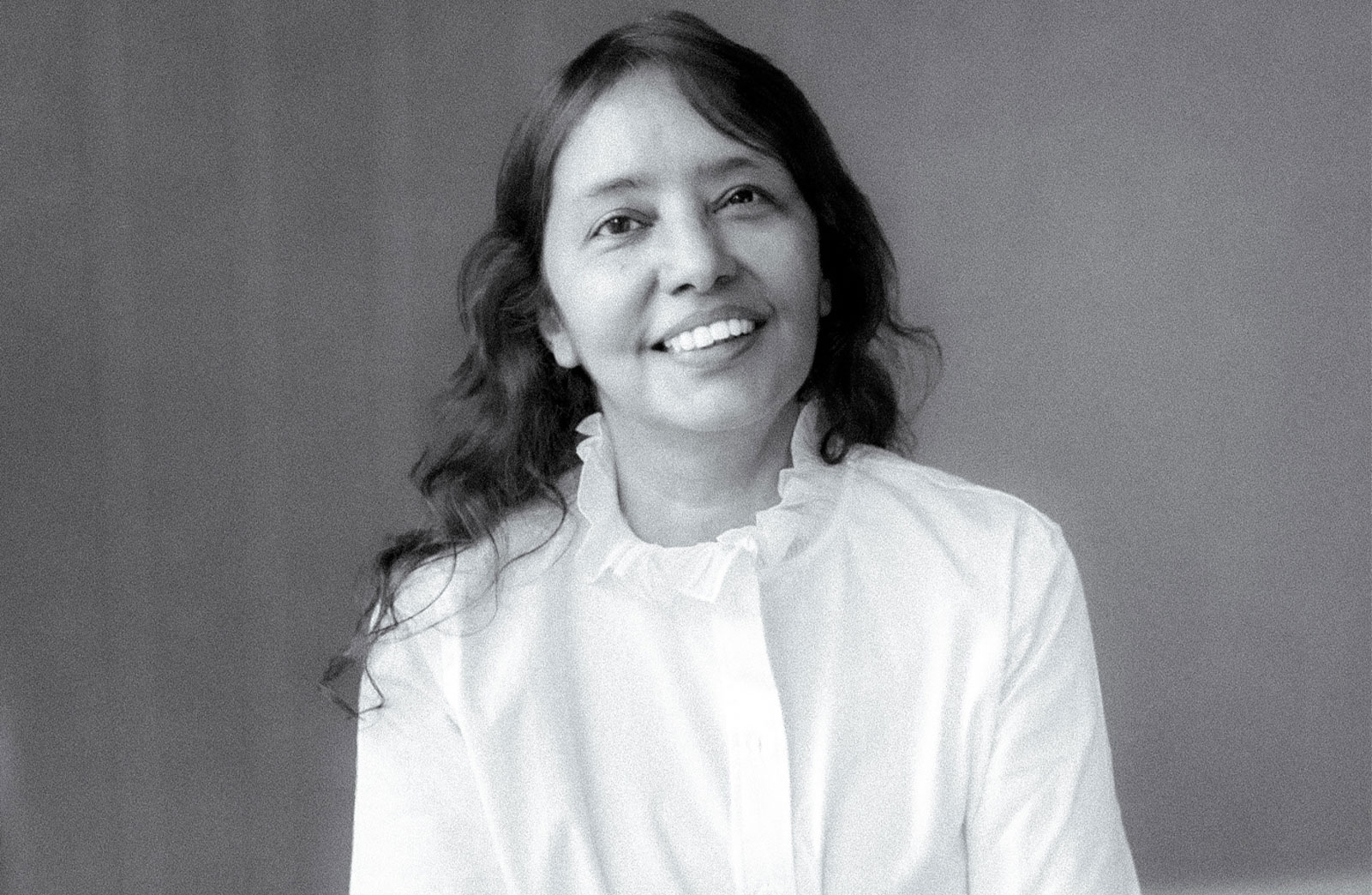
First up, we speak with Mike Sunda, Founder of PUSH, a creative company working across cultures with locations in Japan, Australia, Singapore, Europe, and China.
Sunda discusses building PUSH in Japan as a bilingual, bicultural agency, maintaining the chemistry of a close-knit team as it grows, handling fast-turnaround work, the value of taste in an AI-driven industry, and the importance of regional platforms in recognizing culturally nuanced work.

When you founded the Tokyo office in 2020, what opportunity did you see in the Japanese agency market for a company like PUSH?
The local market opportunity in Japan was very clear – by 2019, inbound tourism was at all-time highs, globalisation had accelerated ahead of the planned Olympics, and it was clear that more and more global brands would need a bilingual, bicultural agency partner. At the time, the vast majority of agencies were either too Japanese or too Western to effectively meet that demand.

On top of that, there was the broader, global industry trend towards clients needing agencies that were more agile and cost-effective for content production, in particular. On paper, we were always confident with the positioning, but the COVID pandemic hit a few months after we opened and certainly knocked the wind out of our sails for a couple of years!

How do you see the independent agency scene in Japan today, and what role do independents play within the wider agency ecosystem?
I think we still exist in a bit of a bubble within the wider ecosystem, albeit one that can thrive in a niche that feels like it’s growing and expanding year-on-year. The biggest proof point is that almost all of our work comes through organic, inbound requests, and we have some of the world’s most exciting brands proactively asking to work with us, so there’s no question about the demand.
I think we still exist in a bit of a bubble within the wider ecosystem, albeit one that can thrive in a niche that feels like it’s growing and expanding year-on-year.
On the flip side, we’re almost never part of the RFI or RFP process for the bigger, 7-figure-plus integrated campaigns on the market, so in that respect it feels like we’re very much in our own lane separate from the holding companies and their agencies.
You’ve described a growing space in Japan for bilingual and bicultural independent agencies working between global brands and the local market. What does that model allow an independent agency like PUSH to do differently?
It means that we typically have to hire a very specific type of talent – someone who can speak Japanese and thoroughly understand local cultural nuances, but also work in English and be aware of the global context. Those types of talent can command a premium on the market, which means that we have to appeal to them beyond just the financial incentive – that means we need to optimise our company culture, our commitment to diversity, our working environment, and all the “soft” benefits to attract and retain our team.
That takes a lot of investment and effort separate to our creative output, but ultimately makes us a better and more robust company for it.
You’ve said PUSH is comfortable remaining relatively small and that beyond a certain size you risk losing some of the magic. What is that “magic,” and what becomes harder to protect as an independent agency grows?
For better and for worse, we’re a very close-knit team and it’s hard to imagine operating without that mutual trust and chemistry that we’ve nurtured between ourselves over the past few years. I’m a big football (soccer) fan – one of the greatest managers of our era, Pep Guardiola, famously commented that he prefers a “lean” team because otherwise, with too much squad depth, he feels bad for the players that aren’t getting minutes on the pitch, and that it has a negative impact on morale in the dressing room.
We’re a very close-knit team and it’s hard to imagine operating without that mutual trust and chemistry that we’ve nurtured between ourselves over the past few years.
I feel similarly – we have our “starting eleven” (literally) that are consistently busy and operating to a high standard. To extend the football metaphor, the next phase would be to get another five or six talents who can challenge for game time while also providing much-needed depth, much like substitutes on the bench. After that, the next phase would be to find and grow junior prospects, much like an academy.
Some of PUSH’s production work has involved extremely short turnaround times and unconventional requests. What are some of the more unusual things you’ve been asked to make happen, and what have those experiences taught you about what an agency should be capable of?
Our most challenging work has come through musicians and artists, who operate at a completely different speed to brand clients. For Ye (fka Kanye West), we produced a screening event for over 600 people at a huge warehouse space on less than three days’ notice. Our MTV VMA-award-winning music video for Megan Thee Stallion’s “Mamushi” happened in less than ten days, and that was a highly complex two-day shoot across multiple locations outside of Tokyo.
Our most challenging work has come through musicians and artists, who operate at a completely different speed to brand clients.
These sorts of timelines aren’t ideal, but they do demonstrate what can be accomplished when everyone involved passionately buys into the creative vision, and when the “client” can streamline decision-making, which is naturally more difficult when you’re working with brand teams that need to establish consensus beyond a single person. It’s not necessarily a healthy way to look at it, but these experiences do teach you that nothing is impossible, and there’s always an adrenaline rush from pushing boundaries beyond even your own expectations.
ONE Asia Creative Awards is built this year around the idea of “Where Taste Matters.” At a time when technology can generate almost limitless creative output, what does “taste” mean to you, and how do you recognize it in a piece of work?
It’s become a cliche, but taste really is a moat. The sort of work we typically do is either rooted in humans and storytelling, or has an aspect of craft – like shooting on 16mm or 35mm film – that can’t be replicated through generative AI. On top of that, you have to make decisions based on taste at every stage of the production process, from casting through to styling, music selection and even the colour grade.
Personally, I’m optimistic about the integration of technology and its potential creative applications, but I’m only able to take that viewpoint because I believe that taste will continue to be a moat, which therefore protects our value as creative partners.
How important is it for Asia to have awards platforms that judge creative work within the context of the region rather than primarily through a global lens?
Hugely. Almost every award-worthy campaign or creative idea has so much cultural nuance that it’s inevitable it would be lost on a jury that’s unfamiliar with the local market. Not only that, but it’s important for the health of the creative industry as a whole that we build connections within the region, and I’ve found that only tends to happen through awards platforms.
It’s important for the health of the creative industry as a whole that we build connections within the region, and I’ve found that only tends to happen through awards platforms.
Anecdotally, we’ve built strong working relationships with companies like Heckler, who we never would have met were it not for regional awards platforms.
What advice would you give someone trying to build an independent creative agency in Japan today?
This is a timely question because, right now, the Japanese government is doing everything it can to deter non-Japanese nationals from starting any sort of business. New capital requirements make it almost impossible to bootstrap, and there are more institutional hurdles popping up every day. In that context, I would pragmatically suggest: Do it with at least one co-founder, so you can split the risk, and have a strategy for short-term profitability, because the current conditions aren’t conducive to long-term planning.
On an emotional note, I would say do it anyway – it’s been the most rewarding years of my professional life, and I can genuinely say that I think we’ve made a positive contribution to growing the local creative ecosystem. Japan’s creative industry can only benefit from more people and teams thinking independently.
To learn more about ONE Asia and how to enter, go here.