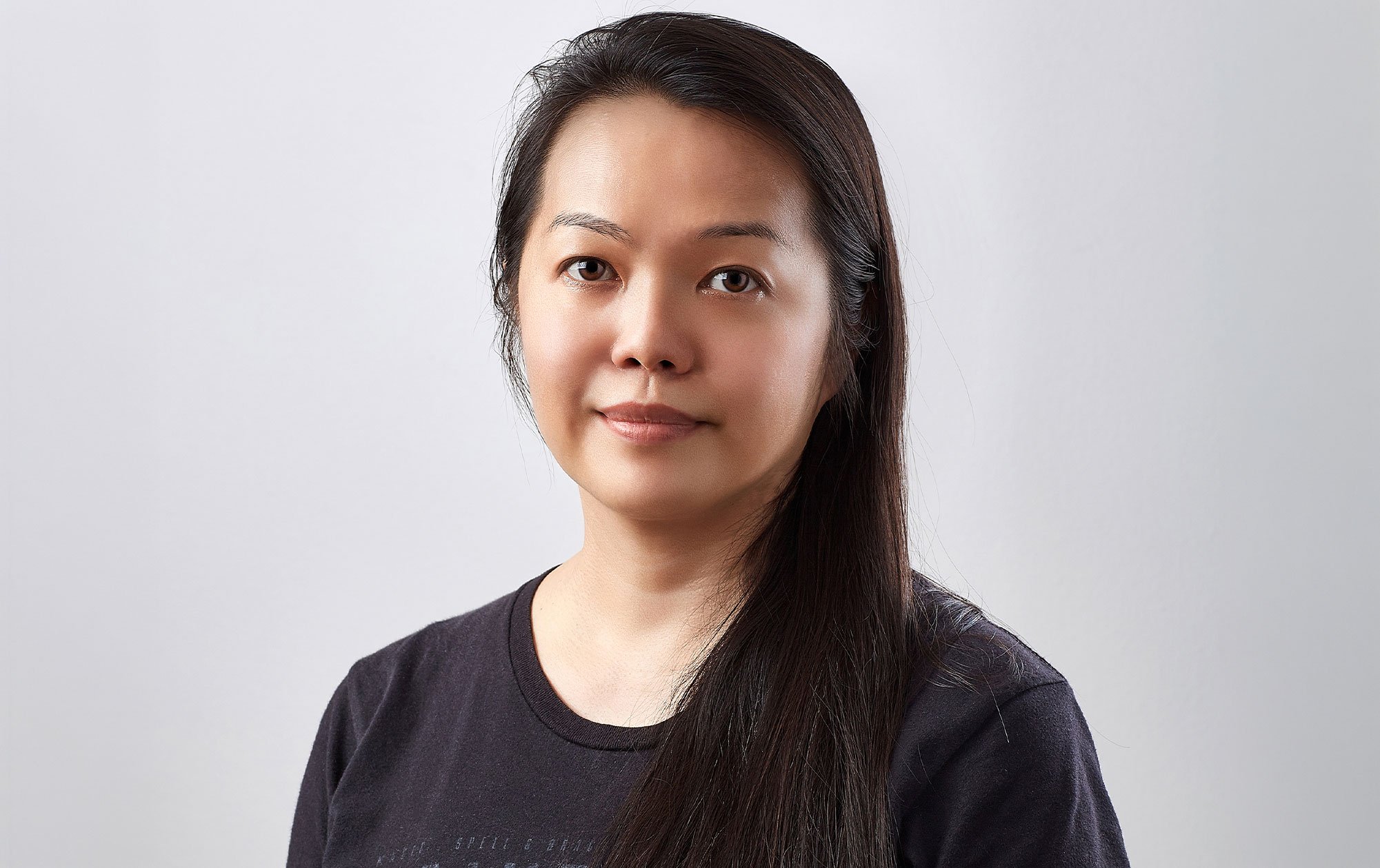
Up next in our Singapore Design in Focus series, we speak with Masturah Maidin, Founder of MalayMondays, which grew out of her research thesis for her MA in Design at LASALLE College of the Arts. What began as a simple invitation to speak Malay on Mondays has grown into a series of projects connecting elders and youth through colloquial Malay.
Over the course of our interview, she reflects on what sets Singaporean design apart, pointing to cultural exposure, both from the country’s mix of communities and from Singaporeans being globetrotters. “Being exposed to different perspectives is a very important aspect to making good design,” she says.

She also traces how design’s role in Singapore has shifted from survival to economic competitiveness, and now to shaping intelligent systems. On clients and bold ideas, she says that while truly bold design decisions depend on company culture, she believes they have to do with trust, built by testing small bold choices and showing clients the evidence.
Asked what she wishes she had been told when starting out, she points to two things: there is no fixed career path or perfect job, and relationships matter as much as the portfolio. “So build the work, but also build the relationships,” she says.
What do you think sets Singaporean design apart from the rest of the world?
Singapore, being a small island with 6 million people, is an amalgamation of different cultures and communities. Being exposed to different perspectives is a very important aspect to making good design. And because Singapore is so small, Singaporeans are also globetrotters, and this catapults cultural exposure even further.
Singapore has transformed dramatically since its founding. How has the role of design evolved alongside it?
At its core, Singapore’s transformation has been a design project. Since its independence in 1965, design has evolved from a tool of survival to a driver of economic competitiveness, and today to a partner in shaping intelligent systems.
As former Prime Minister Lee Hsien Loong put it, “Singapore is a nation by design. Nothing we have today is natural, or happened by itself. Somebody thought about it, made it happen.”
The evidence is all around us—in public housing, transport, digital services, and the built environment. It has been and will continue to be a city built for people.

Do you find that clients have become more willing to make bold design choices over the years? How do you encourage them to embrace innovative design?
I don’t think it’s a steady increase in bold choices over the years, per se; truly bold design decisions depend on the company culture. However, I believe it has to do with trust in the agency and/or the designer. Whether it’s prior work you have done or the relationship you’ve built with the client, they tend to be more open to bold ideas if you have a great and established working relationship.
Encouraging innovative design, then, isn’t about pushing for one big leap—it’s about building a track record of trust and proof, one step at a time.
And this has to grow, so make small bold choices and test those ideas, and bring back the data to show how going a certain innovative direction can change the experience for their customers. Once they see the evidence, they’re more willing to go further. Encouraging innovative design, then, isn’t about pushing for one big leap—it’s about building a track record of trust and proof, one step at a time.
You founded MalayMondays, a project exploring how design can reconnect generations through language. Can you tell us more about the project and the thinking behind it?
This project was the result of my research thesis for my MA in Design at LASALLE. I saw a problem I wanted to solve: my mother was trying so hard to communicate with her grandchildren in English, when she could just speak Malay to them instead. But she chose English because that’s what her grandchildren are comfortable with. So I asked myself, why can’t it be both?
We’re losing the last of our native Malay speakers. And with them goes our ancestral and cultural knowledge. This isn’t just a Malay household issue; it’s across the board for Singaporeans.

Through on-the-ground research (speaking to elders and parents in the community), I found a disconnect in expectations. The elders assume the youth aren’t interested in their stories. The youth assume they will be chastised for making mistakes when they speak Malay. Neither is true.
So MalayMondays runs a series of projects to cultivate colloquial Malay—not the textbook Malay, but the spoken, everyday Malay. We do this by positioning elders as Knowledge Keepers and youth as Knowledge Seekers.
We’re losing the last of our native Malay speakers. And with them goes our ancestral and cultural knowledge. This isn’t just a Malay household issue; it’s across the board for Singaporeans.
First, there’s the telephone booth, where youth listen to elders’ stories and record their responses. Alongside it is a letterbox, where youth write to elders in Malay, asking for stories or advice. All responses are uploaded to malaymondays.com.
Beyond that is @malaymondays on Instagram, where we pick an interesting word (sometimes colloquial, not necessarily in the dictionary) and break down its etymology. The objective is simply to get a conversation going about speaking Malay.
I also produced a four-episode podcast on the importance of sustaining the language, exploring each guest’s relationship with it. The four guests are subject matter experts with differing perspectives, and the podcast argues that language decline is not a linguistic problem, it’s a systemic one.
View this post on Instagram
Policy alone can’t solve it, nor can individual willpower. It requires action across all three levels: micro (safe, low-stakes spaces for individuals to speak and make mistakes), meso (activating community spaces and grassroots networks), and macro (enabling conditions through policy, funding, and institutional support).
By designing for anonymity so youth don’t feel judged, and for reverence so elders feel heard and respected, the project dismantles the assumptions both generations hold about each other—creating the conditions for them to speak Malay to each other freely.
When approaching a project, do you prefer the clarity of a set brief or the flexibility of creative freedom? What makes that balance important for you?
I prefer clarity, so I know where to bend the rules and move outside the box. Essentially, the brief is a guide, but the real essence is understanding the problem we’re trying to solve. The brief should not have a solution but guidelines as to what the solution can sit within. Balance matters, but it is up to the designer to create it.
I prefer clarity, so I know where to bend the rules and move outside the box. Essentially, the brief is a guide, but the real essence is understanding the problem we’re trying to solve.
When I receive a brief, it is not set in stone––there will be multiple conversations to understand how the brief was derived, so we know we’re on the same page.
AI is a growing part of the conversation in design. How do you see its role in the industry, and how has it shaped your own workflow?
AI is becoming a bigger part of the design conversation, but I see it as an accelerant, not a replacement. The bigger AI gets, the stronger the counter-movement will be: the more we’ll value things made by hand, with care, with a point of view. As technology grows, the intrinsically human parts of design grow in importance too. So we can choose to delegate the less human, repetitive work to AI and spend more time on the very human aspects: empathy, cultural context, taste, and craft.
As technology grows, the intrinsically human parts of design grow in importance too.
And yes, AI has sped up my workflow, especially in the early stages. It’s much quicker to prototype and test ideas: I can put something in front of users sooner. That speed lets me fail faster, learn faster, and focus my energy on refining the concept and asking whether we’re solving the right problem.
MalayMondays is a good example of the human side. We’re losing our mother tongue, and the response had to be deeply human—elders as Knowledge Keepers, youth as Knowledge Seekers, safe spaces to make mistakes. AI can help with production or organisation, but it can’t replace the cultural nuance and lived experience at its heart. So I use AI to speed up the parts that can be sped up, and protect the parts that shouldn’t be.
What’s something about breaking into design in Singapore that you wish someone had told you when you started out?
Two things, really. First, there’s no fixed career path and no perfect job. You go in, decide what you want to learn, and opportunities tend to create themselves when you work on things you genuinely enjoy.
Second, relationships matter as much as the portfolio. I thought I needed to perfect my portfolio and CV, and they still matter. But making connections is how I got my foot in the door for every job I’ve had. In a small, relationship-driven design scene like Singapore’s, people remember how you work, how you collaborate, and whether you’re good to be around. So build the work, but also build the relationships.
Could you share a project (or projects) from your own work that stands out as especially meaningful or impactful to you?
MalayMondays.
The real impact is intangible: youth discovering that elders aren’t intimidating, and elders discovering that youth are interested.
By designing for anonymity so youth don’t feel judged, and for reverence so elders feel heard and respected, this project dismantles the assumptions both generations hold about each other: creating the conditions for them to speak Malay freely.

This project proves that design can be a tool for social change. MalayMondays is my attempt to work across three levels: the individual, community, and policy.
Quick Hits
Something symbolic of Singaporean design that someone visiting Singapore should see that isn’t widely known:
Unica plastic stool is a quiet everyday icon. Designed in the 1990s by Chew Moh-Jin and produced by Singa Plastics, it was made for coffee shops and food centres: lightweight, sturdy, stackable, with a hole in the centre for lifting and chaining.
It has become synonymous with local kopi culture. It is not in a museum, but you will see it everywhere, a piece of Singaporean design you sit on.
A Singaporean designer or artist you’d love to collaborate with or have been inspired by:
Oniatta Effendi.
What draws me to Oniatta is how she treats heritage as a living, evolving material rather than something preserved behind glass. She designs and commissions batik from multi-generational family workshops in Indonesia and Malaysia, and describes her approach as balancing “reverence for the tradition of batik” with making it “accessible to the modern wearer”.
Your go-to place for creative inspiration in Singapore:
HDB blocks and heartland spaces. There’s so much to draw from: the patterns and colours of the facades, the tiles, the signage, the way light moves through the corridors.
But what I love most is that you’re also immersed in how people actually live: uncles and aunties chatting at the void deck, kids running around, neighbours sharing food. For me, inspiration isn’t just visual; it’s also social. The heartland is where Singapore’s everyday culture is most visible, and I want my work to be rooted in that.
Explore the MalayMondays postcards and listen to the podcast.