In August, amid a colorful activation that saw pink-suited astronauts roaming the streets of Ho Chi Minh City, creative agency Moonfolks officially touched down in Vietnam.
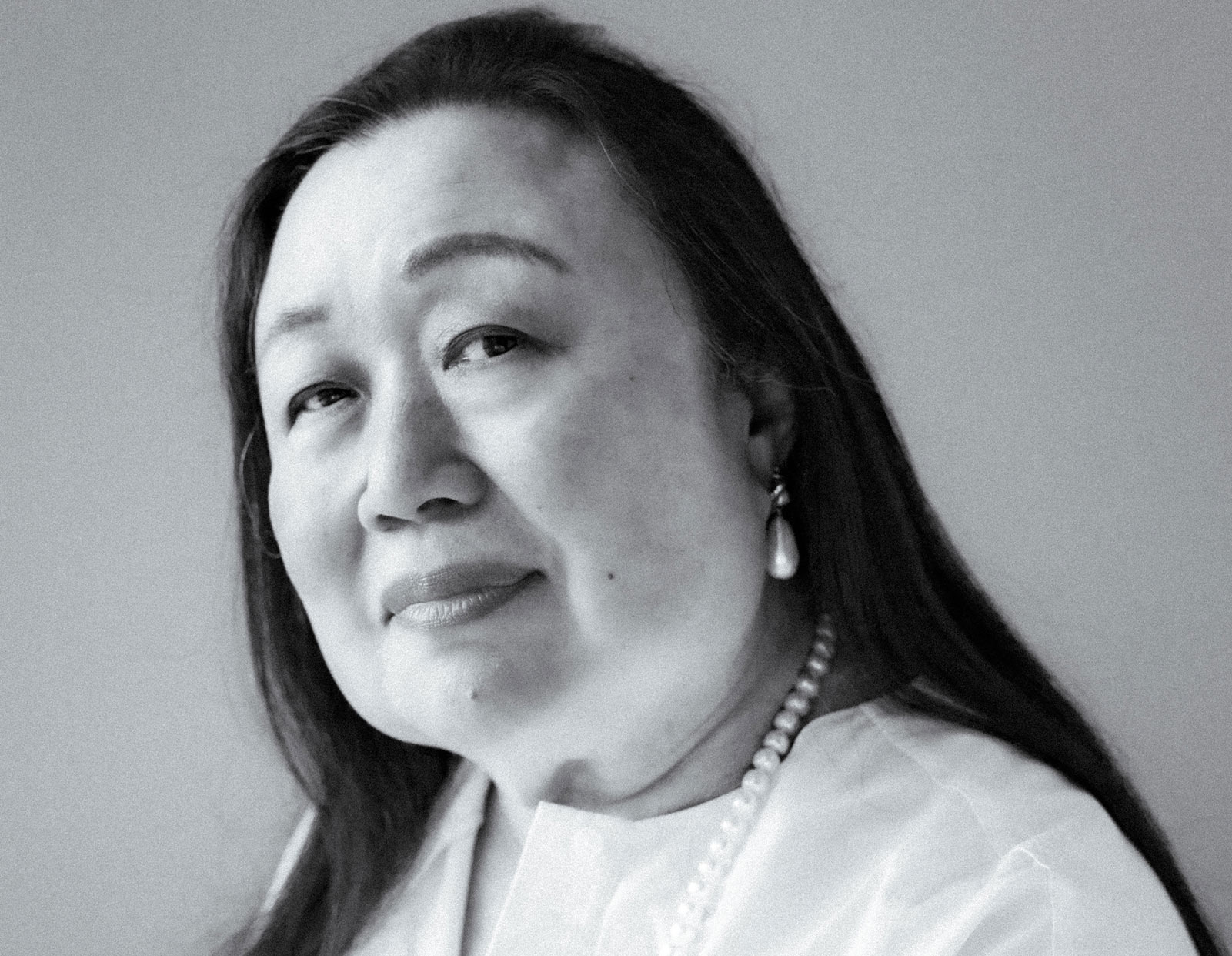
Leading the new operation is Livio Grossi as Chief Creative Officer and Managing Partner. Grossi has spent more than a decade living and working in Vietnam, most recently as Executive Creative Director at Dentsu Redder, following earlier creative leadership roles at MullenLowe and Phibious.
In our interview, Grossi talks about how adding Managing Partner to his creative leadership role has broadened his focus beyond the work itself. Though when asked what success looks like for the new operation, he flips it to what failure would look like instead: “the same bland work we see every day in our feeds.”

Spoken like a true creative.
He also talks about a younger generation of filmmakers, designers, musicians, and creators in Vietnam defining itself on its own terms, and more broadly, why craft and taste matter for young creatives in the age of generative AI.

Following the recent opening of Moonfolks Vietnam, you’re now at the helm of an agency. How has adding Managing Partner to your creative leadership role changed the way you lead?
As a creative leader, you can afford to obsess solely over the work. As a Managing Partner, you suddenly need to obsess about everything, everywhere, all at once.
But honestly, I’m still figuring that part out.
I’m lucky I’m not doing it alone. Anish, Moonfolks’ CEO, has been doing this for a long time, and I think the secret is surrounding yourself with people who have the right energy, the right mindset, and complementary skills.

If I had to pick one main task for myself in this new role, it would be helping build the right culture and the right reputation.
I’m drawing from every experience I’ve had, whether positive or terrible, to figure out what my own version of that looks like. But I don’t want culture to become one of those things that gets written beautifully in a credentials deck and then forgotten.
I want it to be lived through the decisions we make every day: how we spend money, who we hire, which clients we choose, what behaviour we reward and what kind of ideas we decide are worth bringing into the world.
When you think about what you want to build with Moonfolks Vietnam, what does success look like?
I’d actually flip the question: what does failure look like?
I keep saying the world doesn’t need another advertising agency, and probably even less so in Vietnam.
So failure, to me, would be ending up making the same bland work we see every day in our feeds. Work engineered to tick every box, offend no one, and ultimately be forgotten.
Too much advertising is still treated as a repeatable formula, while I fundamentally believe it should be a form of entertainment. It should catch me by surprise. Make me question something, laugh, cry, get pissed off, or simply feel seen and understood.
Failure, to me, would be ending up making the same bland work we see every day in our feeds. Work engineered to tick every box, offend no one, and ultimately be forgotten.
And ideally, it should be interesting enough that people choose to talk about it, share it or pass it on without us having to pay for every single impression.
I’d rather build something with a very clear point of view. A place with strong taste, real craft and people who care deeply about what they put into the world. Somewhere ambitious people come because they know they’ll be pushed, but also trusted.
If people can look at a piece of work and think, “That feels like something Moonfolks would do,” then maybe we haven’t failed.
After more than a decade living and working in Vietnam, what continues to inspire you there creatively, and what changes in the creative industry have stood out to you most?
What keeps Vietnam interesting to me is that it still feels like a country being written in real time.
You can move from something deeply traditional to something incredibly contemporary within a few streets. There’s this constant push and pull between preserving what makes Vietnam unique and embracing what comes next. Creatively, that is much more interesting than being somewhere that already feels fully defined.
The biggest shift I’ve seen is confidence. For a long time, there was a tendency to look outside Vietnam for inspiration, validation, even permission. I think that is changing. A younger generation of filmmakers, designers, musicians and creators is starting to define itself on its own terms, and some of that work is now getting global attention.
I hope that same confidence starts to influence the country more broadly too, not just culture and creativity, but how Vietnam thinks about cities, policy, business and its own future.
After more than a decade here, I still think of myself as a New Local. Close enough to understand many of the codes, but hopefully still distant enough to question them. For me, that is probably the sweetest spot.
Has technology changed what young creatives need to learn about craft, or do the fundamentals still come first?
I think technology might actually be the worst way for young creatives to learn craft.
Craft is built slowly, day by day, fuelled by mad curiosity and stupid obsession. To me, craft is ultimately an expression of taste, and taste is everything. It’s the sum of everything you’ve watched, read, listened to, noticed, loved, hated and somehow absorbed over time.
But craft without meaning is not a good look.
Knowing why an idea matters is the real currency. Craft should serve the idea so completely that the two almost fuse together, until every choice feels inevitable rather than designed for the sake of looking good.
Young creatives still need to learn how to sell a great idea from a badly drawn sketch. If the idea only works once it looks beautiful, there is probably something wrong with the idea.
Gen AI is incredible, don’t get me wrong. But it becomes truly powerful in the hands of people who already have enough experience, knowledge and taste to understand the difference between what is good and what simply looks good.
Young creatives still need to learn how to sell a great idea from a badly drawn sketch. If the idea only works once it looks beautiful, there is probably something wrong with the idea.
These tools are incredibly powerful, but they’re a privilege, not a shortcut.
And with great power comes great responsibility, right?
What aspect of creative leadership do you still find most challenging?
One thing I’ve become very aware of in myself is that I can be impatient. And I know that sometimes people don’t immediately understand where that comes from.
For me, it’s driven by this desire to be prolific. I believe the more good work we put into the world, the more we grow. Not necessarily in size, but in ambition. And the more chances we give ourselves to eventually make something truly iconic.
I look at agencies like Uncommon or Bear Meets Eagle On Fire, and it feels like every month there’s another piece of work that makes you think, fuck, they did it again. That’s my not-so-hidden ambition.
So yes, I get impatient. I want to present the idea. I want the client to buy it. Then I want to make the next one. And the one after that. And if there’s no brief, why are we waiting? Let’s book a meeting and bring them something we believe they should be doing.

The same impatience applies to the work itself. I believe speed creates more iterations, more iterations make the work better, and better work gives you a greater chance of making something great.
Not everyone enjoys working that way immediately. But the people who understand the rhythm usually start to enjoy it once they see how much we can produce, and how high the quality can still be.
I’m still learning when that impatience is useful, and when I need to hit the brakes.
Can you share some creative work from Vietnam that you have particularly admired over the years?
Let me tell you about the two pieces of work I’ve been most jealous of recently.
The first is the identity BaseSGN created for AGI Open in Ho Chi Minh City. I loved how unmistakably Vietnamese it felt without reaching for any of the usual visual clichés.
It took all that density, noise, typography and energy you find on the streets here and turned it into something incredibly contemporary. It felt local without having to explain that it was local. Oh, and the actual event was great too. Among many I got to see Lance Wyman and Stefan Sagmeister speak.
View this post on Instagram
The other is Apple’s Shot on iPhone project with MCK, created with Antiantiart. They turned an album comeback into this completely immersive 360-degree world you could actually explore. What I loved most was how uncompromised it felt. As if every creative choice had made it all the way from the original idea to the final piece without cutting corners.
And there’s probably something connecting the two. They both feel confidently Vietnamese, but neither feels like it was made only for Vietnam.
That’s the kind of work I wish to see more here.
Quick Hits
A new tool you’ve added to your creative process, and what do you use it for?
I just bought an analogue Casio watch. No notifications, no distractions, and somehow I’m way more productive because of it.
Does that count as a tool?
A film, series, album, or other work you recently discovered that made you jealous you didn’t make it?
After the movie came out, I bought my daughter the original Wild Robot book trilogy and ended up reading it myself before the summer.
Beyond being beautifully illustrated, what I loved is that underneath this very simple children’s story, which somehow feels incredibly contemporary, it’s really about empathy, adaptation, parenthood, belonging, and what it means to care for someone other than yourself.
We all have something to learn from a fictional robot. AI should probably take notes too.
Something you’ve recently become obsessed with that has nothing to do with advertising?
Together with a friend, I started producing micro-batches of 100% Vietnamese Robusta coffee. It’s been incredibly fun figuring out everything from the taste profile to the design language. There’s something unmatched about finally holding the three-dimensional expression of an idea in your hands.
Actually, wait. That still sounds suspiciously like advertising.
Let’s go with blind boxes. More specifically, Saint Seiya blind boxes.
I love the little rush of not knowing which character you’re going to get, then having to build it yourself. And the character design is ridiculously well done, which makes stopping slightly difficult.
Needless to say, my wife is absolutely thrilled about this new obsession.