
A conversation with the Founder and Design Head of Resaiki Interiors and Architecture Design Studio, about the cultural roots of Indian design, the role of Vastu Shastra, shifting client expectations, design education, and more.


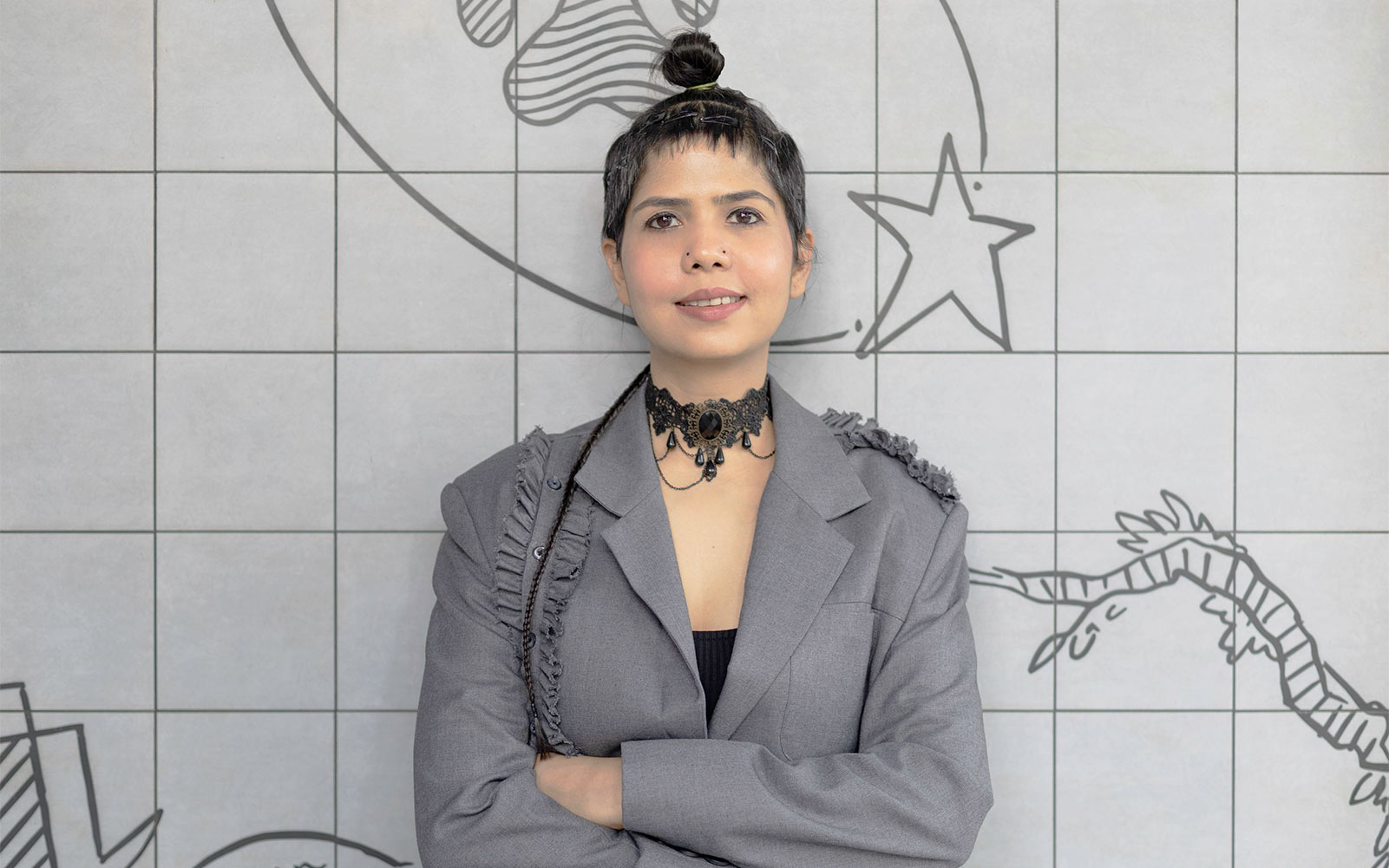
Our Indian Design in Focus continues with Kuntal Vyas Aggarwal, Founder and Design Head of Resaiki Interiors and Architecture Design Studio. In her practice, design is shaped by the cultural fabric of the country, where joint families and intergenerational living influence spaces that are layered, multifunctional, and emotionally connective.
Her work draws from craftsmanship, storytelling, and the principles of Vastu Shastra, which guide orientation, energy flow, and the five elements of nature. She views every space as carrying its own vibration, shaped by how sunlight, moonlight, and airflow interact with the built form.
In this interview, she discusses how Vastu and symbolic motifs inform her design, the role of briefs and intuition, how clients are changing in the age of social media, the gaps she sees in design education, and why a hospital project with the DY Patil Group remains deeply meaningful to her.
When asked to describe what makes Indian design unique she told us, “Our design language draws from a rich historical palette: vibrant colours, intricate craftsmanship, and an instinctive sense of storytelling.”


Indian design is deeply intertwined with the cultural fabric and ways of life of the country. Unlike many global contexts that are increasingly nuclear or individualistic, India continues to embrace the collective rhythm of joint families and intergenerational living. This naturally influences how spaces are imagined as layered, multifunctional, and emotionally connective.
Even as global trends swing between minimalism and maximalism, Indian interiors find harmony through bold colours, handcrafted details, and symbolism.
Our design language draws from a rich historical palette: vibrant colours, intricate craftsmanship, and an instinctive sense of storytelling. What makes India unique is how these elements balance both tradition and modern aspiration.
Even as global trends swing between minimalism and maximalism, Indian interiors find harmony through bold colours, handcrafted details, and symbolism. Vastu Shastra, with its emphasis on the five elements of nature, continues to guide spatial orientation and the flow of energy. This cultural grounding sets Indian design apart, allowing it to be at once timeless and deeply personal.
At the core of my practice is Vastu Shastra. I view it as a guiding philosophy that brings balance, alignment, and harmony to a space. I often work with symbolic motifs, natural materials, and directional placement inspired by the Vedas. These teachings create a synergy between colour therapy, energy flow, and materiality.
At the core of my practice is Vastu Shastra. I view it as a guiding philosophy that brings balance, alignment, and harmony to a space.
At the same time, inspiration is not limited to one cultural context. I find resonance in spiritual philosophies across cultures, whether it’s the Japanese reverence for natural imperfection in wabi-sabi or the Scandinavian emphasis on clarity in material use.
However, my design always returns to the Indian ethos, where spaces are more than physical constructs; they are energetic ecosystems that hold emotions, memories, and intentions.
For me, the ideal process is a balance between the two. A clear brief sets boundaries while providing an insight into the client’s needs, preferences, and lifestyle. We have an extensive questionnaire that covers daily habits, guest interactions, storage requirements, and even their recent travels and inspirations. The answers to this questionnaire become the framework behind the design.
Ultimately, I see myself as a channel; the space already carries an energy, and I allow that energy to guide the choices we make.
Within this framework, creative freedom allows me to interpret their aspirations in ways they may not have imagined. It is in this dialogue between structure and intuition that design becomes meaningful. Ultimately, I see myself as a channel; the space already carries an energy, and I allow that energy to guide the choices we make.
Every space has its own vibration. I like to experience it at different times of the day — early morning or late evening — when the energies shift. We study airflow, the paths of the sun and moon, and their interactions with the built form. This observation becomes a compass for material selection, layout, and orientation.
I begin every project by acknowledging the spirit of the space itself, almost like seeking permission to design.
Energy is not always visible, but it can be felt. When a space resists an element, it could be a simple motif, a grand chandelier, or even a colour; it often means it doesn’t belong there. I begin every project by acknowledging the spirit of the space itself, almost like seeking permission to design.
By working with rather than against these energies, we create environments that feel instinctively right and emotionally uplifting.


I’ve observed the opposite. With the rise of computer-aided visuals and social media, many clients arrive with a fixed idea of how their home should look, most often inspired by Pinterest or Instagram. This has made them less experimental, as they already “see” a projected image of the space before it is built.
While I don’t believe in pushing a vision that they aren’t comfortable with, I do try to stitch their unspoken dreams into a coherent design narrative, one that balances their comfort with subtle innovation.
Earlier, when imagination played a larger role, there was more openness to exploration. Today, my role is to gently guide clients in looking beyond trends and discovering what truly resonates with them. While I don’t believe in pushing a vision that they aren’t comfortable with, I do try to stitch their unspoken dreams into a coherent design narrative, one that balances their comfort with subtle innovation.
There is an incredible curiosity among young designers today, but I also see gaps in how education prepares them for the realities of practice. While software and digital tools have expanded their creative potential, many lack hands-on exposure to markets, materials, and feasibility.
The challenge for the next generation will be not just in conceptualising powerful ideas but in grounding them in physical, budget-conscious realities.
Design is not only about aesthetic imagination, but also about viability; that is, we also need to consider budgets, sourcing, negotiation, and adaptability. These are skills one acquires only by stepping outside the studio. The curriculum needs to encourage field experience in that area. The challenge for the next generation will be not just in conceptualising powerful ideas but in grounding them in physical, budget-conscious realities.
One project that remains close to my heart is a hospital we designed in collaboration with DY Patil Group. While hospitals are primarily focused on patient care, we realised that caregivers — the family members who accompany patients — often endure immense emotional and physical strain without adequate support.
We designed spaces that acknowledged their needs, including foldable beds, small workstations, counselling booths, and areas for rest and reflection. It was a way of saying that their journey matters too, and that healing is a collective effort. For me, this project was impactful because it expanded the idea of care beyond the patient, creating an ecosystem of empathy in a healthcare environment.
Sun Temple, Konark, Odisha
Indian Temples and Vernacular Architecture of India.


To learn more, visit resaiki.com
All images provided by Resaiki Interiors and Architecture Design Studio