The Co-founder and Creative Director of BLACK discusses Singapore’s evolving design identity, the role of design in the nation’s development, how AI is changing the way designers work, and more.


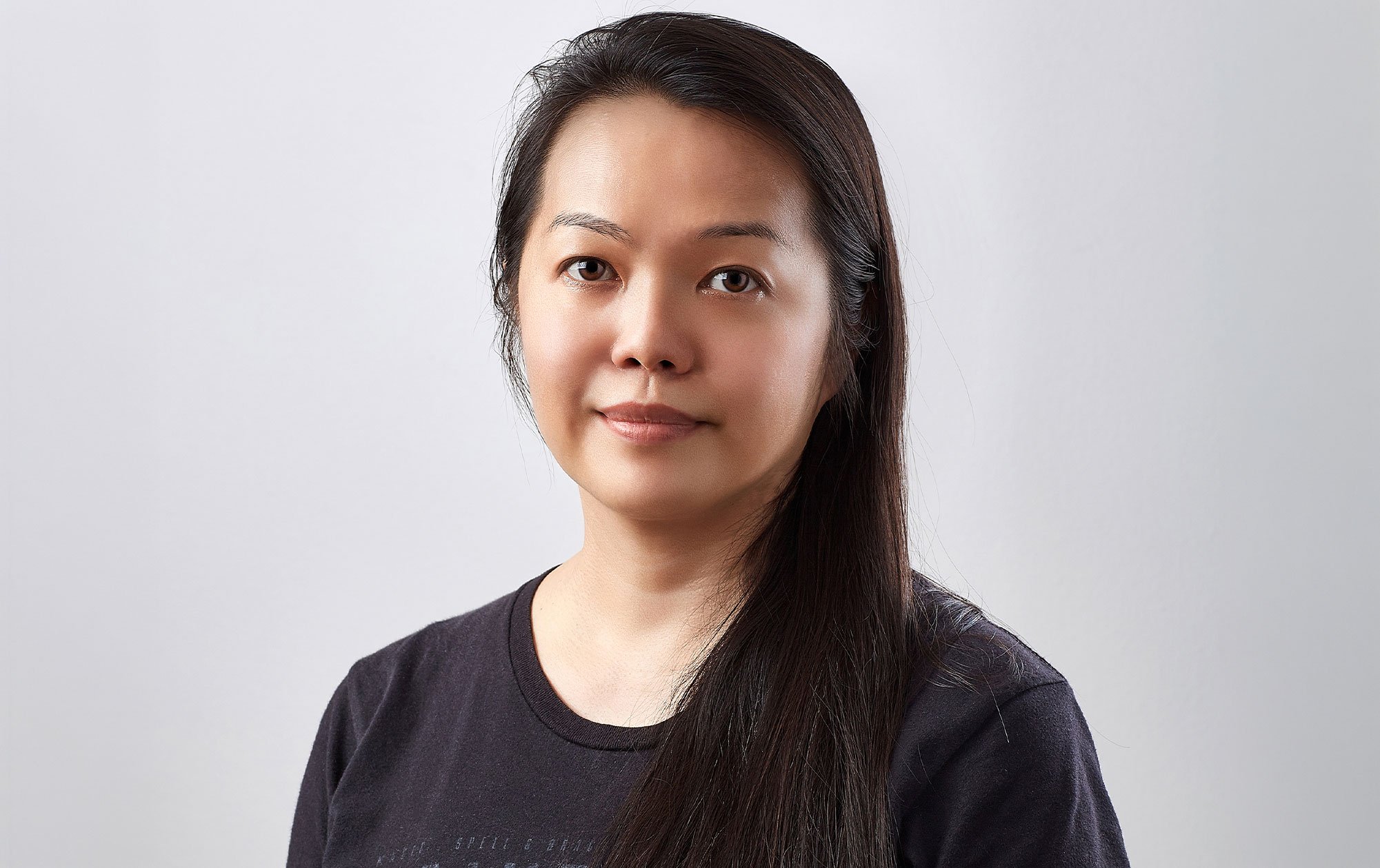
Up next in our Singapore Design in Focus series we catch up with designer Jackson Tan, Co-founder and Creative Director of BLACK, a creative agency based in Singapore and Taiwan. During the process of reaching out to Singapore’s design community for recommendations on who we should interview for this series, Tan’s name was one of the first to come up.
Tan, a recipient of Singapore’s President’s Design Award, is a founding member of the art and design collective PHUNK, and his work spans art, design, branding, and curation. He has worked with brands including Nike, Nokia, Levi’s, Herman Miller, and Diesel, and on projects including Singapore’s SG50 and SG60 identities.
For Tan, Singapore’s design language may not be a particular visual style at all, but a mindset: one that embraces curiosity, adaptability, collaboration and reinvention. He told us that over the last ten to twenty years, Singaporean designers have begun looking inward as much as outward, rediscovering their own stories, heritage and everyday culture.
In our interview, he recalls how the animal-themed playgrounds of his childhood, including the Dragon Playground, sparked his imagination. He also reflects on the role of design in Singapore’s development, how collaboration between clients and designers has evolved, and how AI is changing the creative process.


I believe what sets Singaporean design apart is that, unlike many countries, Singapore went global before we went local.
Many nations developed a strong national design language over many years before exporting it to the world. Singapore’s journey was almost the reverse. As a small nation with limited domestic scale, our designers have always had to think beyond our borders. From the outset, we were creating work that could resonate and scale across Asia and internationally.
That has fundamentally shaped the way we design. Singaporean designers are naturally adept at creating ideas, products and experiences that are universal enough to scale globally, yet flexible enough to be translated and adapted to different local cultures. Living in one of the world’s most multicultural societies has also made us natural translators. Constantly navigating between East and West, tradition and innovation, heritage and technology.
Many nations developed a strong national design language over many years before exporting it to the world. Singapore’s journey was almost the reverse.
Unlike countries with established design traditions, Singapore has always been future-facing. Our instinct isn’t to preserve a fixed design language, but to continually evolve one. Drawing from our heritage while responding to the world around us. Perhaps Singapore’s design language isn’t a particular visual style at all. It’s a mindset: one that embraces curiosity, adaptability, collaboration and reinvention.
Our journey mirrors Singapore’s national development. We first became a global trading hub, then a global business hub. I believe our next opportunity is to become a global cultural and design hub, not by imitating other creative capitals, but by contributing a distinctly Singaporean way of thinking to the world.
For me, Singapore’s greatest design export isn’t an aesthetic. It’s our ability to connect worlds, bridge cultures and imagine what comes next.
Singapore’s transformation has always been a story of design. In many ways, Singapore is a Nation by Design.
Since independence, design has been embedded in the way we’ve built the nation. It has shaped our public housing, transport systems, public spaces, education, communications and digital services. Design wasn’t simply about aesthetics, it was a strategic tool for solving problems, improving everyday life and creating a shared sense of identity.
In our early years as a developing nation, we looked outward. We learned from the world’s leading cities and nations, adopting international best practices and learning to speak a global language of design. For a small country with limited resources, this openness became one of our greatest strengths. We weren’t afraid to learn, adapt and continually improve.
Since independence, design has been embedded in the way we’ve built the nation. It has shaped our public housing, transport systems, public spaces, education, communications and digital services
As Singapore evolved into a leading global city, our role also began to change. We were no longer simply adopting solutions, we were increasingly creating them. Today, Singapore is tackling complex challenges that many cities around the world are only beginning to confront, from ageing populations and land scarcity to climate resilience, digital governance and multicultural living. These are unprecedented challenges, and design has become one of our most important tools for imagining and testing new solutions.
At the same time, we’ve also become more intentional about understanding who we are. Over the last ten to twenty years, Singaporean designers have begun looking inward as much as outward. We’re rediscovering our own stories, heritage and everyday culture, and translating them into contemporary design. We’re no longer just speaking the world’s design language, we’re beginning to speak in our own voice, from our own identity.
I believe this is shaping Singapore’s influence in the world. If the first sixty years were about becoming a successful Nation by Design, I hope we can become a nation recognised not only for what we build, but for the ideas, creativity and cultural perspectives we contribute to the world.
Yes, I think there’s been a significant shift. Not just in how clients view design, but in how they participate in the design process.
In the past, many clients saw designers as the experts who would disappear for a few weeks and return with “the answer.” Today, clients are much more proactive and engaged. They want to be part of the journey. Through workshops, research sessions and strategic discussions, they’re increasingly collaborating with designers to define the problem, explore possibilities and shape the outcome together.
For me, the future of design isn’t about designers having all the answers. It’s about creating the right conversations so that the best answers can be discovered together.
I think this is a positive evolution because the best ideas rarely come from one person or one discipline. Great design emerges through dialogue—bringing together different perspectives, expertise and experiences.
At the same time, I don’t believe bold design is about being different for the sake of it. The most meaningful innovation is grounded in insight, purpose and a clear understanding of the people we’re designing for. When an idea genuinely solves a problem or opens up a new opportunity, it stops feeling risky and starts feeling like the obvious next step.
At BLACK, we see our role as facilitators as much as designers. We ask questions, challenge assumptions and create the conditions for new ideas to emerge. By involving clients throughout the process, we build shared ownership and trust. That trust gives everyone the confidence to pursue ideas that are more ambitious, more original and ultimately more impactful.
For me, the future of design isn’t about designers having all the answers. It’s about creating the right conversations so that the best answers can be discovered together.
When we founded BLACK, we believed that creativity wasn’t simply about making things more beautiful, it was about making things more meaningful. We also believed that culture isn’t something we inherit unchanged; it’s something we actively shape through the stories we tell, the experiences we create and the ideas we choose to share.
That belief continues to guide everything we do.
Whether we’re working with a global brand, a public institution or developing our own intellectual property, we always begin with a simple question: What difference can this project make?
When we founded BLACK, we believed that creativity wasn’t simply about making things more beautiful, it was about making things more meaningful.
Sometimes that difference is commercial, helping a business grow or creating a stronger brand. Sometimes it’s social, bringing communities together or encouraging new ways of thinking. Sometimes it’s cultural—helping people reconnect with their heritage or inspiring them to imagine the future differently.
We see design as a bridge between people, ideas and cultures. It gives shape to stories, creates shared experiences and helps people see the world from a different perspective.
Ultimately, success isn’t measured only by what we create, but by the conversations we start, the connections we build and the positive change that follows. That’s what we mean when we say creativity and culture can make a difference.


I don’t see it as a choice between a clear brief and creative freedom. I think great design needs both.
A clear brief gives us clarity. It defines the challenge, the intent and the constraints. Rather than limiting creativity, I believe constraints give us something meaningful to respond to.
Once we have that clarity, we intentionally broaden the conversation. We become curious. We ask questions, challenge assumptions, conduct research, facilitate workshops and invite different perspectives into the process. This is where unexpected ideas and new opportunities emerge.
A clear brief gives us clarity. It defines the challenge, the intent and the constraints. Rather than limiting creativity, I believe constraints give us something meaningful to respond to.
I often describe our creative process as going from narrow to wide, and then narrow again. We begin with a clearly defined challenge, expand our thinking to explore different possibilities, and then gradually refine those ideas into a solution that is simple, focused and meaningful.
At BLACK, we often say: “Clarity defines the challenge. Curiosity expands the possibilities. Design brings them back together.” That philosophy guides the way we approach every project.
Ultimately, I don’t believe creativity is about having unlimited freedom. It’s about knowing when to diverge and when to converge. The balance between clarity and curiosity allows us to create work that is both original and purposeful.
“AI generates possibilities. Humanity gives them meaning.” I think that captures how I see AI’s role in design today.
This isn’t the first technological transformation I’ve experienced as a designer. I was part of the first generation that learned to design digitally on the Macintosh. Before that, graphic design was a highly specialised process involving different roles. A layout artist, a photo retoucher, an illustrator and a print production artist. Digital tools brought many of those disciplines together, enabling a single designer to take ownership of the entire creative process. Technology fundamentally changed what it meant to be a designer and levelled the playing field for many of us.
I see a similar shift happening today with AI.
Just as digital software transformed how we made things, AI is transforming how we think, research and explore ideas. At BLACK, AI has become an integral part of our workflow across research, brainstorming, prototyping and strategic thinking. It allows us to explore more possibilities, challenge assumptions and move much faster through the early stages of the creative process.
As generating ideas becomes easier, the real differentiator is no longer the ability to produce more options, but the ability to ask better questions, exercise good judgement and recognise which ideas truly matter.
Rather than replacing creativity, I believe AI expands curiosity. It strengthens the exploratory phase of our process, giving us more opportunities to discover unexpected connections and new directions.
At the same time, I believe AI makes the human aspects of design even more valuable. As generating ideas becomes easier, the real differentiator is no longer the ability to produce more options, but the ability to ask better questions, exercise good judgement and recognise which ideas truly matter.
AI has access to the world’s information, but it doesn’t have lived experience. It doesn’t have memories, intuition, relationships or emotions. It doesn’t understand culture because it hasn’t lived it. Those human experiences, sensibilities and emotions are what give design authenticity, empathy and meaning.
I don’t see AI replacing designers. I see it expanding the role of the designer once again. Just as the Macintosh empowered designers to become multidisciplinary creators, AI is enabling designers to become researchers, strategists, facilitators and curators of ideas. The tools have changed, but our responsibility remains the same: to create work that connects with people in meaningful ways.
It’s always difficult to choose because every project represents a different chapter of our journey. But if I had to highlight three, they would be SG50 & SG60, ART-ZOO, and ANOTHER LAND because together they reflect the different ways I believe design can create meaningful impact.
SG50 and SG60
These identity projects were especially significant because they became part of Singapore’s collective memory. More than creating a logo, we created a shared symbol that Singaporeans could make their own. The SG50 identity became ubiquitous, appearing across national celebrations, public spaces, businesses, schools and community initiatives. More importantly, it gave Singaporeans the opportunity to celebrate Singapore in their own way, rather than through a purely government-led campaign.
The identity became a platform for participation, allowing people and organisations to express what Singapore meant to them. It also helped establish “SG” as a contemporary shorthand for Singapore, shaping how the nation presents itself today. It reinforced my belief that the most successful identities don’t just represent people, they belong to them.
ART-ZOO
ART-ZOO is perhaps the project closest to my heart because it was inspired by my own childhood. Growing up, I spent countless hours drawing, imagining characters and turning everyday places into worlds of adventure. Those experiences taught me that creativity begins with curiosity and play. ART-ZOO was my way of bringing that feeling back, not just for children, but for children of all ages.
Because no matter how old we become, we should never lose our sense of curiosity, wonder and imagination. It began as an interactive inflatable art playground where people could step inside a world of colour, characters and imagination. Today, it has grown into an original universe of books, animation and intellectual property. More than creating entertainment, ART-ZOO is about nurturing imagination and reminding us that creativity is one of the greatest gifts we can carry throughout our lives.
ANOTHER LAND
This is our most eventful project because it grew out of an unexpected chapter in our lives. During the COVID-19 pandemic, my wife and co-founder Talia and I found ourselves stranded in Taiwan for almost a year. Like many people around the world, that experience made us reflect on what truly matters. We asked ourselves a simple question: How might we help the world sleep better and live well? That question became the foundation of ANOTHER LAND.
Together with our partners in Taiwan, we combined design, science and sensory experiences to create products and rituals that encourage people to slow down, rest and reconnect with themselves. It reminded me that design isn’t only about creating products—it can also improve wellbeing and the quality of everyday life.
Although these three projects are very different in scale and purpose, they share the same underlying belief. Whether we’re designing for a nation, inspiring imagination through play, or creating moments of care and wellbeing, the goal is always the same: to create meaningful connections between people, culture and everyday life.
The Dragon Playground. It was part of a series of iconic animal-themed playgrounds that shaped the childhood of many Singaporeans, including mine. Long before I created ART-ZOO, these playgrounds sparked my imagination and showed me how design could transform an ordinary neighbourhood into a place of adventure, creativity and shared memories.
If I could stretch the definition of “designer,” I’d say Lee Kuan Yew. I’ve always been inspired by the way he approached Singapore as a long-term design project—bringing together vision, systems thinking and an unwavering commitment to improving people’s lives. It reinforces my belief that design isn’t confined to objects or graphics; it can shape a nation.
One of my favourite things to do is simply walk. Whether it’s around my neighbourhood of the Bras Basah–Bugis district and Kampong Glam, or on longer walks through Gardens by the Bay and the Singapore Botanic Gardens.
Those walks have become an important part of my creative process. They give me the space to slow down, observe and reconnect with the city. I find inspiration in the everyday details—the architecture, old signboards, neighbourhood playgrounds, coffee shops, hawker centres and the conversations that unfold between people. It’s often these seemingly ordinary moments that reveal the most meaningful stories.


To learn more, visit: blackdesign.world
All images provided by Jackson Tan