
A conversation with the founders of House of Katha about duality in Indian design, the role of creative coding, and how experimentation across art, design, and technology shapes their work.


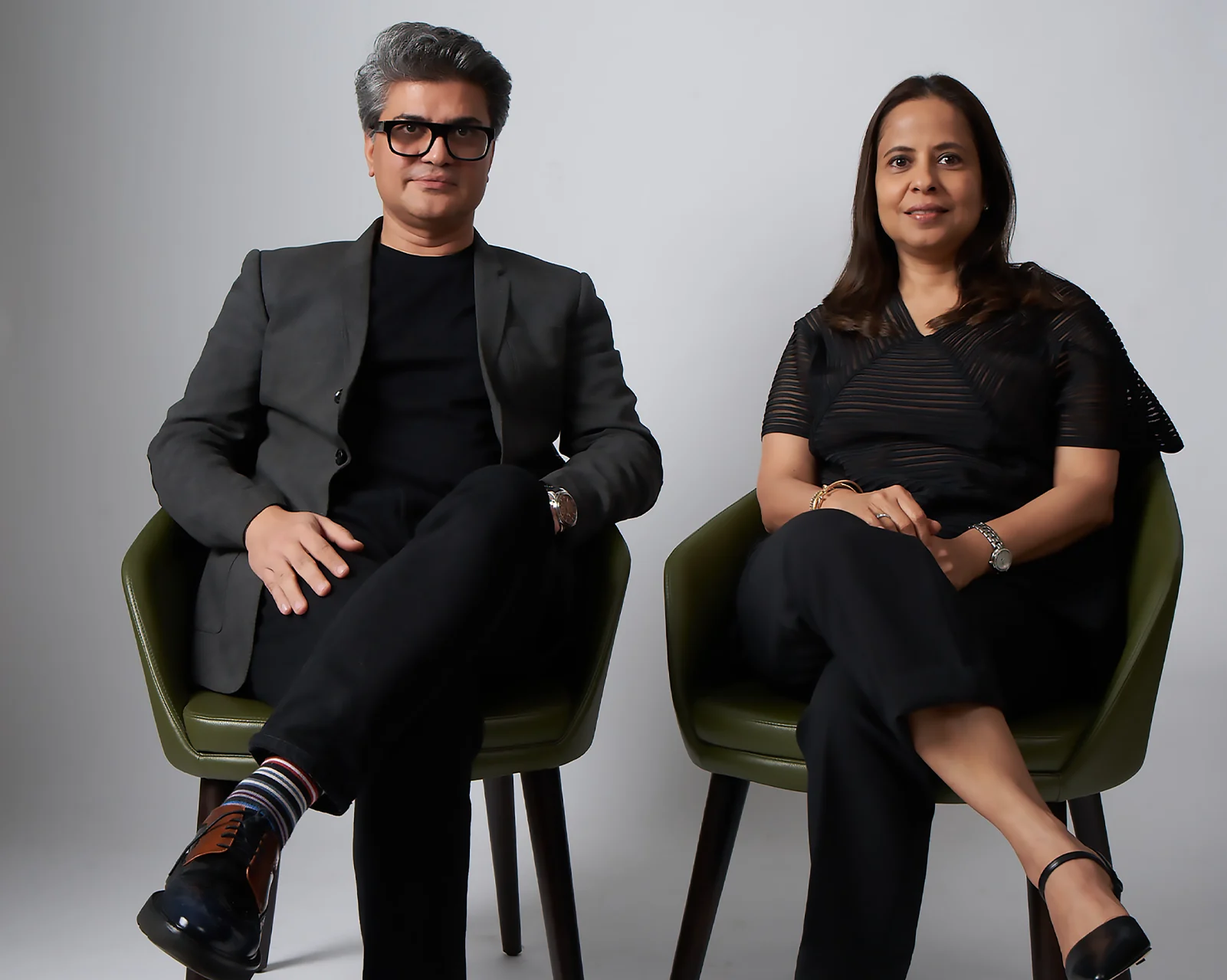
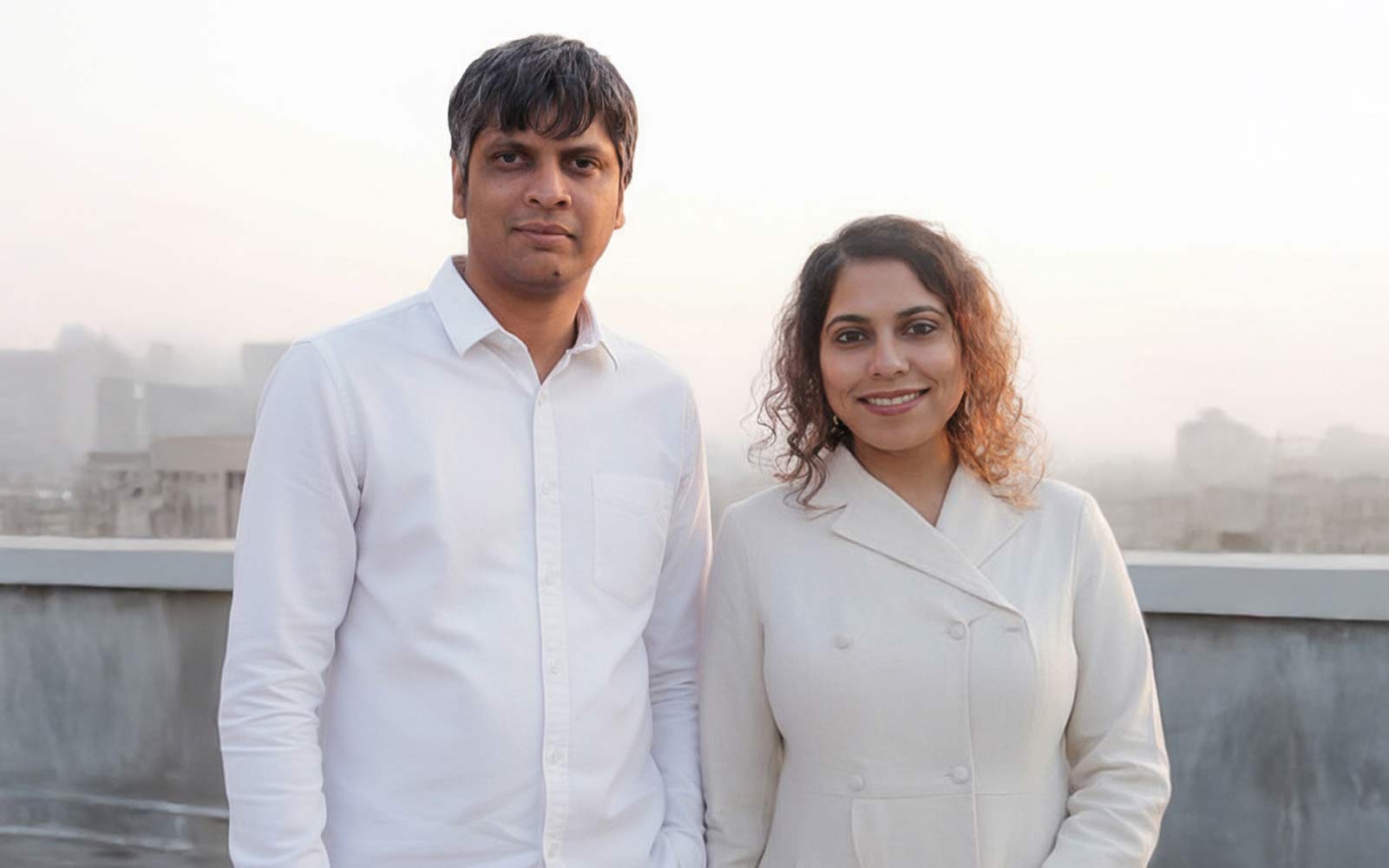
Founded by designers Anusheel Gurjar and Srajan Jain, House of Katha is an Indore-based creative studio that works at the intersection of art, design, and technology.
Sparked by a collaboration that began when the pair first met and became friends in design school, their work draws from generative thinking, system-led design, and ongoing explorations with creative coding and other emerging approaches.
They view art, design, technology, science, nature, and culture as a single interconnected landscape rather than separate territories. Much like a creative Pangea.
Inspired by the anti-disciplinary thinking championed by the MIT Media Lab, their practice pushes them to continually reassess how ideas take shape—reworking process, refining skill, and developing projects that encompass of multiple disciplines.
When asked what sets Indian design apart, they told us, “Our culture has a duality. We have managed to balance order and chaos, nature and culture and other such dualities in a profound way.”


Our culture has a duality. We have managed to balance order and chaos, nature and culture and other such dualities in a profound way. For example, Indian temples have a lot of motifs, sculptures, and hidden stories in the architecture. Such intricate carvings and structures are usually regarded as ‘maximalism’.
However, if you notice, most of the temples are made of a single-color stone. This duality of complex surfaces paired single color material introduces a delightful harmony, a balance untainted by the idea of maximalism and minimalism. The same ideology can be seen in our textiles, jewelry and other crafts. We believe India is the master of it.
Over time, we have realised that traditional Indian design has a logical way of creating, similar to creative coding. For example, we made an in-house experiment called Textile Rhythms. It blends poetic rhythms and Indian motifs to generate patterns.
These patterns were then printed onto fabrics, resulting in clothing sets that are individually distinctive and at the same time harmoniously connected through a shared visual language.
Over time, we have realised that traditional Indian design has a logical way of creating, similar to creative coding.
Japanese culture is a big inspiration. The way they embrace modernity while proudly holding onto their tradition is admirable. I also love the fact that they call it ‘open space’ to what we call negative space or white space in the design world. It’s a simple switch of words with a huge shift in perspective.
I think we are quite new in the industry to be able to comment on that. However, we think that if a creative company like ours, run by two young boys in Indore can have clients of various scales across the country, then clients have become bolder. We have been told by a lot of people that they see a freshness or newness in our work and quite frankly we have no clue why.
It’s magic even for the clients when they see a tech-based solution derived from the lens of an artist.
Our ideology of working at the intersection of art, design and technology has been a great way to encourage clients with bolder and innovative design. It’s magic even for the clients when they see a tech-based solution derived from the lens of an artist.
Both are different, both are great when provided with the right context. We believe there’s a beauty even in set briefs. For a moment, think it’s the inception of the universe and you are an architect working with God as your client. At this moment, you have been tasked with creating a ‘tree’.
God has defined that the idea of a tree consists of roots, trunk, branches, leaves or flowers and we need thousands of variations. How do you create so many trees with just these few elements? Answer: Rather than creating several trees, you create a dynamic system within the limitations.
How do you create so many trees with just these few elements? Answer: Rather than creating several trees, you create a dynamic system within the limitations.
You introduce factors like wind direction, soil quality, heat intensity, leading to variations in texture, colour, branch thickness, leaf arrangements and more, which then lead to the creation of thousands of beautiful trees. In the creative coding world, we have this idea of a programmatic way of making.
It’s great when the client trusts you with this part when defining the brief. The ‘how’ part of things.


An education system is ever evolving, always with room for improvement. There’s a need for balance in the design education system. There are major design institutions that are great at developing design thinking and problem-solving skills in students and then there are smaller institutions that focus on teaching technical and execution skills. There needs to be a single host that offers a cross-pollination between both.
Don’t listen to podcasts. Listen to yourself.
We keep experimenting with creative coding in our projects. Versatile in nature, it has immense possibilities in elevating the immersive experience for brands and art in general. We have been experimenting with websites that respond to sound, visual merchandising screens that react to the body movements of window shoppers and much more.
This pollination of media has helped us provide a better experience for the consumers and increase the brand retention. It has helped structure a unique process of making, constantly questioning ‘why’ and ‘why not’
Development work for Studio Ping Pong’s website is truly special for us. It’s a joy to make for creatives as creatives ourselves. Unlike a typical website, we didn’t let the technical limitations come in the way of design. Through creative coding, we introduced a lot of custom interactions to elevate the experience of the website.
The project helped us introduce the industry that the limitations of storytelling in the digital space can be a lot more immersive and quite frankly, fun to design. All thanks to team Ping Pong and their founder, Kritika Trehan. (Studio Ping Pong Images)
As we mentioned in the beginning, the Dilwara Temple is a beautiful example of such harmony
Your go-to source for creative inspiration in India:
Textiles


To learn more, visit houseofkatha.co
All images provided by House of Katha