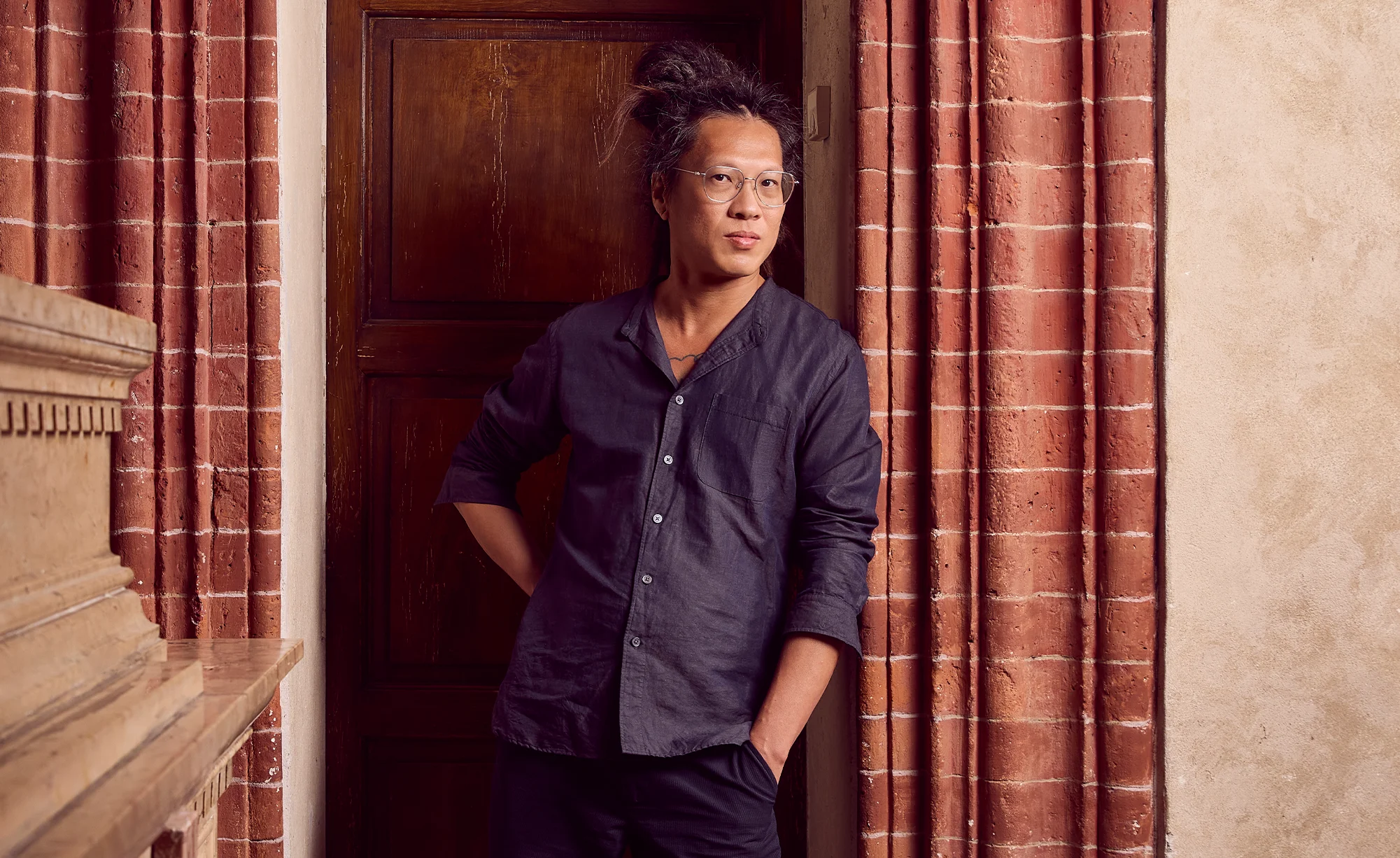
The Studio Director of Fable reflects on Singapore’s evolving design landscape, working with clients who are open to exploration, the challenges she faced as a young designer, the simple enjoyment of creating typefaces, and more.


Up next in our Singapore Design in Focus series we speak with Eugenia Chin, Studio Director of Fable, a design consultancy working across brand identities, typography, and creative campaigns.
In our interview, Chin discusses design’s evolving role in Singapore, from promoting national campaigns to becoming a form of strategy. She also reflects on fond memories of Sharity Elephant as the mascot for sharing and charity, and Singa Lion for courtesy and kindness, noting that mascots remain a feature of public campaigns today.
When asked about designing typefaces, Chin says inspiration can come from a desire to create a typeface that expresses something she has yet to see in the market. She adds that type design is really about having fun and that sometimes you don’t need a reason to create.
She also reflects on the challenges of finding clients as a young designer fresh out of university and what she wishes she had known when starting out. She discusses the role of AI in her work and why she believes design must retain a soul that machines cannot replace.


I personally struggle with defining what “Singaporean design” even means or looks like. From the lens of foreigners, I guess it’s our unique geographic position that provides us a truly East x West lens, making us adaptable and flexible across projects that require a deep understanding of blended cultural contexts.
With every new nation, design naturally acted as a function that pushed national movements. Campaigns featuring public cleanliness, kindness, productivity and even birth control were signature movements that heavily shaped our society.
People of my generation fondly remember Sharity Elephant as the mascot for sharing and charity, and Singa Lion for courtesy and kindness.
What’s interesting is that mascot design is still heavily featured in our public campaigns today, albeit designed in today’s context and trends. What’s not changed, would be the role of design in using mascots to promote national movements.
From an aesthetic and functional role of design in the founding years, Singapore has now transitioned to practising design as a form of strategy. This is impacted by global movements such as design thinking, sustainability, digital technology, and the list goes on.
I don’t find them more or less willing over the years. Client profiles don’t change over the years. Rather, the type of clients we accept changes. I relish working with clients who have an open mind when it comes to exploration and collaboration.
I relish working with clients who have an open mind when it comes to exploration and collaboration.
While “bold” might not be my preferred choice of word when it comes to design, I interpret it as having clients willing to push the envelope to better the output. Fable was never about always making bold design choices just for the sake of it – we push boundaries when it is appropriate.
The former is based on a deep understanding of our client’s brand DNA, which is imperative to designing a typeface that will act as the brand’s handwriting. A generic typeface can never represent a brand as well as a customised one.
Type design is really just about having fun. Sometimes, you don’t need a reason to create.
The latter is based on our years of experience in design and branding, where we are in touch with typefaces every day. Inspiration comes by when we desire to create a typeface that expresses something we have yet to see in the market. Actually, to be very honest, type design is really just about having fun. Sometimes, you don’t need a reason to create.


I prefer the former when I am dealing with MNCs and clients with opaque layers of management for obvious reasons. I prefer the latter when I am dealing directly with the sole decision-maker or the boss of the company. I always tell my team: don’t look at the brief, look at the client first. A bad client makes the most interesting of briefs a total hell for you; a good client makes a seemingly boring brief something memorable and enjoyable to work on.
I always tell my team: don’t look at the brief, look at the client first.
I am intrigued by the question that assumes clarity and flexibility are on two ends of a spectrum. I have had projects that are clear in their deliverables and KPIs, yet because of the client, we had a lot of fun challenging ourselves to deliver creatively.
We use it. I am not afraid to say that. It’s how you use it that matters. AI is great for bouncing of ideas, summarising, light research, graphic generation, and more. What’s important is that we never lose our soul to it. I strongly believe that design, at the end of the day, has to contain a soul that is irreplaceable by machines.
To celebrate my youth.
When we first started, we were fresh out of university. It was difficult getting clients, especially larger companies, who preferred designers with years of experience and a solid portfolio. We had neither, because of our age. This meant we went through rejections multiple times simply because we were “too young”.
While it was discouraging, we slowly found clients who saw what we could do, and not what we have done. They appreciated our youthful hunger and passion, and most importantly, gave us a shot. I have immense gratitude for these clients and some of them remain our longtime clients till present day.
Looking back, I wish someone told me that my youth had its advantages, and that things come in His time.
Any public housing precinct. They each carry their own distinctive architecture, history and communities.
Jiahui, my partner at work and home. He’s fantastic and I would love to work with him (just the two of us) on something purely personal and non-profit. We just need to find time after our kids get a little older.
A private onsen. I think best in a quiet place devoid of any humans.


To learn more, visit fable.studio
All images provided by Fable