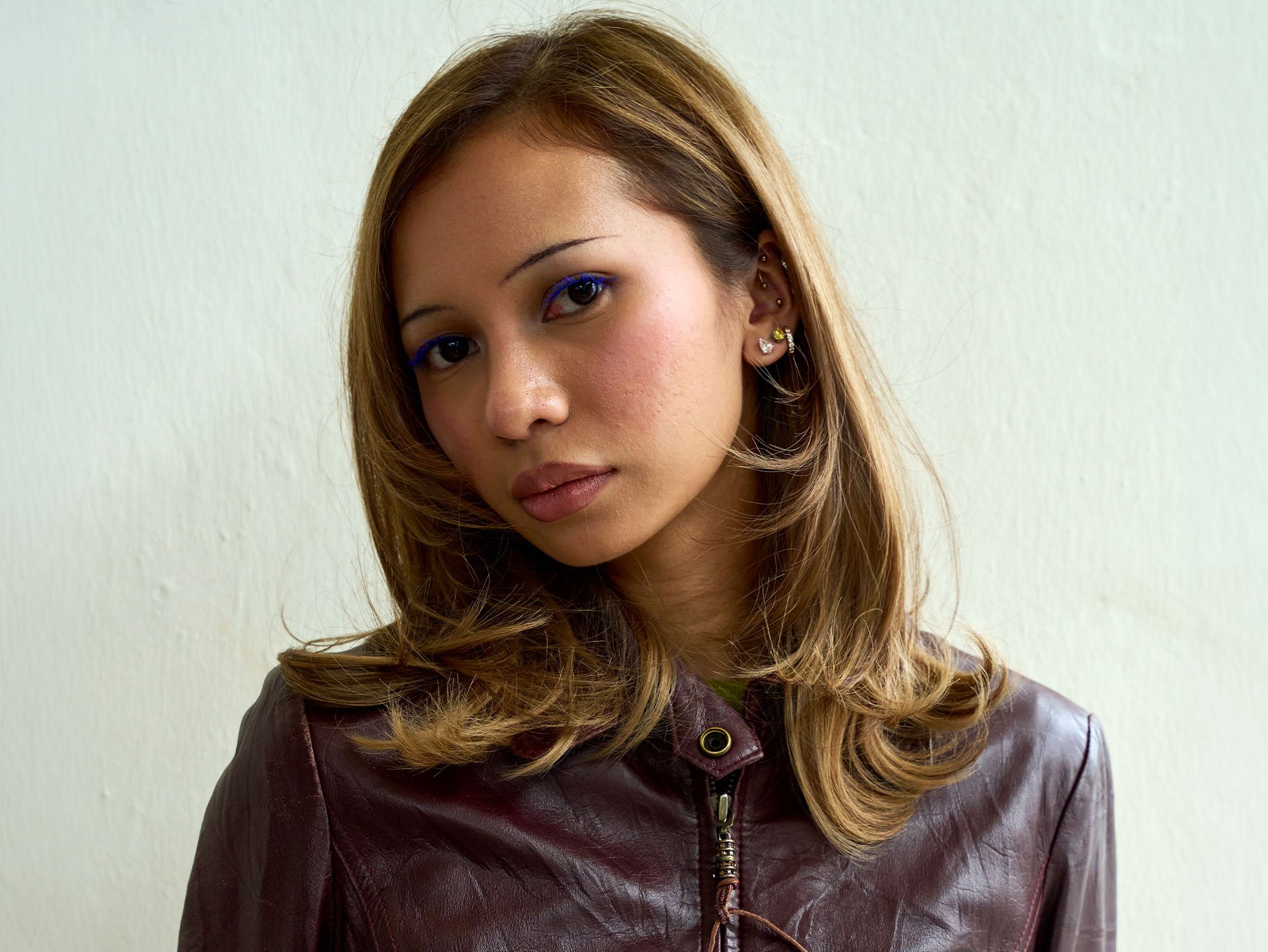
Up next in our Singapore Design in Focus series, we speak with industrial designer Emeline Ong, whose practice is rooted in storytelling and emotion. Ong graduated from the National University of Singapore in 2023 with a Bachelor of Arts in Industrial Design. Her debut project, The Pastille Collection, a series of monolithic tables adorned with minimal graphic lines, was shortlisted for the 2024 Dezeen Awards, and her work has been shown at events including Milan Design Week and Singapore Design Week.
Asked what sets Singaporean design apart from the rest of the world, Ong pointed to the country’s relative youth. “We are still evolving, and I would say we have yet to find a specific style of our own, but that makes it exciting to watch how we grow and evolve!” she said.
Over the course of our interview, she talks about how design in Singapore is intertwined with its blend of cultures, how she chooses materials and manufacturing methods to turn imaginative ideas into physical objects, and why she prefers working to a set brief.
She also discusses AI, which she finds useful for mundane tasks but doesn’t think can ever fully replace an idea or concept. She explains why The Pastille Collection, which she made entirely by hand, means so much to her, and shares what she wishes she had been told when she was starting out in design: “Nothing is as scary as it seems. Just put yourself out there, and things will follow.”
What sets Singaporean design apart from the rest of the world?
I think we are in a unique position because we are a relatively young country. We are still evolving, and I would say we have yet to find a specific style of our own, but that makes it exciting to watch how we grow and evolve!

Singapore has transformed dramatically since its founding. How has the role of design evolved alongside it?
Design is intertwined with culture. With four main ethnic groups coming together in Singapore, we have an interesting blend of cultures and different ways of perceiving things. I think this is what makes our culture unique, much like Singlish, which emerged and evolved from the blending of different languages.
With four main ethnic groups coming together in Singapore, we have an interesting blend of cultures and different ways of perceiving things.
You trained in industrial design, and your work is strongly rooted in storytelling and emotion. How has that background shaped the way you turn imaginative ideas into tangible objects?
When I have an imaginative idea, I think about the possibilities of bringing it into the real world. This involves looking at the suitable materials and accessible manufacturing methods that can best bring my imagination to life.
Sometimes, having limitations can actually lead to more ideas.
For example, I think about which machines or processes can best achieve a particular effect, whether it is in colour, shape or texture.

When approaching a project, do you prefer the clarity of a set brief or the flexibility of creative freedom? What makes that balance important for you?
I prefer having a set brief to work with, as I find that constraints can help guide my thinking. Sometimes, having limitations can actually lead to more ideas.
AI is a growing part of the conversation in design. How do you see its role in the industry, and how has it shaped your own workflow?
I think AI is useful for simpler, more mundane tasks that don’t require much creativity, as it can help speed up the workflow.
I see it more as a palette, something that can suggest a thing or two and help spark ideas, but it will never be the whole picture.
But when it comes to creativity, I don’t think it can ever fully replace an idea or concept. I see it more as a palette, something that can suggest a thing or two and help spark ideas, but it will never be the whole picture. I think human ideas are the most sincere and ingenious, and we should not let a robot define creativity for us.

What’s something about breaking into design in Singapore that you wish someone had told you when you started out?
Nothing is as scary as it seems. Just put yourself out there, and things will follow.
Could you share a project (or projects) from your own work that stands out as especially meaningful or impactful to you?
The Pastille Collection, because it was my debut project and everything was handmade by me! I poured my heart and soul into the project, and it also helped kick-start my career in ways I never imagined possible.


Quick Hits
Something symbolic of Singaporean design that someone visiting Singapore should see that isn’t widely known:
Eating kuehs! I think they are a symbol of Singapore’s multicultural identity and shared heritage.
A Singaporean designer or artist you’d love to collaborate with or have been inspired by:
I would love to collaborate with someone from a different creative field, outside of industrial design. I think it would be interesting to exchange perspectives and see how we can bring our different ways of thinking together!
Your go-to place for creative inspiration in Singapore:
I get the most inspiration when I have a clear mind. Marina Barrage is a great spot to take in Singapore’s skyline and watch the sunset. I always feel refreshed after spending some time there.