The Founder of Supermama reflects on Singapore’s approach to design, what objects can tell us about a culture, and how his work through weareSuper has expanded his understanding of what design can do.


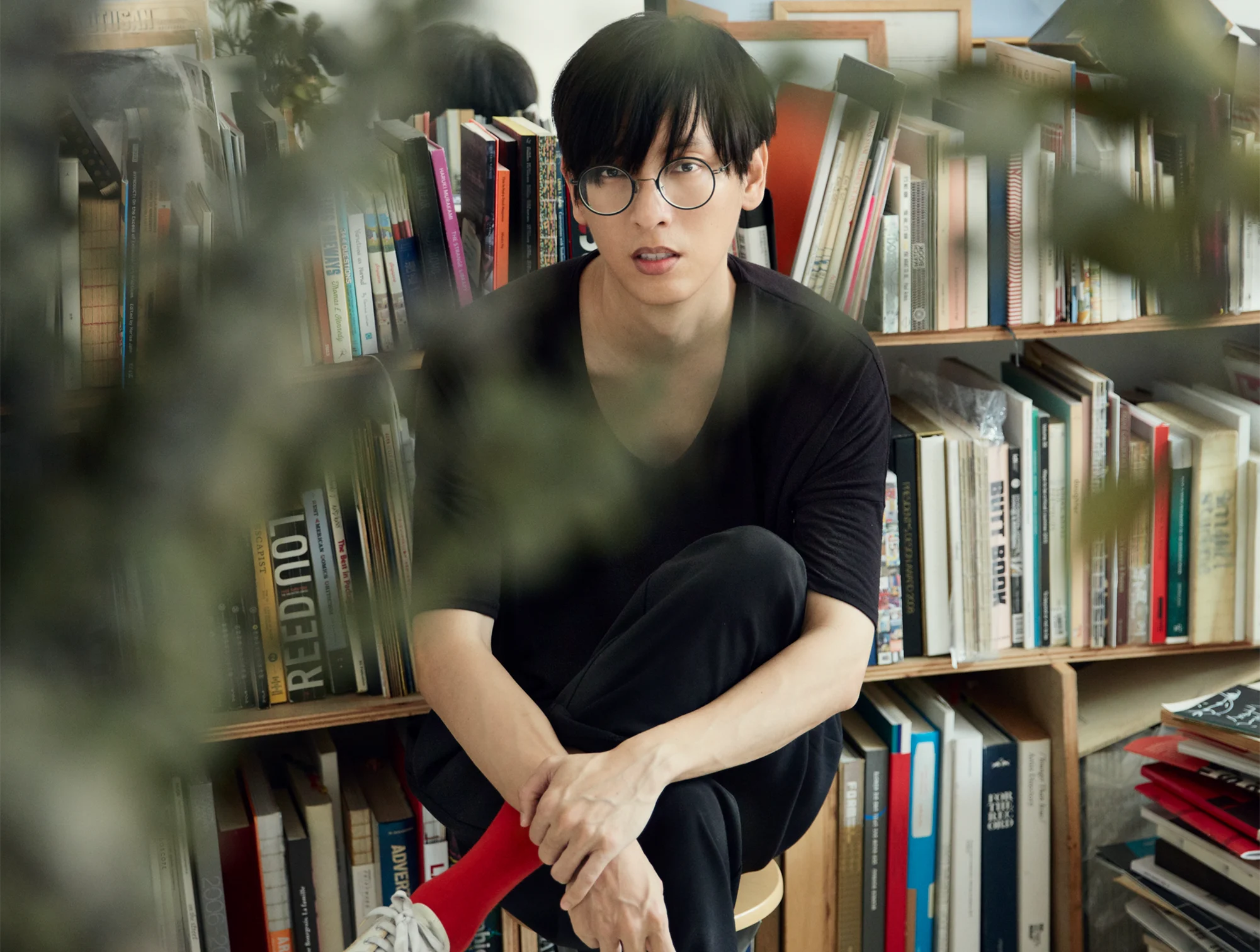
Up next in our Singapore Design in Focus series we speak with Edwin Low, Founder of Supermama, a Singapore design brand and museum store that began with Low and his wife, Mei Ling, in 2010.
When Supermama opened, Low says, it was basically a design store, with objects found on travels and brought back to Singapore. After a while, he began asking himself what visitors to Singapore would bring home, and he says he couldn’t find enough objects that represented the Singapore he knew.
“That question changed Supermama,” says Low.
Instead of only looking outward for designs, the store began working with Singapore designers and artists, as well as with manufacturers and craftspeople overseas, among them KIHARA in Arita, Japan, with whom Supermama developed Singapore Icons, a porcelain collection that went on to receive the President’s Design Award.
We caught up with Low to learn more about his thinking on Singapore’s design language, why everyday objects can tell us something about a culture, and how his work through weareSuper has expanded his understanding of what design can do.


I think Singapore design has developed a particular ability to navigate between worlds.
We are Asian, but also very international. We are highly organised and pragmatic, yet culturally very layered. We are exposed to many different cultures, industries and ways of making, and because we manufacture relatively little ourselves, Singapore designers have also become very comfortable working across borders and production cultures.
I don’t think there is one visual style that defines Singapore design, and I’m not sure there needs to be. There is already a Singapore point of view in the way we approach problems, combine influences and make things work.
Perhaps our strength lies in this ability to connect things, absorb different influences and make something of our own from them.
Singapore’s relationship with design has always been closely connected to nation-building.
In the early years, design had a very practical job to do. We needed housing, infrastructure, transport, public systems and industries. Good design helped make Singapore work.
I think we are entering another interesting stage now. Design is increasingly being asked to deal with much more complex questions: ageing, disability, sustainability, technology, cultural identity and how we want to live together.
As the country developed, the role of design expanded. We started thinking more about identity, culture, experience and how Singapore presents itself to the world. Today we have a generation of designers and studios producing work that is increasingly confident in its own point of view.
I think we are entering another interesting stage now. Design is increasingly being asked to deal with much more complex questions: ageing, disability, sustainability, technology, cultural identity and how we want to live together.
That interests me because design is no longer simply about making things look or work better. It has become a way of thinking about what kind of society we want to build.
When Supermama started in 2010, we were basically a design store. We travelled, found objects we liked and brought them back to Singapore.
But after a while, I started asking myself a very simple question: if people come to Singapore, what would they bring home from us?
I couldn’t find enough objects that represented the Singapore I knew.
That question changed Supermama.
Instead of only looking outward for good design, we started looking inward. We began working with Singapore designers and artists, and with manufacturers and craftspeople overseas, to make our own objects.
Singapore Icons was one of the earliest expressions of that thinking.
After a while, I started asking myself a very simple question: if people come to Singapore, what would they bring home from us?
Over the years, I became less interested in Supermama simply being a place that sells good design. I became much more interested in how objects can represent a culture.
Today I think of Supermama as contributing to Singapore’s material culture. We make objects, but collectively these objects become a record of who we are, what we value and how Singapore continues to change.
I have been thinking about this for many years, and I don’t think a Singapore design language means arriving at a particular aesthetic.
It isn’t about putting the Merlion, orchids or familiar Singapore motifs onto everything.
A design language becomes interesting when you begin to recognise a certain way of thinking.
What are our instincts as Singapore designers? How do our density, multiculturalism, pragmatism, humour, ambition, constraints and relationship with the rest of Asia shape the things we make?
When we look at places with very established design cultures, we can often recognise where an object comes from without seeing a national symbol anywhere. That recognition comes from generations of designers, industries, manufacturers, institutions and consumers developing alongside one another.
What are our instincts as Singapore designers? How do our density, multiculturalism, pragmatism, humour, ambition, constraints and relationship with the rest of Asia shape the things we make?
Singapore has been building this vocabulary for several decades now, and I think we are beginning to see different expressions of it.
For me, developing a Singapore design language means continuing to create enough good work, over enough time, that certain attitudes and ways of thinking become recognisable. I don’t think any one designer can decide what that language is. It emerges collectively from what all of us make.


Objects are interesting because we live with them.
A book tells you a story when you read it. An exhibition tells you a story when you visit it. An object can sit quietly in your home for twenty years.
You use it, touch it, break it, repair it, give it to someone. Eventually it becomes connected to memory.
That gives objects a very particular ability to carry culture.
A plate can tell you something about how we eat. A chair can tell you something about how we live. A souvenir can reveal what a country chooses to remember about itself.
This is probably why I have remained interested in objects for so long. They may appear ordinary, but collectively they become evidence of a place and a time.
I use AI quite a lot.
For me it is another tool, but a very powerful one. I use it to research, organise thoughts, test arguments, write, visualise possibilities and sometimes challenge my own assumptions. It has dramatically shortened the distance between having an idea and being able to explore it.
I think the interesting question is what happens when everyone has access to the same intelligence and increasingly the same ability to generate competent work.
AI can generate a hundred possibilities very quickly. The designer still has to know which one matters.
Taste becomes more important. Judgement becomes more important. Knowing what question to ask becomes more important.
AI can generate a hundred possibilities very quickly. The designer still has to know which one matters.
And perhaps this makes culture even more important. Technology can learn styles extremely quickly, but having something meaningful to say, and understanding why you are saying it, still comes from your relationship with the world around you.
Don’t be too concerned about defining yourself too early.
When I graduated, I thought being a designer meant I had to design things. Over the years I have been a shopkeeper, product developer, curator, producer, collaborator and business owner. Design gave me a way of thinking that allowed me to move between all these roles.
I would also tell young designers to stay curious about things outside design.
When I graduated, I thought being a designer meant I had to design things. Over the years I have been a shopkeeper, product developer, curator, producer, collaborator and business owner.
Learn about business. Learn about manufacturing. Travel. Understand culture. Talk to people who are completely different from you. Learn how things are sold, how institutions work and how ideas actually make their way into the world.
The world probably doesn’t need more designers who are simply good at designing. It needs people who can use design to understand problems, connect different worlds and make things happen.
Singapore Icons / Singapore Blue
Singapore Icons will always be important to me because it changed the trajectory of Supermama. It began with a fairly simple ambition: to make Singapore souvenirs that we ourselves would want to own.
Working with Singapore designers and KIHARA in Arita, Japan, eventually led to Singapore Icons and the Singapore Blue collection. It established a way of working that continues at Supermama today: Singapore stories interpreted through contemporary design and realised through collaborations with makers and manufacturers who bring their own knowledge and traditions.
More than a decade later, we are still developing the collection. I like that it has become an ongoing body of work rather than a project that ended.
weareSuper / inclusive design
More recently, the work I have been doing through weareSuper has expanded my understanding of what design can do.
It feels connected to the same question I started with at Supermama many years ago: how can design give form and value to stories that might otherwise be overlooked?
Working with persons with disabilities, social organisations, designers and makers has made me think much more deeply about participation: who gets to design, whose ideas become products, and how design can create economic and social value.
It feels connected to the same question I started with at Supermama many years ago: how can design give form and value to stories that might otherwise be overlooked?
The everyday things. Go to a hawker centre, a wet market or an old HDB estate and look at the objects, signs, furniture and improvised solutions people have created around themselves.
There is probably more Singapore design language there than in any design shop.
Nathan Yong.
He was probably the first designer-entrepreneur profile in Singapore that I really looked up to. He showed me early on that being a designer didn’t necessarily mean only running a design studio.
You could design, make, build a brand, run a business and create your own opportunities. That was very inspiring to me, especially when I was finding my own path.
The Asian Civilisations Museum. I like looking at Singapore through the much longer history of Asia. It reminds me that while Singapore as a nation is relatively young, the cultures, exchanges and histories that we are part of go back much further.


To learn more, visit supermamastore.com
All images provided by Supermama.