The Product and Play Designer, on the shift toward designing for society and the quality of everyday life, helping clients discover a better question, a project putting children in the role of the expert, and more.


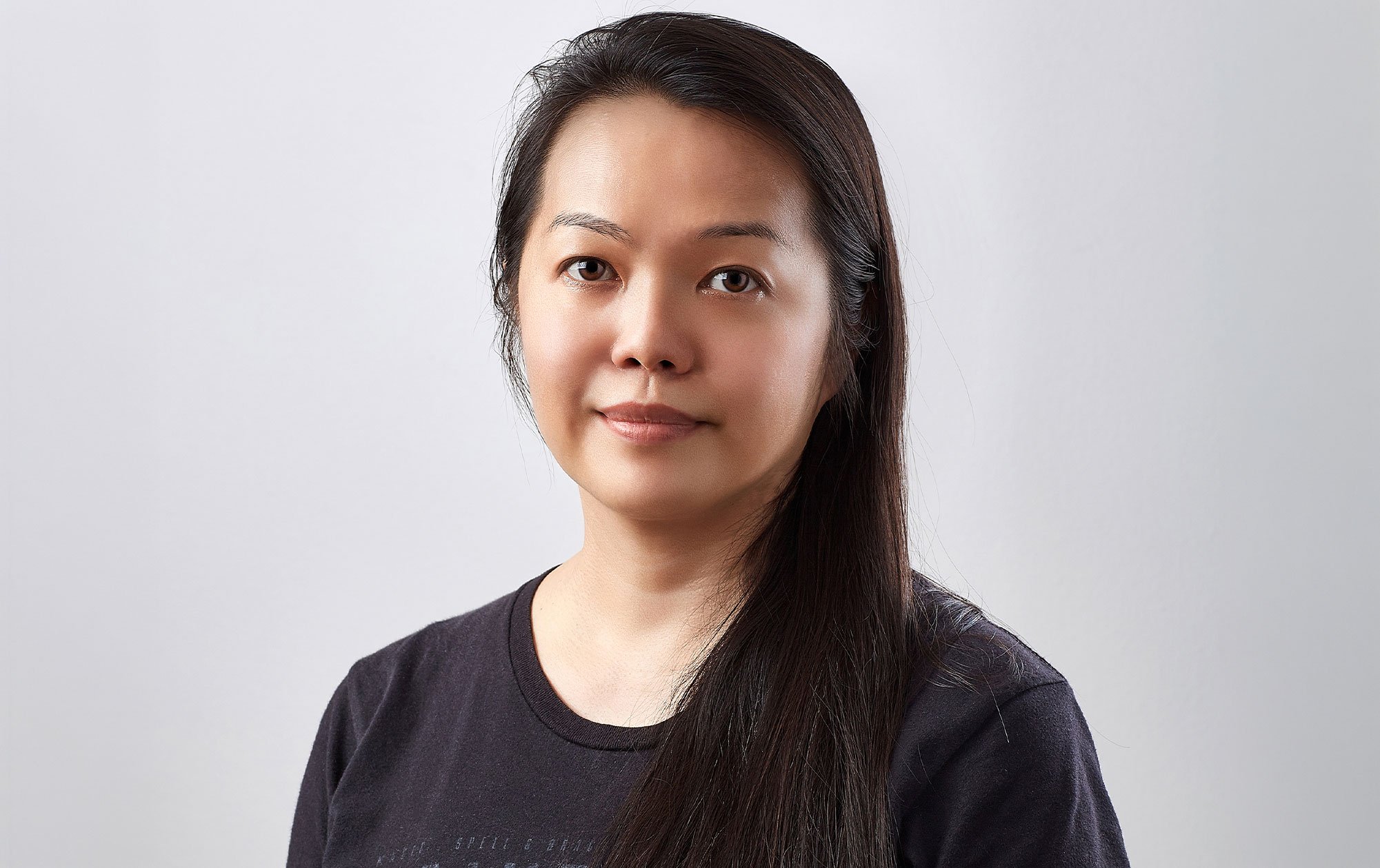
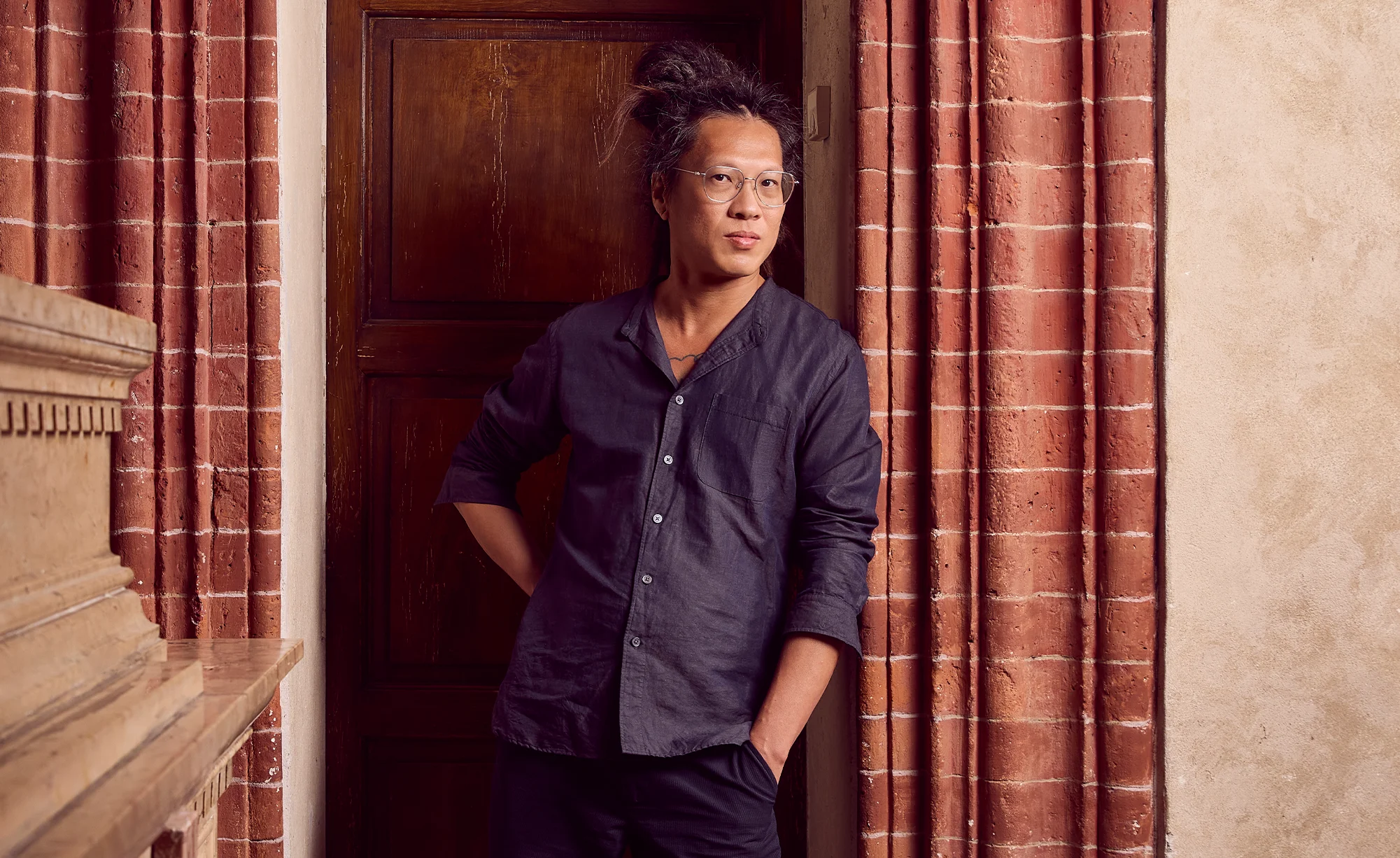
Up next in our Singapore Design in Focus series, we speak with Edmund Zhang, a Product and Play Designer from Singapore, currently based in Denmark, where he is pursuing an MA in Design for Play at Kolding School of Design. His practice explores how playful thinking can be applied to everyday life. His work has also been recognized by the President’s Design Award.
Over the course of our interview, Zhang reflects on what sets Singaporean design apart, describing it as characterized by inventiveness and pragmatism. He also discusses how the conversation around design in Singapore has increasingly expanded from designing primarily for industry and economic growth towards designing for society and the quality of everyday life.
On play, Zhang talks about using it to question norms, citing projects such as ‘The Cabinet’ and ‘The Inner Child Clinic’ and cautioning against what he calls playwashing. On AI, he says he uses it as a sounding board, especially for writing and structuring his thoughts, but wouldn’t want to outsource his original thinking to it.
On working with clients, Zhang says they are generally practical and risk-averse, and adds, “Sometimes the designer’s job isn’t just to answer the brief, but to help the client discover a better question.”


Our design history is relatively young compared to places like Japan, Korea and Europe. Because of that, I think we have fewer established conventions and perhaps more freedom to try new things and break out of established ways of thinking.
To me, Singaporean design is characterised by a sense of inventiveness and pragmatism, with a strong tendency to look towards the future. We are a nation that is constantly building and rebuilding itself – something you can literally see in the construction sites that exist everywhere you go.
Singaporean design is characterised by a sense of inventiveness and pragmatism, with a strong tendency to look towards the future.
I think that creates a particular mindset. We’re quite comfortable with change, experimentation and the idea that things can always be redesigned.
I see an evolution in the role of design in Singapore, particularly in recent years. The conversation has increasingly expanded from designing primarily for industry and economic growth towards designing for society and the quality of everyday life.
This is reflected in the work of socially conscious young designers, as well as the growing number of educational programmes focused on social innovation. One example is the BA Design for Social Futures at LASALLE College of the Arts, headed by Wendy Chua of Forest&Whale, where I currently also teach.
I see an evolution in the role of design in Singapore, particularly in recent years. The conversation has increasingly expanded from designing primarily for industry and economic growth towards designing for society and the quality of everyday life.
I think this shift is important because Singapore has, in many ways, already moved beyond designing simply for survival and economic development. The question now becomes: what do we want our society to feel like?
I think the answer lies in making Singapore more human, liveable, delightful and inclusive. As a society develops, these qualities become increasingly important alongside the more traditional measures of progress. Design is evolving from being primarily an economic and cultural driver to also a way of shaping how we experience society itself. And I see that understanding and desire to explore it in many of the designers here too.
I would say that Singaporean clients are generally quite practical and risk-averse, and for good reason. At the end of the day, they want to know whether what they are investing in will create value and pay off.
Sometimes the designer’s job isn’t just to answer the brief, but to help the client discover a better question.
I think part of our role as designers is to identify those gaps, bring them to light and help clients imagine what could be possible beyond the brief they initially gave us. Sometimes the designer’s job isn’t just to answer the brief, but to help the client discover a better question.
It also helps to show that these ideas aren’t completely hypothetical. Sharing relevant case studies and examples from around the world can give clients a glimpse of what the future could look like and make an unfamiliar idea feel more tangible.
I’m also fortunate to have had the opportunity to put work out into the world that contributes to this conversation. I think the more examples we have of ambitious, thoughtful design creating real value, the easier it becomes for clients to believe in taking that next step.
I’ve been increasingly thinking about how we can design alternative “games” for society. By games, I don’t necessarily mean board games or sports, but the implicit rules, incentives and narratives that shape how we behave and what we see as normal.
On a meta level, we are all playing these games already. They just become more elaborate and complex as we grow older.
Education, careers and even leisure such as sports can become achievement games, where we are constantly measuring progress, collecting credentials and working towards the next goal. These systems aren’t necessarily bad, but we can become so accustomed to playing them that we forget they are systems we created, and that they could be different.
This is where I see play as a powerful way of questioning norms. Play gives us permission to temporarily step outside the rules we are used to and experiment with alternatives. It creates a certain distance from reality, which can make it easier to engage with systems that might otherwise feel invisible, abstract or uncomfortable.
Play gives us permission to temporarily step outside the rules we are used to and experiment with alternatives.
This is something I try to explore through my work. In The Cabinet, for example, I use a playful voting ritual to question our assumptions around how collective decisions should be made. In The Inner Child Clinic, children become the experts and adults become the ones being taught, reversing a relationship that we usually take for granted. I’m interested in these moments where play can make something familiar feel strange again, because sometimes that is what allows us to see it differently.
But I don’t think play is a silver bullet. Used superficially, it can easily become gimmicky, adding playful aesthetics or mechanics without addressing the underlying issue. That’s what I think of as playwashing. Play needs to be grounded in empathy, research and an understanding of the people we are designing with. We need to take their lived experiences seriously, whether we are designing for children, seniors, or anyone else.


I was having a chat with a student a few weeks ago who shared that he felt unsettled knowing that his friend talks to ChatGPT for two hours at a time, almost like a personal friend. We ended up laughing about how, in some ways, it can feel like a better listener than a human one. It remembers the details you share with it, is always available and doesn’t judge you.
I appreciate that it can hold a lot of context about what I’m working on, and I use it as a sounding board, especially when it comes to writing or structuring my thoughts. But I wouldn’t want to outsource my original thinking to it.
In some ways, I have a similar relationship with AI in my own work. I appreciate that it can hold a lot of context about what I’m working on, and I use it as a sounding board, especially when it comes to writing or structuring my thoughts. But I wouldn’t want to outsource my original thinking to it.
I don’t think the answer is to resist AI altogether. Rather, we need to be more intentional about where we let it in. Let AI help us process and explore, but I think the dreaming, the unexpected connections and the serendipitous flashes of insight should ultimately remain ours. What makes design meaningful isn’t simply the ability to produce something new. It’s our ability to experience the world, find meaning in it, and share those experiences with other people. We shouldn’t settle for synthetic replicas of that experience.
No one really prepared me for how different the design industry would be from what I experienced in school. When I graduated, many of the most sought-after design roles were in tech, and a lot of my friends found great opportunities there. I tried it for a year and it wasn’t my thing.
The industry naturally rewards profit, growth and commercial viability, but I believe there should also be space for making things simply because they are interesting, meaningful or worth exploring. I eventually found a balance between the two through the side projects I pursued alongside my full-time job.
I want to contribute towards a culture where designers and artists have the courage to sustain themselves through their imagination, and where there is an audience willing to value, fund and support that work. We need more room for work that isn’t immediately justified by profit.
A few come to mind, but ultimately the common thread for me has always been treating play as a basic human capacity, and recognising the people who are often overlooked when we think about who gets to play.
A lot of my work explores play with people who aren’t traditionally associated with it: seniors, parents, the visually-impaired and neurodivergent communities.
One project that is especially meaningful to me is Silver Pride Lion Troupe, which I was a part of during my time at NextOfKin Creatives. We explored how play could become a way for seniors to engage with lion dance, heritage and one another. Rather than treating seniors simply as an audience for cultural heritage, we created opportunities for them to reinterpret and participate in it through play.
Another project is The Inner Child Clinic, which positions children as the experts in play and invites them to conduct an “inner child health check-up” on adults. What made the project meaningful to me was the reversal of the usual relationship between adults and children.
Rather than designing play for children, or asking adults to behave like children, we created a space where children could share their knowledge and perspectives with adults, and invite them to reflect on how they may have gradually lost touch with their playfulness.
For me, play is much more than toys or playgrounds. By expanding who gets to play, we can also reveal entirely new ways to play.
Marina Bay Sands is spectacular and all, and by all means, visit it. But if you want to see the everyday ingenuity of Singaporean design, go into the heartlands and visit a hawker centre or walk around an HDB estate.
You’ll find things like CD-ROMs repurposed as bird scarers and bamboo poles turned into clothes-drying racks. At the spaces underneath the HDB blocks, you might find a mama shop, a Malay wedding, a Chinese funeral wake, an active ageing centre, or even, under one particular block in Bedok South, a small ceramic studio running workshops for the community.
Hans Tan, for showing how poetry and design can come together, and for constantly pushing the needle in creative education.
I’m also inspired by Pann Lim, Gian, Astri, and the rest of the team from Kinetic, particularly in the way they find delightful and metaphorical ways to connect design to everyday life.
And the team at Lien Foundation, for their boldness and willingness to work with some of Singapore’s best designers to prototype new ideas and push the boundaries of social innovation.
I will never get tired of Joo Chiat. There’s always something to discover – from window shopping at Grafunkt and sipping a drink at Accompany Coffee, housed within it, to checking out the latest exhibition at Heartware Store or browsing homewares at SOJAO.
I sound like a tour guide now.


To learn more, visit edmundzhang.work
All images provided by Edmund Zhang.
Photographers:
Jonathan Levi (Chronicler Photography)
Tony Chan (Lumiere Photography)
Jonas Nordahl (Stupid Studio)