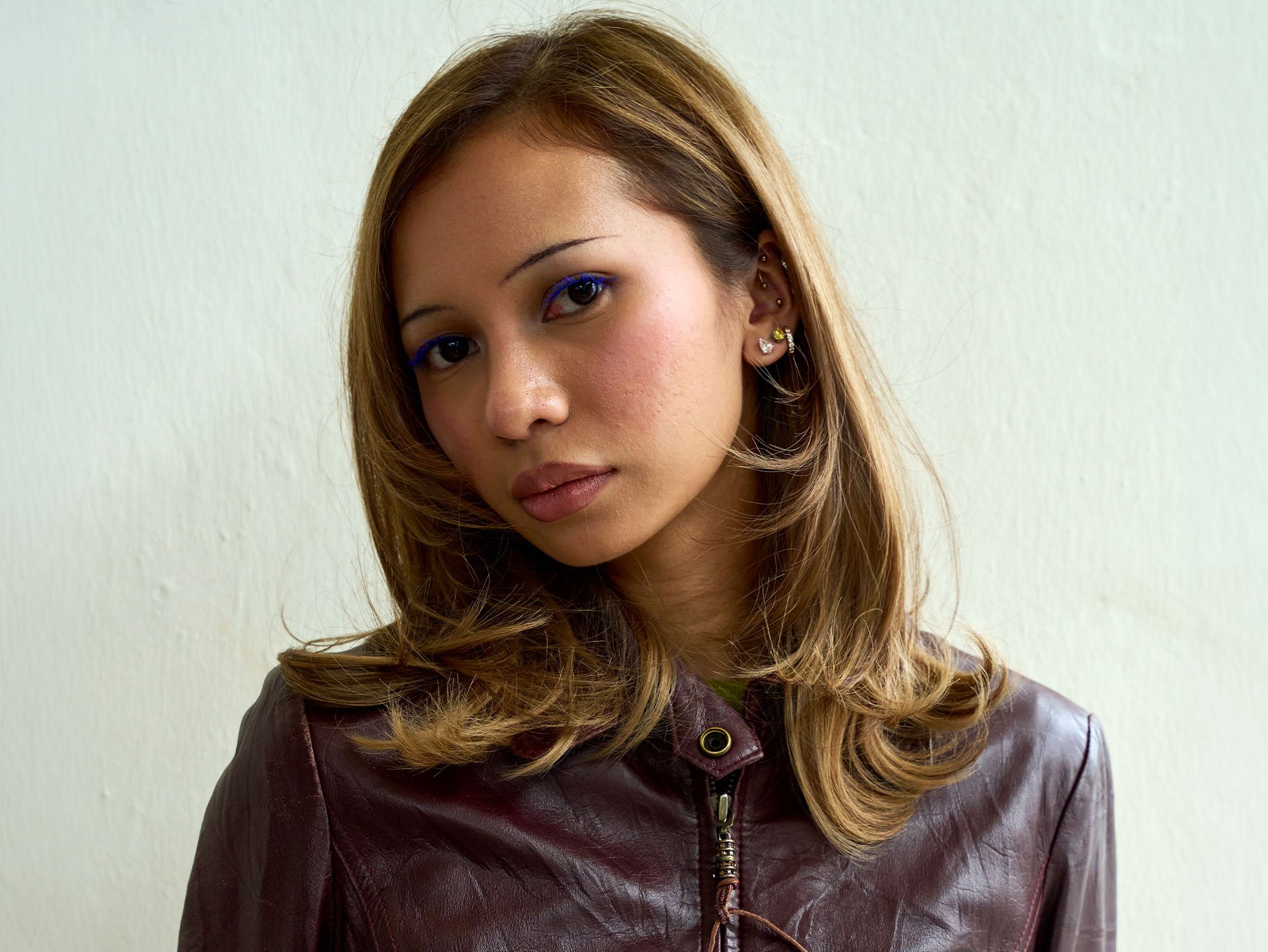
The SPACElogic Creative Director, who has worked in Singapore since 2004, on the country’s multicultural influences, balancing a set brief with creative freedom, and more.


Up next in our Singapore Design in Focus series, we speak with Daniel Powell, Creative Director at SPACElogic, a multidisciplinary design and build company headquartered in Singapore. Founded in 2002, it has since expanded to six other cities across Asia.
When asked what sets Singaporean design apart, Powell, who has worked in Singapore since 2004, pointed to the country’s many multicultural influences and to homegrown brands, where he sees ideas unique to Singapore that often reference colloquial terms or traits, especially in advertising and media.
Over the course of our interview, he discusses design’s role in Singapore’s development, from urban planning to a growing number of design-focused institutions, why innovation “does not always mean spending more,” and how SPACElogic’s in-house design, project, contracts, and production teams work together when tendering for new projects.
The interview also covers what Powell sees as the ideal balance between a set brief and creative freedom, how the team uses AI to explore material combinations and lighting while taking care not to rely on it for idea generation, and projects including the recently completed refresh of the Singapore Air Force Museum and the redesign of the National Cancer Centre Singapore’s main lobby.


Singapore is at the intersection of many multicultural influences, and we have seen this manifestation in the physical world around us. If we look beyond the more well-known international brands and focus on the homegrown ones, we do see quirky ideas that are uniquely Singaporean, often referencing colloquial terms or traits, especially in advertising and media.
In terms of the built environment, we are also seeing a predominance of Biophilic Architecture, where sustainability is the key driver in the design approach. While this is not exclusive to Singapore and can be found in new buildings all over the world, I would say Singapore is home to many ‘world-class’ examples of this such as Gardens by the Bay, Jewel Changi or PARKROYAL COLLECTION Pickering, to name just a few.
From a big picture perspective, design has been pivotal in the development of Singapore. From excellent urban planning to solve a housing shortage to an extensive public transport system and everything in between, designers and planners have played an intrinsic role in terms of the Singapore we know today.
There has also been a development in the academic scene, with the number of design-focused institutions that cropped up over the last 2 decades, and I believe this is in response to a shifting mindset whereby design is very much seen as a credible career choice just as much as the more traditional careers such as finance, law, medicine, etc.
From excellent urban planning to solve a housing shortage to an extensive public transport system and everything in between, designers and planners have played an intrinsic role in terms of the Singapore we know today.
We have also seen the rise in arts and leisure-based attractions, geared not just towards tourism but also to offer locals access to new experiences. From the opening of the ArtScience Museum in 2011, the National Gallery back in 2015, and more recently the new attractions at Mandai, we have seen how design has played a vital role in creating such destinations.
In my experience, clients have always challenged us to be bold and to “think outside the box”, an expression that has perhaps become somewhat cliché. The bigger challenge is translating bold ideas into solutions that maximise the value of the available budget. This is where designers need to be especially creative — understanding where investment will create the greatest impact, while exploring new materials, production techniques and smarter ways of detailing and building.
The bigger challenge is translating bold ideas into solutions that maximise the value of the available budget.
Ultimately, innovation does not always mean spending more. It is about making purposeful design decisions and finding opportunities to deliver something distinctive and memorable within the parameters of the project.
In terms of embracing innovative design, yes, I would also say this is something the clients themselves actively push in equal measure. The reason is because clients typically want a design that reflects positively on them and if it is innovative, you could infer that this is a reflection on them as a company. If it is bold, daring or unique, likewise it speaks about the company and how it positions itself in the market.
Having worked in both design and build companies, as well as a design agency for over 6 years, I would say the overall approach to most projects is actually quite similar. One key difference, however, would be the collaboration across all departments when we tender for a new project as the winning formula is almost always about combining great design with a competitive pricing strategy.
In SPACElogic, there is a concerted effort among the design team, project team, contracts team and the production team which are all in-house. This helps to ensure alignment and understanding in regards to the overall creative intent, the materials that would be used to execute it, and any possible issues we may face and how those could be mitigated, if they occur.
This is a continuous challenge for designers! A clear, orgainsed brief that has obviously been well thought out by the client, does make the process of executing the design proposal more straightforward. At the same time, the requirements are often heavily tied back to the client’s costing schedule and if they are looking for ‘apples-to-apples’ comparisons, it does mean we can easily go over budget if we propose anything that ‘creatively’ deviates too much.
Similarly, if there are little or no parameters given by a client, designers need to make a lot of assumptions, some of which may pay off, others that may miss the mark completely so there is always an element of risk when designing a project in this way despite the creative freedom.
The ideal balance would be a set of general requirements that every tenderer must adhere to, that forms the main basis of the proposal, with a secondary set of requirements that actively encourage creative exploration for selected areas of the project.


AI is definitely becoming more embedded in the design industry and brings its benefits along with its challenges. There is a growing sentiment that AI may slowly render designers redundant, as it has done in other industries, and this is a concern. On the other hand, we need to keep in mind that any AI software should be viewed as a ‘tool’ that still ultimately relies on prompts to generate any output.
AI is definitely becoming more embedded in the design industry and brings its benefits along with its challenges.
In our design workflow, we use AI to explore aspects such as material combinations or mood and lighting within a space as even the most basic AI software can now generate quick mock-ups in a fraction of the time it would take using more conventional software. This time saving means we can work more efficiently.
Our design team is also conscious of not relying on AI for idea generation, as that would devalue our own design services as a company.
Honestly, I just feel grateful that I had the opportunity to come to Singapore, as the job landscape in the UK 20-25 years ago was quite bleak. I was very green when I first arrived and didn’t really know what to expect, but luckily my Creative Director at that time, was also from the UK and helped me to settle and adapt to not only the culture of a new country, but the work culture.
I would say my work ethic has always been there, growing up with the mentality that you get out of life what you put in, but there were times when I had to work beyond what I thought I could handle, especially when meeting tight deadlines and handling multiple projects at once.
We have recently completed the refresh of the Singapore Air Force Museum, and one of the main project goals was to seamlessly integrate new exhibits, graphics, showcases and interactive experiences into the existing museum, while working in harmony with the overall design language.
Other aspects of the project that have been well received are the introduction of new large-format experiences such as the immersive theatre show ‘Defending Our Skies’ in the Level 2 Galleries. This space features a very large, inward curving LED screen, seats with integrated vibrations and other sensorial effects such as fans and strobe lighting to create a dynamic show for visitors.
Another project that stands out would be the National Cancer Centre Singapore, in which we redesigned the main lobby area at Level 1. The project scope was to create a new organic design language intended to soften the mood of the space for patients and visitors, introduce a new way-finding system and design a dedicated Donor Wall.
Good question!
I would say depending on their age and what piques their interest, there is a lot for visitors to see in the Tiong Bahru area. The Art Deco architecture is unique, in Singapore anyway, while there are art galleries, wall murals depicting local culture on the sides of buildings…it is a real visual treat and offers an insight into the local creative scene.
I have had the opportunity to collaborate with several local designers and artists when SPACElogic was designing the Sneakertopia Exhibition at ArtScience Museum.
I felt lucky to be involved in this project as I grew up very much living in the ‘urban, street culture’ vibe – skateboarding, playing basketball, designing graffiti, so to work with designers such as Mark Ong (Mr Sabotage), Jahan Loh, Soph O, Phunk, among many others was a great experience.
I don’t really have a ‘go-to place’ per se, but I do find that when I need inspiration, a good way is to disconnect and disassociate from the challenge at hand – the idea that inspiration can happen when we least expect it. To add, often the best ideas are the simplest ones and when we try too hard to be ‘creative’, we sometimes miss what is right in front of us.


For more information, visit spacelogic.asia.
All images provided by SPACElogic.