Time for another visit to Creative Leaders Corner. Pull up a seat for insights from industry leaders as they share their creative journeys and how they guide others on theirs.
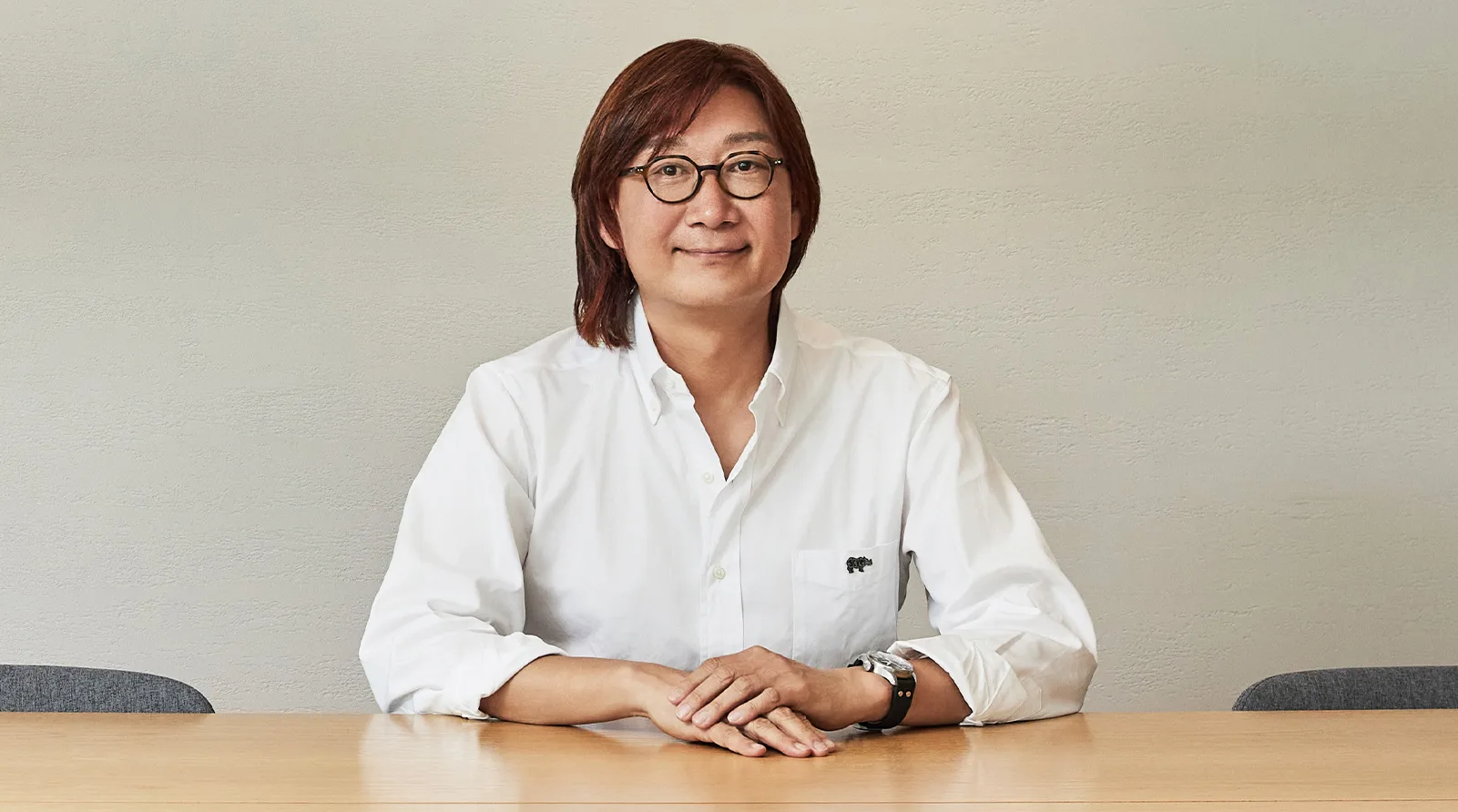
Next, we speak with Ki-Young Kim, Executive Vice President and Head of INNO21 at INNOCEAN.
Ki-Young began his career as a copywriter at TBWA before joining INNOCEAN in 2009 as a Creative Director. With more than 30 years creating advertising — including over 16 years at INNOCEAN — he now leads INNO21, a creative division launched in 2023 to elevate the agency’s overall creative capabilities.

Over the course of our conversation, Ki-Young talks about creative leadership, ads that have inspired him, encouraging clients to take creative risks, and more.
What do you miss about being a creative without the leadership role, and what do you enjoy most about creative leadership?
Due to the nature of INNO21, leadership here goes beyond simple organizational management. The very direction of INNO21 is PLAY & DIRECT. What I sometimes miss about working purely as a creative director, without any leadership roles, is that although it was challenging, I could immerse myself much more deeply in a single project. I also had far deeper and more intense discussions with the four team members.
If I could go back to that time, I think I would have shared more diverse experiences, such as visiting exhibitions or performances, to help draw out the team members’ best ideas.

As a creative leader, there are two things I enjoy most. First, presenting in competitive PTs and persuading advertisers is the most exciting part of my work.
Second, I truly enjoy watching the work of the CDs I collaborate with and identifying areas that can be improved and seeing how we empathize and grow together in our approach to creativity. In fact, one of the most important qualities of a CD is the ability to gauge ideas: knowing when to stop ideation and building a shared organizational perspective on what defines a good idea. I believe that’s one of the key roles of a leader. That’s why one of INNO21’s key slogans is “Raise the Bar.”
Was there a particular ad or ads that inspired you to focus your creative talents on the ad industry?
My belief is that “you can’t sell to someone who hasn’t seen it.” In that sense, Cheetos’ “Can’t Touch This” campaign is a great example.
It’s impressive how Cheetos boldly took the product’s downside, how it sticks to your fingers, and turned it into a strong point of differentiation for their campaign. These days, when advertisements do not compete with other ads but compete with all the content in the world, this campaign perfectly illustrates how advertising can capture people’s empathy and attention by highlighting a genuine product characteristic.
In that respect, the recent “Ride the Buldak High” campaign for Buldak Sauce, which went hugely viral on TikTok, is another great example. The campaign humorously and unapologetically addressed what happens “the next day in the bathroom” if you eat too much of it, turning that honesty into a massive viral moment.
How do you persuade clients to take creative risks?
The Buldak Sauce campaign “Ride the Buldak High,” which humorously centers on the next-day “bottom on fire” experience after eating Buldak sauce, sparked quite a reaction.
Advertiser’s reaction: “That’s a terrible point about our product. Are you sure we should advertise that?”
My answer: “You absolutely should.” The Buldak challenge began because of the sauce’s extreme spiciness, which many foreigners couldn’t handle. What people expect from the Buldak brand is its unpredictable and provocative attitude.
Just as the brand once played on people’s struggle to handle spicy food, it can now make light of the “next-day burn” in a way consumers find funny and relatable.
I believe that same spirit should be reflected in its advertising. Just as the brand once played on people’s struggle to handle spicy food, it can now make light of the “next-day burn” in a way consumers find funny and relatable. This approach can even strengthen the perception that people willingly endure the aftereffects simply because the product is irresistibly delicious.
Persuading advertisers is about clearly identifying the brand’s philosophy and direction, and explaining how those qualities can be used to reinforce its identity. Ultimately, these elements must be communicated to consumers through a sense of empathy and fun.
What are your strategies for inspiring and motivating your creative team to push boundaries and challenge the status quo?
RAISE THE BAR. Everyone probably has their own idea of what makes the best campaign. We constantly discuss how what we propose measures up to that standard. We always emphasize that our goal is not simply to create what the advertiser wants, but to prepare a campaign that truly astonishes the world.
For instance, there are times when we need to develop an alternative after the original proposal reaches its limits. At those moments, I always say this: “An alternative is not a second-best option. An alternative must be better than the original to be called an alternative.”
How is AI influencing your team’s creative process and the way you approach creative work for clients?
This was true even before the AI era, but now the boundaries between copywriters and art directors have blurred even further. Everyone creates both copy and visuals, and sometimes even produces music and videos. When pitching to advertisers, we often create videos to present our ideas. This helps them visualize the final outcome much more clearly than they could from a storyboard alone, leading to more accurate decision-making.
Just as people expect a greater level of imagination when watching animation, in the age of AI, creativity must reach new heights to truly capture people’s attention.
AI has had a profound impact not only on production processes but also on ideation itself. Because AI has virtually no limitations in visual execution, the process now feels similar to generating ideas for animation. Just as people expect a greater level of imagination when watching animation, in the age of AI, creativity must reach new heights to truly capture people’s attention. As a result, the standards by which we evaluate ideas are also evolving.
What advice do you have for people making their way into the creative industry for the first time?
I hope there is enough reflection on how our work impacts people. That’s why I try to be careful with clichés that are commonly used in society. For example, topics like “The relationship between a mother-in-law and daughter-in-law is not good” may easily resonate with people, but I don’t think it’s desirable for such ideas to become fixed. I hope advertisements can play a positive role in improving the relationship between them.
And instead of trying to persuade people by merely following trends, I hope more advertisements will be created that introduce new ideas and set trends of their own.
What are some campaigns you worked on during your career that you are most proud of? (share links to work, please)
I really like the “Ride the Buldak High” campaign for Buldak Sauce that I mentioned earlier, as well as Zigzag’s Youn Yuh-jung campaign. Zigzag is a shopping platform for women in their 20s, yet they boldly chose Youn Yuh-jung as their model.
This unexpected decision led to a campaign that received very positive feedback. A brand aimed at 20-year-old users selecting an actress over 70 as their face! I tend to appreciate campaigns like this. When unfamiliar elements are brought together in the right way, they can produce outstanding results. In this case, leveraging Ms. Youn’s Oscar win, which aligned perfectly with my planning, also seemed to enhance the campaign’s impact.
Quick Hits
Most useful app or tool you’ve started using recently:
For video work, I enjoy using tools like VEO3 and Nano Banana. For general research, I prefer oo.ai because it organizes information well and minimizes hallucinations.
Book everyone in the industry should read:
We often encounter the limits of imagination, and in those moments, I turn to novels as a source of inspiration.
I repeatedly revisit works like The Land of the Chimeras by Bernard Werber, which remind us that human imagination knows no bounds, as well as certain classics such as Camus’ The Stranger and Kafka’s The Metamorphosis.
As a copywriter, reading authors like Émile Zola is also valuable. It’s insightful to feel, “Oh, such a simple thing can be expressed so beautifully!”
Something you want to learn or wish you were better at:
I have a small dream of becoming an AI specialist, creating films with AI to submit to film festivals, and occasionally writing lyrics to release songs aimed at the Billboard charts. Additionally, I am considering picking up the janggu (a Korean traditional drum) again, which I played devotedly during university as part of a Samulnori team.