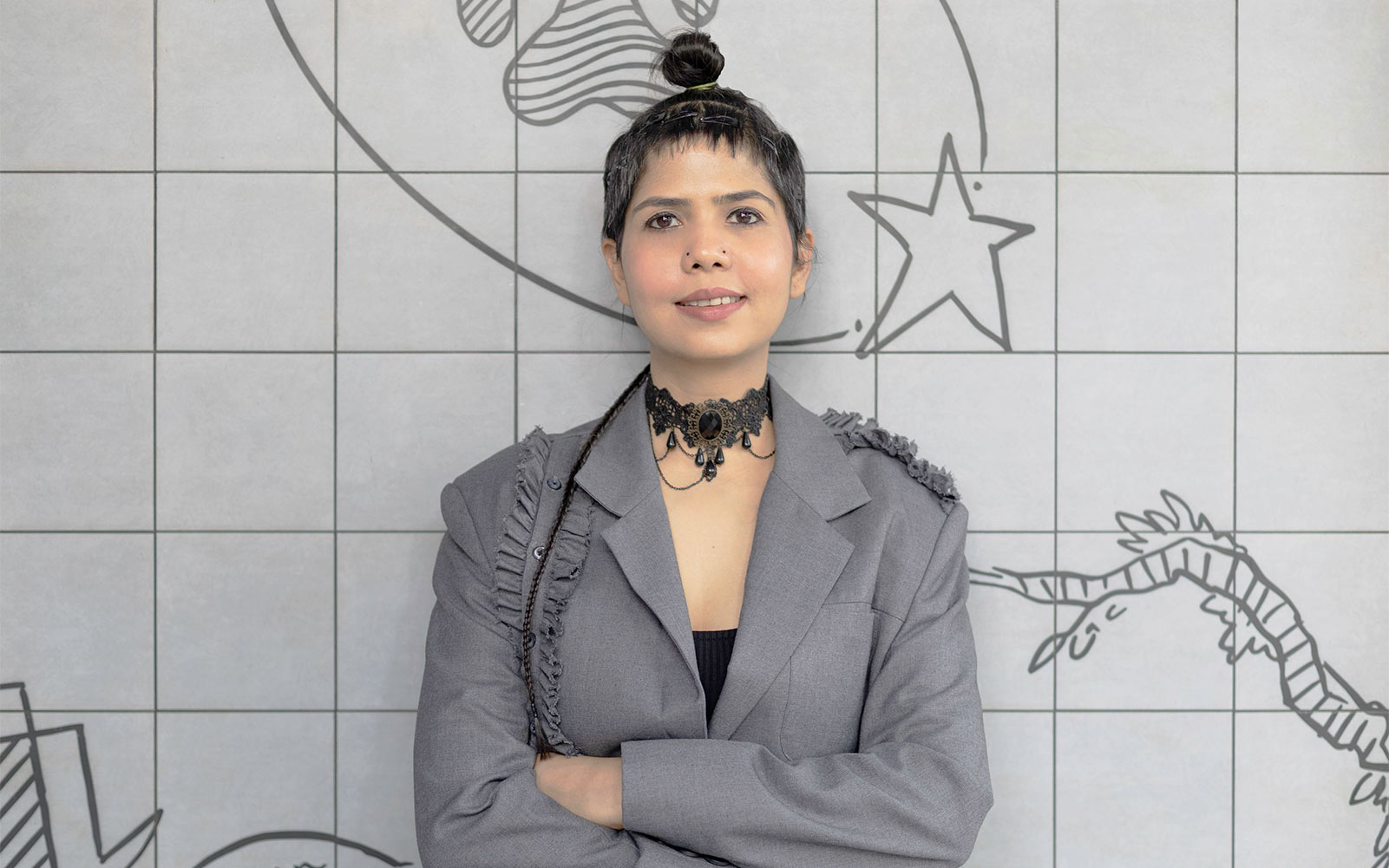

A conversation with the Founder and Creative Director of Studio ABD on India’s design identity, the role of storytelling, client openness to bold ideas, cultural and environmental sustainability, and guidance for emerging designers


As Indian Design in Focus continues, we speak with Abhijit Bansod, Founder and Creative Director of Studio ABD. Established by Abhijit with Amrita Kaushal Bansod as Co-Founder and Director of Design, the studio works across innovation, packaging, product, and environmental design.
Its interdisciplinary teams include industrial designers, business specialists, engineers, communications specialists, and graphic designers. With more than a decade of experience, the practice centers on creating meaningful and memorable design solutions that connect people to brands in emotionally resonant ways.
In this interview, Abhijit discusses what sets Indian design apart globally, the importance of storytelling in shaping their process, and how local identity, humor, craft, rituals, and cultural textures inform their design vocabulary.
He also reflects on shifting client openness toward bold ideas, why innovation must remain rooted in relevance, how clarity and creative freedom work together within a brief, and more.


What sets Indian design apart is its incredible ability to find beauty in chaos and meaning in the everyday. It’s layered, emotional, and deeply human — not just functional. While global design often celebrates minimalism, Indian design thrives in pluralism — a dialogue of materials, stories, symbols, and contradictions.
At its best, Indian design doesn’t imitate global trends — it translates our Desi spirit into universal relevance.
It’s a design language born from resourcefulness, from doing more with less, and from blending the sacred with the spontaneous. At its best, Indian design doesn’t imitate global trends — it translates our Desi spirit into universal relevance.
The core design process is fundamentally driven by the credo that “Storytelling is the most powerful way to put ideas into the world today” and is framed by the philosophy of connecting Life & Design”. This approach ensures that the resulting products are not merely consumables but “animated anecdotes, living stories”, and dictates that the story is scripted before the designs are born.
The process begins with deep introspection and inquiry into the “desi” or local Indian identity, celebrating its humor, craft, rituals, and vibrant cultural tapestry, which yields a unique Indian design vocabulary.
Execution is defined by the fusion of these traditional narratives with cutting-edge technology, following the mantra “Craft + Technology”, ultimately leading to simple, expressive forms that are sophisticated enough for global appeal while remaining profoundly rooted in the Indian ethos.
Yes, over the years, we’ve seen clients become far more open to bold and unconventional design choices. However, boldness in design is not just about being visually different — it’s about being contextually relevant. What might qualify as innovation in a global sense doesn’t always resonate with Indian audiences or cultural sensibilities.
We’ve learned that true innovation must be rooted in relevance — in understanding the emotional, cultural, and behavioral fabric of the people we design for.
At Studio ABD, we’ve learned that true innovation must be rooted in relevance — in understanding the emotional, cultural, and behavioral fabric of the people we design for. When we help clients see how design can tell a deeper story about purpose and impact, rather than just product features or aesthetics, they begin to see innovation as a strategic advantage.
By framing creativity around meaning and measurable impact — connecting life and design — we’re able to push boundaries and get clients excited about design that is both brave and deeply human.
We believe the magic lies in the balance between clarity and freedom. A clear brief gives direction — it helps us understand the business goals, user needs, and the problem we’re solving. But creative freedom allows us to question, explore, and reimagine possibilities beyond the expected.
For us, design thrives when structure meets imagination. We see the brief as a starting point, not a boundary — something to build upon, not be limited by.
For us, design thrives when structure meets imagination. We see the brief as a starting point, not a boundary — something to build upon, not be limited by. This balance ensures our work stays strategically grounded while still being emotionally evocative, culturally relevant, and delightfully unexpected.


Yes, absolutely — sustainability has become a major talking point in India, and that’s a positive shift. But often, it still sits more in intent than in action. Many brands want to appear sustainable without truly rethinking their systems or materials.
We aim for cultural sustainability as much as environmental — creating designs that people form lasting emotional connections with, reducing disposability not just of things, but of values
We approach sustainability not as a trend, but as a design responsibility — something that must be woven into the product’s lifecycle, from sourcing to storytelling.
We aim for cultural sustainability as much as environmental — creating designs that people form lasting emotional connections with, reducing disposability not just of things, but of values
The world is changing at lightning speed — our relationship with physical products is shifting, and digital consumption often gives us our daily dose of dopamine. With AI reshaping how we think, work, and create, and overexposure leading to creative fatigue, the only thing that will truly stand out is authenticity.
Focus on your roots, celebrate what’s local, and tell stories that matter
My advice to young designers: stay raw, stay human. Focus on your roots, celebrate what’s local, and tell stories that matter. Technology will keep evolving, but emotion, craft, and genuine human connection will always define timeless design.
Isha Foundation, Coimbatore. Designed with simplicity, symbolism, and soul, Isha is where ancient Indian wisdom meets modern architecture.
Anish Kapoor
Indian streets


To learn more, visit studioabd.in
All images provided by Studio ABD